Skip to content
Contact & Community
📍 Metro Manila, Philippines
🌐 robimotoph.com
✉️ hello@robimotoph.com
📱 +63 917 517 0594
📍 Metro Manila, Philippines
🌐 robimotoph.com
✉️ hello@robimotoph.com
📱 +63 917 517 0594

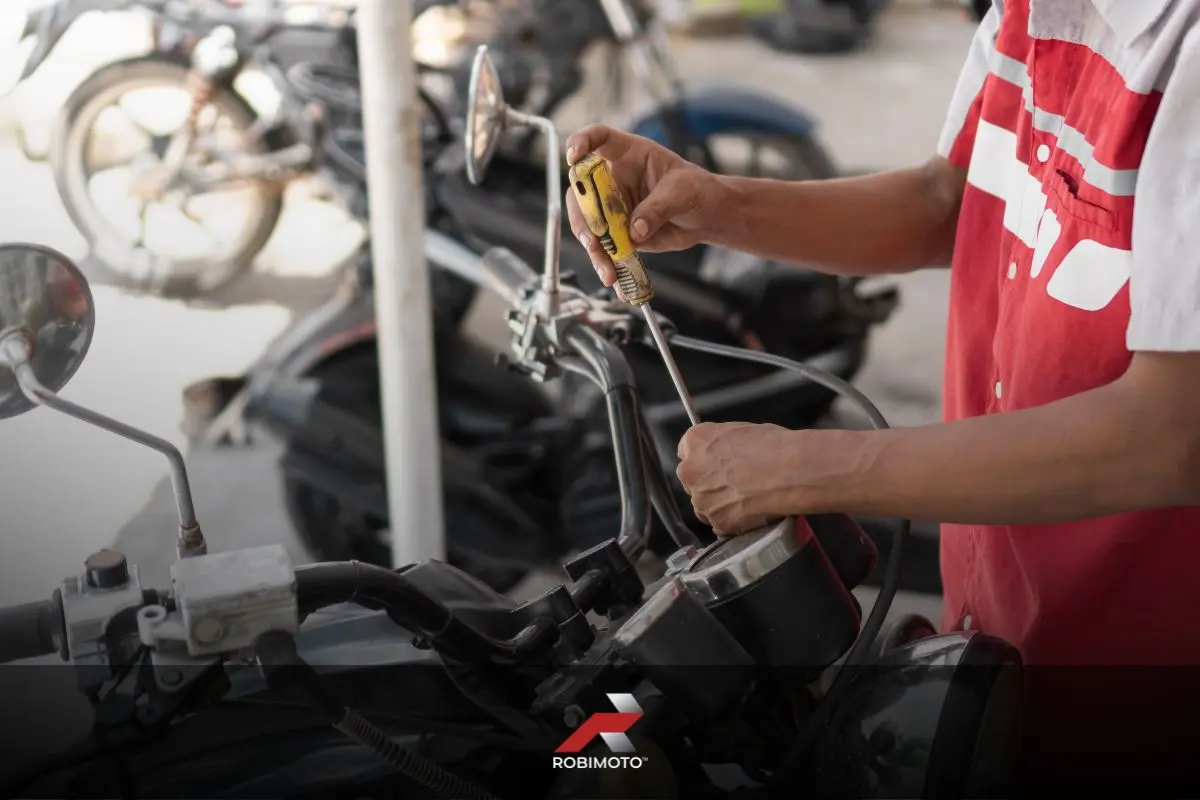
Motorcycle maintenance in the Philippines often feels confusing for daily riders dealing with traffic, heat, rain, and uneven roads. Many assume maintenance is expensive, complicated, or only necessary for older motorcycles. In reality, upkeep depends heavily on how, where, and how often you ride. This article looks at motorcycle maintenance through real daily use, not manuals or sales advice. City commuting, provincial roads, weekend rides, and mixed conditions all affect wear and costs differently. The focus is practical clarity. It explains what riders usually overlook, what actually matters over time, and how everyday decisions shape reliability, expenses, and riding experience.
Motorcycle maintenance in the Philippines is not optional for 400cc–900cc big bike owners. Heat, humidity, traffic congestion, and sudden rain exposure create mechanical stress that shortens service intervals and accelerates wear.
Our climate is harser. Traffic is heavier. Road conditions are less predictable. The rainy season is unforgiving.
Heat expands components daily. Humidity accelerates corrosion. Stop-and-go traffic strains cooling systems. Floodwater contaminates chains, bearings, and electrical connectors.
A big bike is not fragile. It is engineered for performance. But in Philippine conditions, performance demands discipline.
Maintenance must be systematic. It cannot be reactive, emotional, or driven by panic repairs.
This guide is your complete ownership framework for midweight platforms such as the Dominar 400, Z900, MT-07, CB650R, Ninja 650, and similar 400cc–900cc motorcycles used for daily commuting and weekend rides.
Every maintenance article on RobiMoto connects back here because this is the foundation.
Let’s build the system properly.
Repairs happen when maintenance fails.
Most riders wait for:
By then, damage is already progressing.
Instead, think in systems.
Your motorcycle operates through five interconnected systems:
When one system weakens, another compensates. Compensation increases stress. Stress accelerates wear. Wear multiplies cost.
The goal is not perfection.
The goal is controlled wear.
On my Dominar 400, one lesson became clear after years of daily riding: consistent small actions prevent expensive stories.
And that principle applies to any serious 400cc–900cc bike in Philippine conditions.
Maintenance is not mechanical talent.
It is structured awareness.
This is why motorcycle maintenance in the Philippines must follow a structured system, not guesswork or reaction.
Daily checks are visual and tactile awareness routines. Not mechanical sessions.
They take minutes.
They save thousands.
Tires lose pressure naturally due to temperature fluctuations.
Underinflation causes:
Check pressure at least every few days. Visually inspect daily.
Look for:
If you ride expressways regularly, tire neglect becomes dangerous quickly.
For detailed tread inspection before rainy season, refer to your dedicated tire depth guide.
Midweight bikes transfer significant torque through the chain.
Incorrect slack leads to:
Quick daily scan:
If you commute daily in Metro Manila, rain exposure increases chain wear significantly.
Your rainy season chain care guide expands on this deeply.
Before moving, squeeze the front brake. Press the rear pedal.
The feel should be:
Spongy sensation may indicate:
Subtle changes matter.
If braking behavior feels different in wet roads, your brake performance in rain breakdown explains why.
Check:
Weak headlight output often traces back to voltage instability or aging wiring.
You’ve already covered weak headlight causes and electrical issues in depth. This daily check ensures early detection.
Before rolling out, glance at the ground.
Look for:
Leaks start small. They rarely stay small.
Daily checks build mechanical intuition.
And intuition prevents roadside frustration.
Weekly inspections take 15–20 minutes and prevent cumulative damage.
Humidity mixed with road dust forms abrasive grime.
That mixture damages O-rings and accelerates wear.
Clean using proper chain cleaner.
Lubricate evenly.
Wipe excess.
If you delay chain cleaning, long-term drivetrain damage becomes inevitable. You already documented this in your chain neglect article.
During rainy season, increase frequency.
Wet braking performance depends heavily on tread condition.
Shallow tread increases hydroplaning risk.
Measure properly before rainy months. Your tread depth guide explains correct methods.
Do not rely on visual guessing.
Hard starting.
Dim lights at idle.
Slow crank.
These are early warnings.
Midweight bikes rely heavily on stable electrical systems.
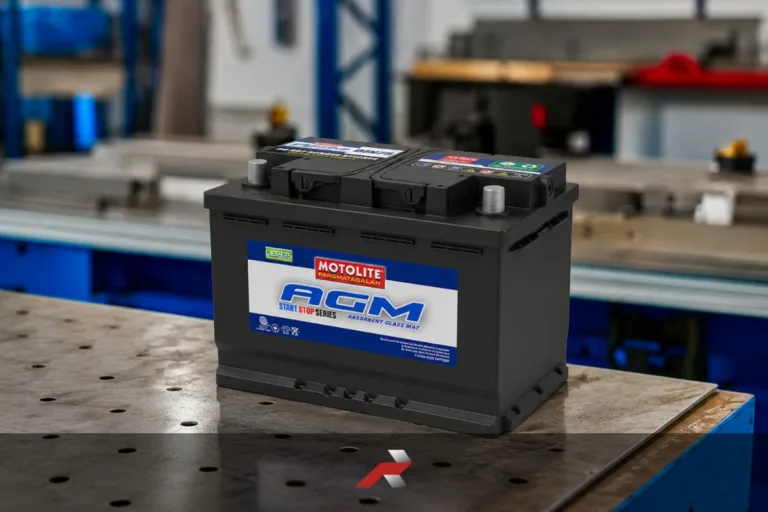
Your motorcycle battery comparison article explains AGM vs lead acid differences and lifespan considerations.
Voltage awareness prevents embarrassing roadside failures.
Check reservoir levels.
If overheating occurs frequently in traffic, review your overheating diagnosis guide and cooling system breakdown article.
Metro Manila congestion stresses cooling systems heavily.
Ignoring temperature spikes shortens engine life.
Daily is awareness.
Weekly is intervention.
Monthly is structural control.
This is where responsible ownership becomes visible.
Brake pads do not fail suddenly.
They thin gradually.
Check:
Thin pads increase stopping distance.
Metal-on-metal contact destroys rotors.
Global road safety research from organizations like the World Health Organization (WHO) emphasizes that mechanical condition directly affects crash severity. In high-density traffic environments like Metro Manila, braking readiness is not optional. It is a safety requirement.
If you’ve ever heard high-pitched squealing at low speed, that’s not just noise. It’s early warning.
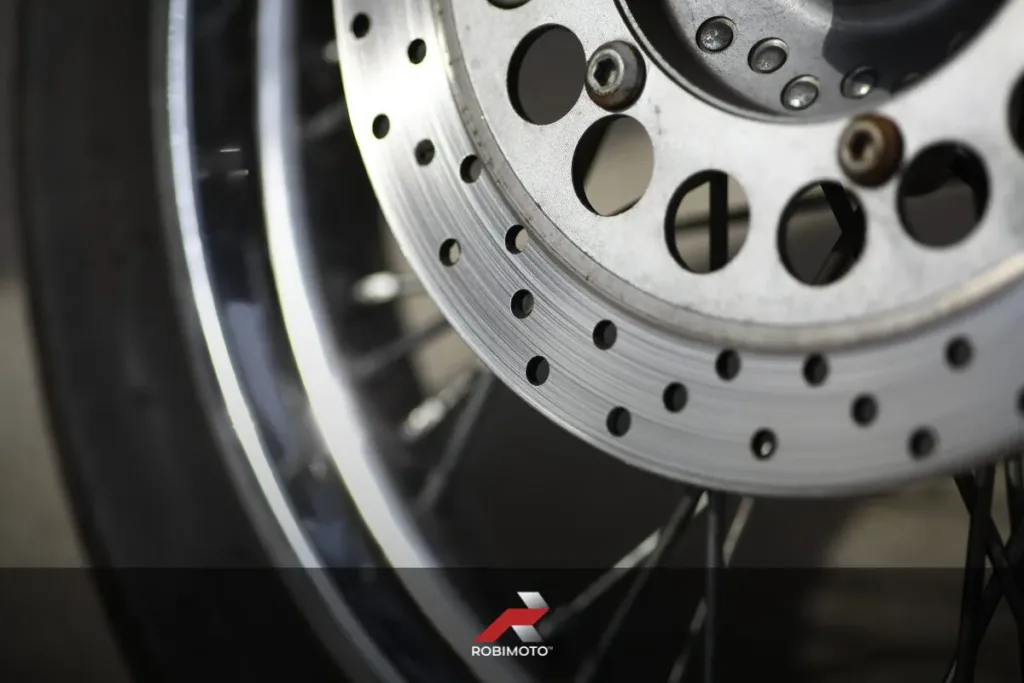
Feeling noise when braking? Understand the causes in Brake Squealing Causes and How to Fix It in Daily Motorcycle Riding
Oil is not just lubricant.
It is heat management and internal protection.
Check monthly:
If oil darkens unusually fast, that signals contamination or heavy stress.
If shifting feels rougher than usual, oil degradation may be accelerating.
Before delaying change intervals, review:
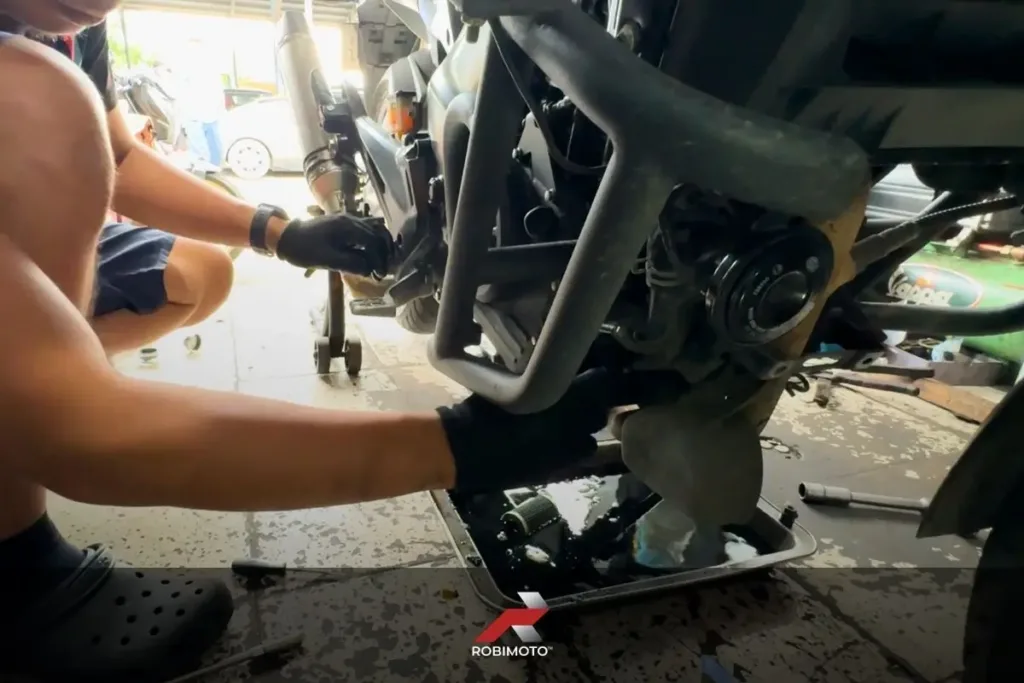
Notice subtle changes in engine feel?
Read Skipped Oil Change Symptoms: Real Signs Filipino Riders Often Miss
Brake fluid absorbs moisture over time.
In a humid country, that process accelerates.
Moisture lowers boiling point.
Lower boiling point reduces braking consistency.
Check for:
Before assuming your braking system is weak, understand:
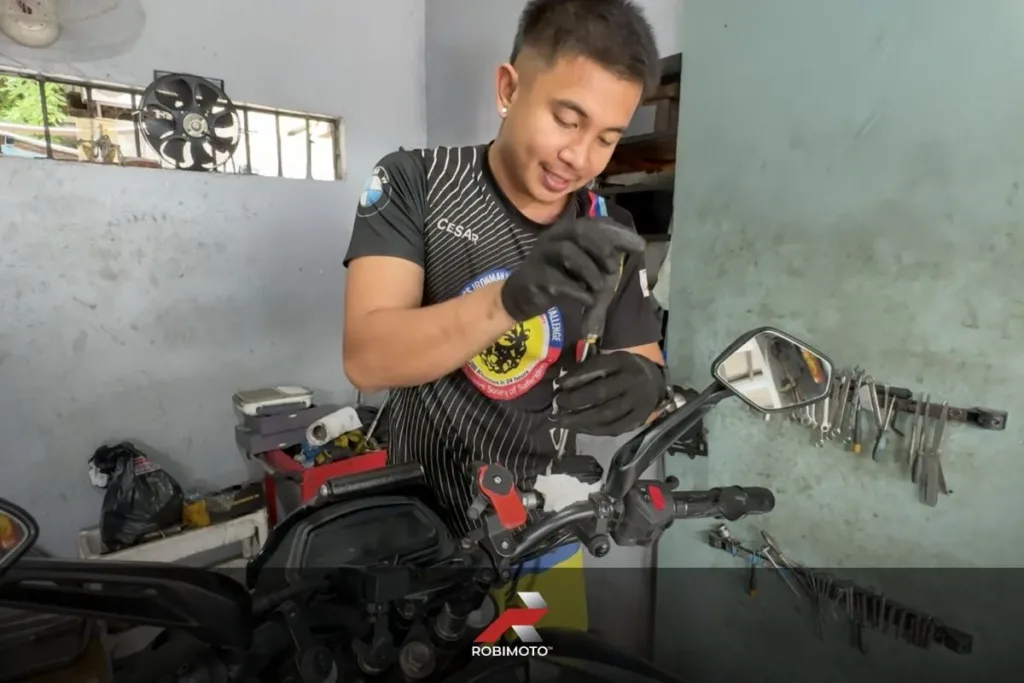
Why delayed fluid replacement affects braking feel: Ignored Brake Fluid Replacement and Braking Feel Issues in Daily Riding
Suspension affects:
Inspect monthly for:
If ride comfort has changed slowly, you may not notice it immediately.
Understanding suspension setup fundamentals helps prevent misdiagnosis:
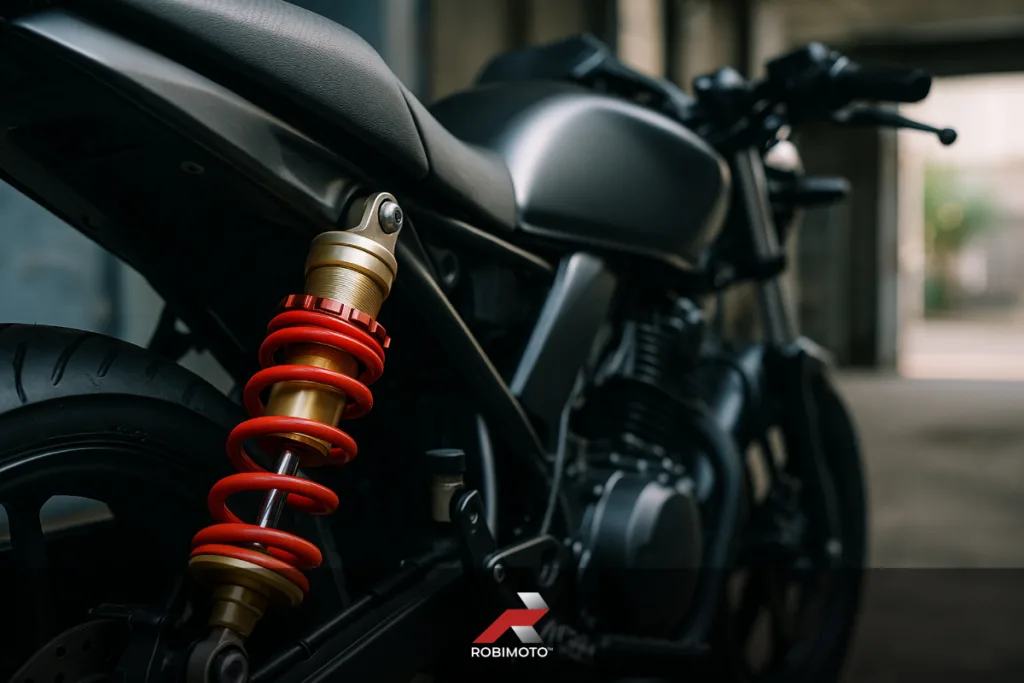
How suspension changes affect real-world riding: Motorcycle Suspension Setup 101: Understanding Rear Shock Behavior
Preventive Maintenance Service is not just a dealership requirement.
It is lifecycle management.
The factory manual provides baseline intervals.
Manufacturer service schedules should always be your baseline. For example, official service interval recommendations published by Kawasaki Motors Philippines outline oil change and inspection timing under standard riding conditions, which riders can then adjust based on real-world Philippine use.
But Philippine conditions require adjustment.
Heat. Traffic. Humidity. Short rides. Flood exposure.
Let’s structure this realistically.
During the first 1,000 km:
This period allows:
Oil change at this stage removes early metal particles.
This applies to Dominar, MT-07, CB650R, and similar midweight engines.
Break-in habits influence long-term compression health.
At around 5,000 km:
This is where early ownership habits become visible.
Neglect here compounds later.
For Dominar 400 owners, maintenance is easier to plan when common wear items are listed in one place. Before your next service, review this Dominar 400 maintenance parts list to check oil, oil filter, spark plugs, chain, brake pads, battery, coolant, and other PMS items.
By 10,000 km:
Urban riding accelerates air filter clogging.
If fuel consumption changes unexpectedly, revisit:
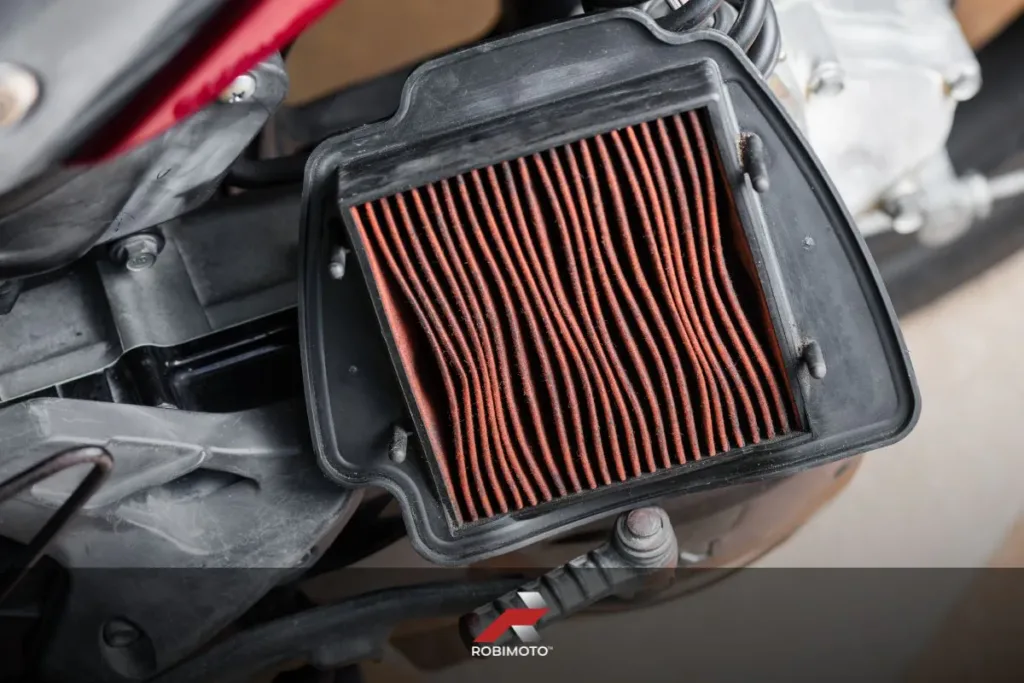
Understanding airflow and fuel efficiency loss: Delayed Air Filter Replacement and Fuel Economy Loss in Daily Motorcycle Use
Even if mileage is low, annual service matters.
Rubber components age.
Fluid absorbs moisture.
Batteries degrade over time.
Annual checklist should include:
To understand the real cost structure behind this, review:
Planning ownership financially: Annual Maintenance Budget Breakdown for Big Bikes in the Philippines
Most riders search only when something feels wrong.
This section converts panic into clarity.
Likely cause:
Symptoms:
Before replacing parts blindly:
Diagnose clutch slip properly: Slipping Clutch Symptoms, Causes, and Fixes
Possible causes:
If your bike struggles to crank in the morning, don’t assume fuel quality immediately.
Start here:
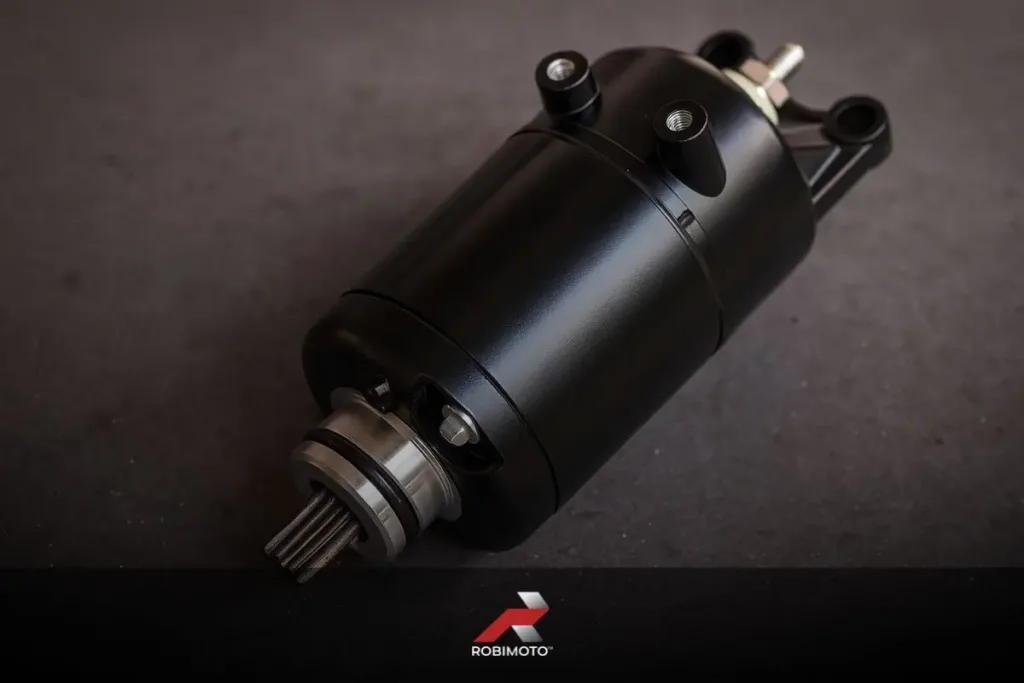
Electrical and starting diagnosis: Dominar 400 Starting Problem and Electrical Fixes You Can Do at Home
Common in Metro Manila congestion.
Causes:
Before assuming engine defect:
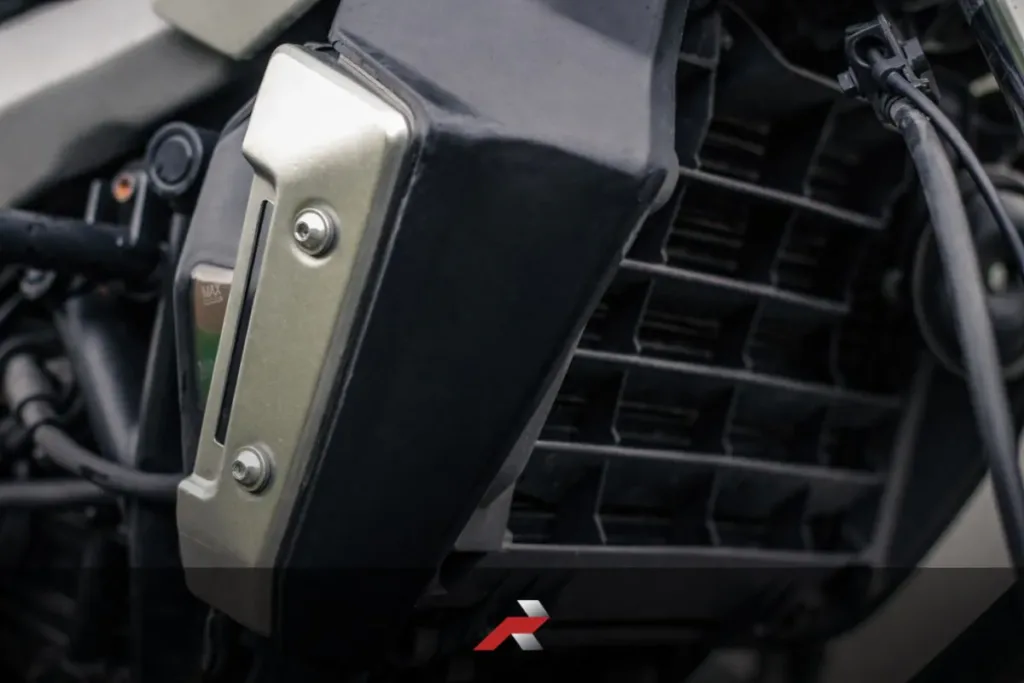
Traffic heat diagnosis explained: Overheating in Traffic Causes and Prevention for Everyday Motorcycle Use
Symptoms:
Possible causes:
For deeper explanation:
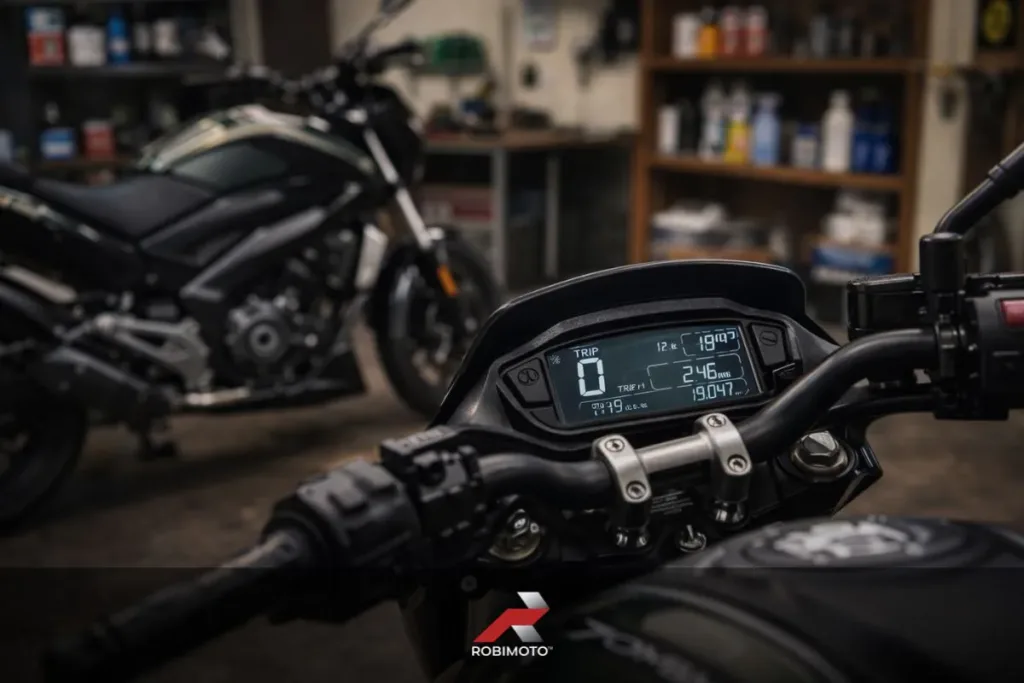
Understanding idle instability:
Rough Idle Problems in Daily Riding Explained for City Motorcycle Use
If you ride in the Philippines, rain is not seasonal. It is inevitable. Rain exposure changes how motorcycle maintenance in the Philippines should be scheduled.
From sudden afternoon downpours to full monsoon weeks, moisture exposure changes your maintenance rhythm completely.
Maintenance intervals must adapt.
Rain does not just “wet” your chain.
It strips lubrication.
Water penetrates between rollers. Road grime mixes with moisture. That mixture forms abrasive paste that eats O-rings slowly.
During dry season:
Clean and lube every 500–700 km
During rainy season:
Clean and lube every 300–400 km
Or immediately after heavy rain exposure
If you park outdoors, humidity alone accelerates surface rust overnight.
For riders who deal with rain, traffic, humidity, and wet parking almost year-round, this motorcycle chain maintenance tropical climate guide gives a more focused routine for daily Philippine riding conditions.
On my Dominar 400, skipping just one rainy-week cleaning cycle noticeably increased chain noise and throttle harshness. That lesson applies to any torque-heavy midweight platform.
For a deeper breakdown of rain exposure consequences:
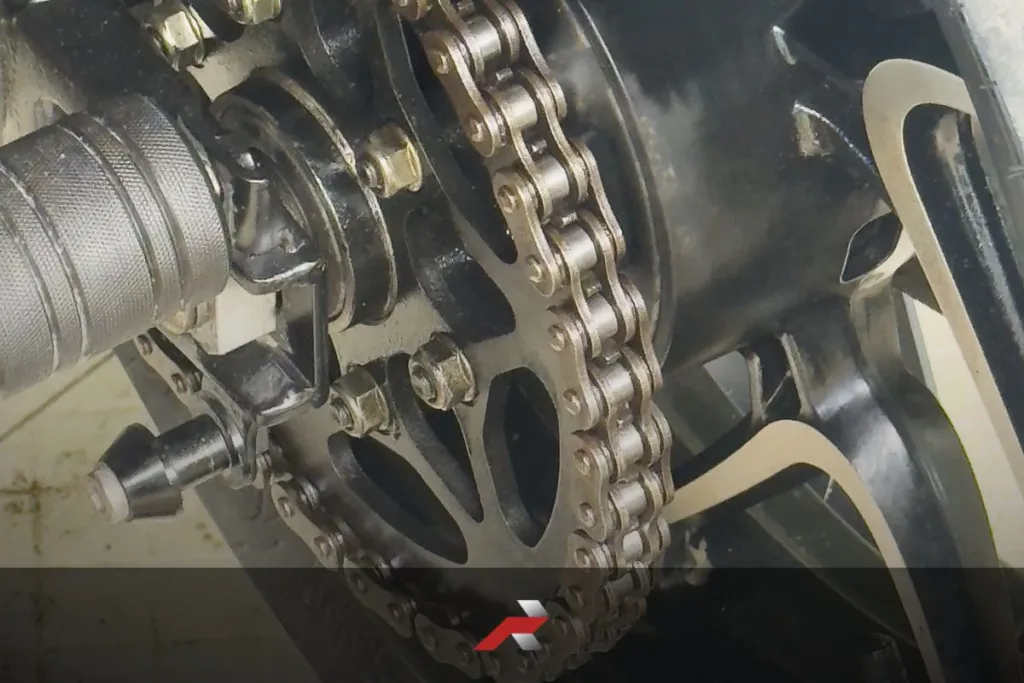
Why rainy season changes drivetrain wear: Chain Care in the Rainy Season: Preventing Rust and Premature Wear
Rain changes braking behavior.
Water forms a thin film between pad and rotor. First squeeze after exposure may feel weak.
This is normal — but only briefly.
What is not normal:
Moisture also accelerates corrosion on rotors.
Understanding wet braking behavior reduces panic reactions.
Before assuming brake failure:
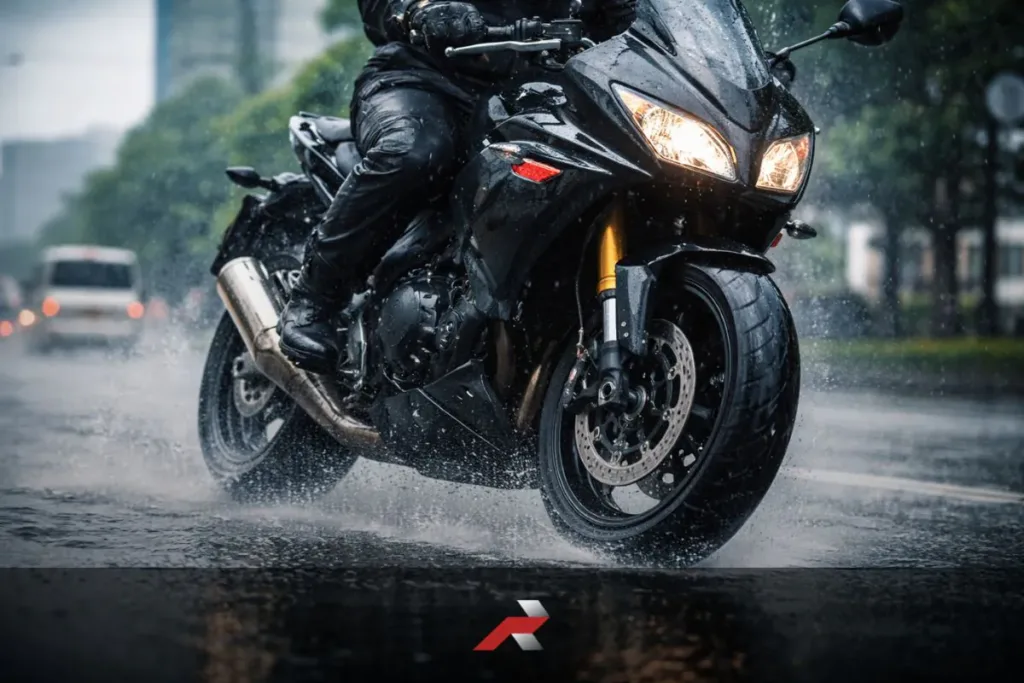
What riders misunderstand about braking in rain: Brake Performance in Wet Roads Philippines: What Riders Must Understand
Humidity changes how water behaves.
Moisture lingers longer in shaded areas. It penetrates deeper into seams. Evaporation slows in enclosed parking.
Focus on:
Surface rust begins quietly. If ignored, it spreads.
After heavy rain rides:
Long-term neglect becomes structural damage.
If you want to prevent corrosion properly:
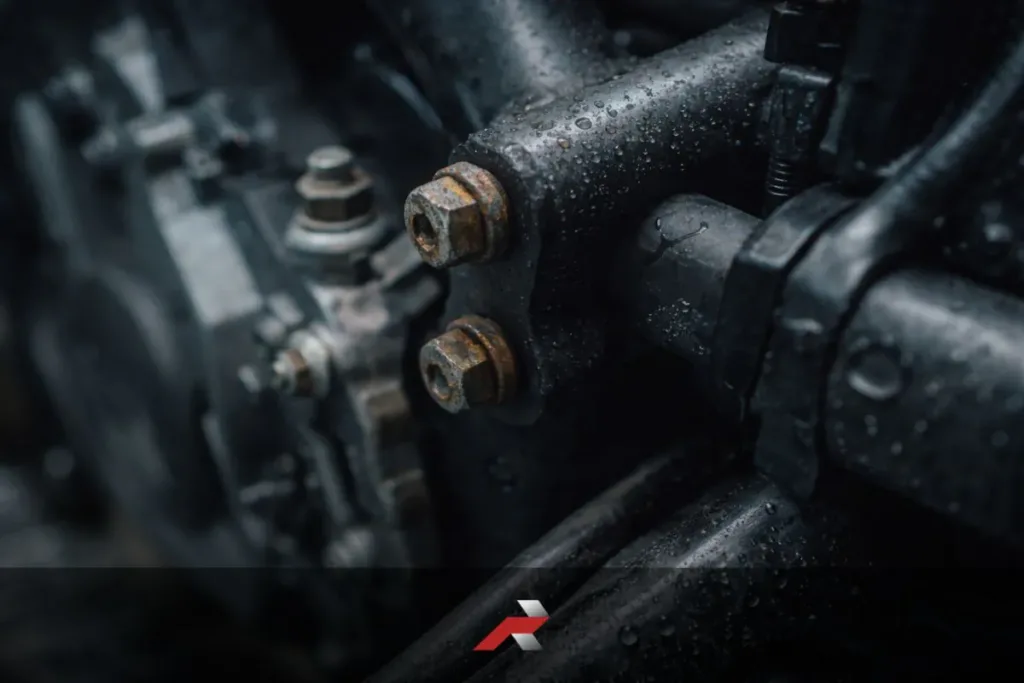
Long-term corrosion prevention methods: Preventing Rust on Big Bikes in Humid Philippine Climate
Floodwater is different from rain.
It contains:
If your bike passes through water above axle level, inspection becomes mandatory.
Immediately check:
If water reached airbox level, do not restart without inspection.
You’ve already documented detailed steps here:
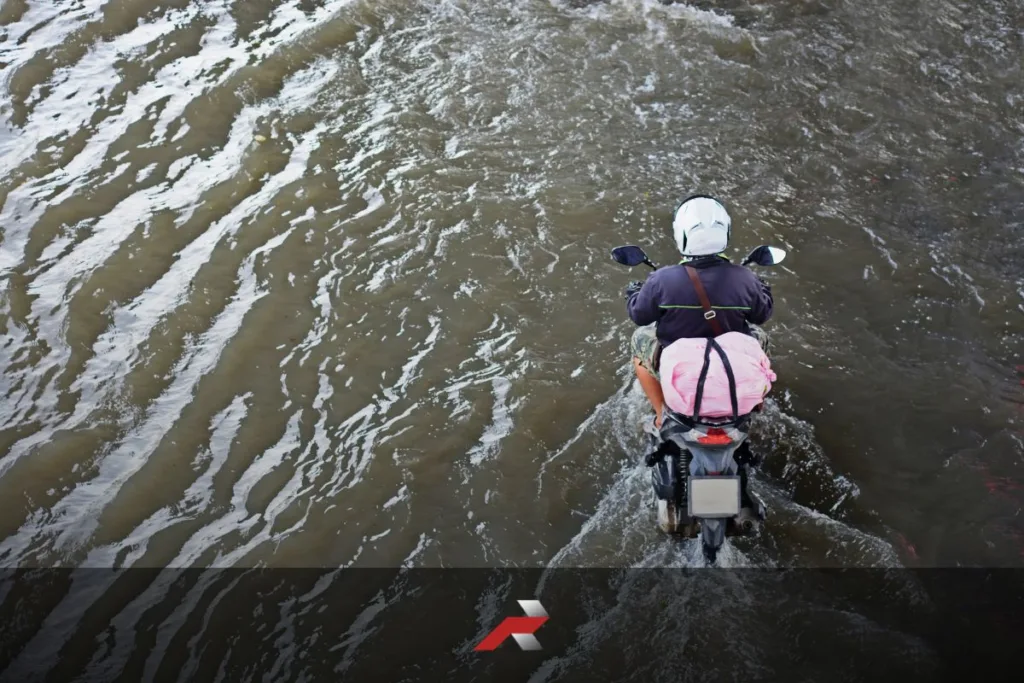
Emergency post-flood checklist:
Post Flood Motorcycle Inspection Guide for Big Bike Owners
Flood neglect creates long-term hidden damage. Bearings fail months later. Electrical corrosion spreads slowly.
Rain strategy is not paranoia.
It is climate adaptation.
Mileage alone does not determine wear. Riding environment does.
Two riders may both log 10,000 km per year. One rides daily through Metro Manila traffic. The other mostly cruises on expressways during weekends. Their maintenance patterns will differ significantly.
Understanding this difference allows you to adjust inspection frequency intelligently instead of blindly following a manual.
Below is a practical comparison based on real-world Philippine conditions for 400cc–900cc motorcycles.
| Component | City Riding (Stop-Go Traffic) | Expressway Riding (Sustained Speed) |
|---|---|---|
| Engine Oil | Degrades faster due to heat cycles and idle time | More stable due to steady RPM |
| Clutch | Higher wear from frequent engagement | Minimal wear during cruising |
| Brake Pads | Faster consumption due to constant braking | Slower wear if riding is smooth |
| Cooling System | Stressed due to low airflow | Efficient due to consistent airflow |
| Tires | Uneven wear from frequent braking | Faster center wear at high speed |
| Chain | More grime exposure and shifting stress | Higher tension stress under load |
| Battery | More strain from stop-start ignition | More consistent charging |
This table shows why a one-size-fits-all maintenance schedule does not work in the Philippines.
If you are a daily commuter in heavy traffic, shorten oil intervals and inspect brakes more frequently.
If you ride long highway stretches weekly, monitor tire condition and chain tension more carefully.
Hybrid riders must balance both.
Maintenance becomes intelligent when it reflects usage, not just kilometers.
Ownership is not just fuel and monthly payment.
Annual maintenance cost for a 400cc–900cc bike typically includes:
Budget realistically.
If you ride daily:
Expect higher wear.
If you ride only weekends:
Expect fluid aging.
To understand cost breakdown clearly:

How to plan ownership financially:
Real Cost of Owning a Big Bike in the Philippines: Annual Breakdown
There is a difference between riding a motorcycle and owning it properly.
A rider:
An owner:
A 400cc–900cc motorcycle is not disposable. It is mechanical responsibility.
The Philippine environment is aggressive.
Your maintenance system must be disciplined.
This guide is not about perfection.
It is about awareness, structure, and long-term thinking.
Because when maintenance becomes routine, problems become predictable.
And predictable problems are affordable.
Upgrades should solve problems. Not satisfy boredom.
Before modifying, ask:
If your stock tires feel unstable in rain, upgrading to higher-grip compounds makes sense.
Tires affect:
This is functional, not cosmetic.
Riders often blame suspension prematurely.
Before upgrading:
Only upgrade if:
Otherwise, you are solving the wrong problem.
Steel braided lines improve consistency under hard braking.
But for daily city riding, stock lines may already be sufficient.
Upgrades must match usage.
Upgrading to AGM battery can improve reliability.
But if your charging system is weak, new battery will not fix root cause.
Always diagnose before replacing.
Some riders pause riding due to:
Motorcycles deteriorate differently when parked.
Inactivity causes:
If parked more than 2 weeks:
Frequent short start-ups without full warm-up can cause condensation buildup internally.
Better to:
Your battery health article supports this discipline.
Modern fuel degrades over time.
If storing longer than a month:
Old fuel affects injectors and throttle response.
Flat spots develop when weight stays in one position.
If storing long-term:
Tire damage during storage is preventable.
Discipline improves when you visualize your year.
Instead of reacting to problems, map maintenance into your calendar. This prevents overlap, missed intervals, and budget surprises.
Below is a simple example for a daily commuter averaging 10,000–12,000 km per year in mixed city and expressway use.
January
– Oil and filter change
– Full inspection reset for the year
– Budget allocation planning
March
– Chain clean and alignment check
– Brake pad inspection
– Tire pressure and tread measurement
May (Pre-Rain Check)
– Coolant inspection
– Brake fluid check
– Rust prevention application
– Electrical connector inspection
July
– Oil change
– Chain deep cleaning
– Suspension visual inspection
September
– Air filter inspection
– Battery voltage test
– Steering head bearing check
November
– Oil change
– Brake pad thickness measurement
– Tire wear evaluation before holiday rides
December
– Full year inspection review
– Maintenance log update
– Budget planning for next year
This layout is flexible. Adjust based on mileage and riding style.
The goal is not perfection.
The goal is rhythm.
When maintenance becomes scheduled instead of reactive, you eliminate surprises.
A motorcycle that follows a calendar rarely produces emergency repairs.
Ownership becomes calmer. More predictable. More professional.
You don’t need a full workshop.
But you should have:
Tools enable independence.
They also prevent expensive mistakes.
A torque wrench, for example, is not about sophistication. It prevents over-tightening bolts that strip threads or crack components. In Philippine heat, metal expands and contracts constantly. Proper torque matters more than most riders realize.
A reliable tire pressure gauge protects more than tire life. Incorrect pressure affects braking distance, fuel consumption, and high-speed stability. On expressways like NLEX or SLEX, a few PSI difference can change how your bike tracks in crosswinds.
Chain maintenance tools preserve drivetrain life. In humid conditions, rust begins quietly. Regular cleaning and lubrication reduce premature sprocket wear and protect power delivery.
Microfiber cloths are simple, but they help you spot leaks early. Wiping around engine cases, brake lines, and fork seals reveals problems before they escalate.
You do not need dealership-level equipment.
You need the tools that support awareness.
Ownership is not about doing everything yourself. It is about understanding what is happening to your motorcycle before someone else has to explain it to you.
A small, intentional tool kit turns maintenance from reaction into control.
And control is the foundation of long-term riding confidence.
Most mechanical failures give warnings.
The problem is not that bikes fail silently.
It’s that riders stop listening.
Before every ride, take 30 seconds for a mental reset:
You ride your motorcycle daily. That means you are the most sensitive diagnostic tool it has.
Changes in sound, vibration, or response often appear weeks before real failure.
In Philippine conditions, small issues escalate faster because of heat, humidity, and traffic stress.
Discipline is not about paranoia.
It is about awareness.
When awareness becomes habit, maintenance becomes predictable.
And predictable motorcycles are reliable motorcycles.
Memory is unreliable.
Log:
This creates:
When buyers see documented care, trust increases.
Maintenance logs convert care into asset value.
Let’s expand cost structure realistically.
Typical annual cost range for 400cc–900cc big bikes in the Philippines:
Oil & Filters: ₱4,000–₱8,000
Brake Pads: ₱2,500–₱6,000
Coolant & Fluids: ₱1,500–₱3,000
Chain Maintenance Supplies: ₱1,000–₱2,000
Battery (every 2–3 years): ₱4,000–₱7,000
Tires (every 12k–20k km): ₱15,000–₱30,000
Maintenance is predictable.
Neglect is expensive.
Budgeting prevents resentment.
Resentment kills ownership joy.
Even experienced riders make these mistakes.
Too much lube attracts dirt.
Excess grime accelerates wear.
Apply evenly. Wipe excess.
Ticking. Squealing. Minor vibration.
These are messages.
Small symptoms grow.
Brake fluid absorbs moisture.
Coolant degrades chemically.
Old fluids compromise performance before obvious failure.
Upgrading exhaust without understanding fueling.
Changing sprocket ratios without understanding torque impact.
Performance changes require system awareness.
Motorcycle maintenance in the Philippines is not a seasonal concern. It is a year-round discipline shaped by heat, humidity, traffic density, and unpredictable weather. Owners who treat it casually eventually pay for that mindset through premature wear, higher costs, and reduced reliability.
Every 3,000–5,000 km for daily riders. Heat and traffic shorten ideal intervals.
Rain itself is not destructive. Lack of post-ride cleaning is.
15,000–25,000 km depending on care and riding style.
Warranty period requires compliance. After warranty, disciplined maintenance matters more than dealership branding.
Predictable maintenance is manageable. Major repairs are expensive.
Motorcycle maintenance in the Philippines is not about being obsessive.
It is about being responsible.
In a country where heat is relentless, traffic is punishing, and rain is unforgiving, your motorcycle is constantly under stress. Ignoring that reality is not freedom. It is negligence.
A rider reacts when something breaks.
An owner prevents it from breaking.
Leadership begins in small, unseen decisions. Checking tire pressure before sunrise. Cleaning the chain after a rainy commute. Replacing brake fluid before it turns dark. Logging mileage instead of guessing.
No one applauds those habits.
But they are the difference between smooth rides and roadside repairs.
Between controlled wear and compounding damage.
Between confidence and anxiety.
Real ownership is quiet discipline.
Every kilometer leaves a mark.
Performance is earned through consistency, not upgrades alone.
Your safety, your passenger’s safety, and even the reputation of the riding community reflect how well you maintain your machine.
Because a well-maintained motorcycle is predictable.
And predictability is safety.
When your bike responds exactly as expected, you ride with clarity. When it behaves unpredictably, hesitation creeps in. And hesitation at speed is expensive.
Maintenance is not mechanical talent.
It is structured awareness.
It is respecting the machine that carries you through EDSA traffic, expressway crosswinds, mountain curves, and flood-soaked streets.
And in the long run, leadership on the road starts long before you turn the throttle.
It starts in the garage.