Skip to content
Contact & Community
📍 Metro Manila, Philippines
🌐 robimotoph.com
✉️ hello@robimotoph.com
📱 +63 917 517 0594
📍 Metro Manila, Philippines
🌐 robimotoph.com
✉️ hello@robimotoph.com
📱 +63 917 517 0594

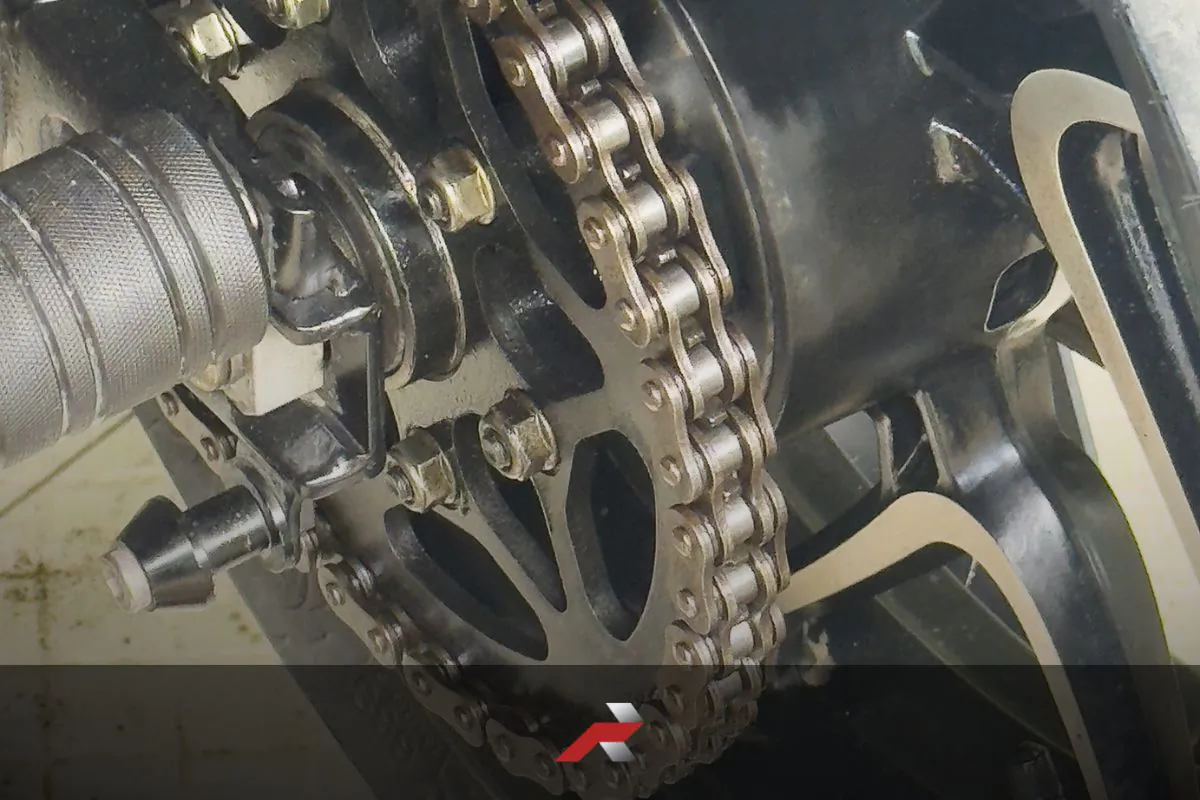
Chain Care During Rainy Season is not optional maintenance for Filipino riders. Rainwater, road grime, and humidity accelerate rust, wear, and chain stretch faster than most owners realize. A neglected chain does not just look dirty. It affects throttle response, fuel efficiency, and long term drivetrain health. This guide explains proper cleaning intervals, lubrication techniques, inspection standards, and prevention strategies specifically for Philippine wet conditions. Whether you commute daily or ride expressways on weekends, this article gives practical, experience based maintenance advice that protects your big bike investment.
Chain Care During Rainy Season becomes critical the moment the first heavy downpour hits Metro Manila roads.
Rain in the Philippines is not light drizzle. It is standing water, flooded intersections, diesel spills, construction dust, and unpredictable debris. All of that sticks to your chain the second your rear wheel spins through wet asphalt.
Here is the problem most riders underestimate:
Your chain is an exposed drivetrain component. It has no protective casing. When it runs dry or contaminated, it stretches faster, wears sprockets unevenly, and increases mechanical stress.
A poorly maintained chain during rainy season can cause:
If you are already serious about tire grip and braking during wet months, you should also review your drivetrain exposure. In fact, proper chain health works together with braking control, especially during engine braking scenarios on slick surfaces. For deeper understanding of braking limitations in wet conditions, read Brake Performance in Wet Roads Philippines.
Chain Care During Rainy Season is not about cosmetic cleaning. It is about mechanical longevity and riding consistency.
In this guide, we will break down:
This is maintenance that protects thousands of pesos in drivetrain parts.
And during Philippine rainy season, timing is everything.
Motorcycle chain maintenance in tropical climate conditions is not only a rainy season concern. In the Philippines, your chain deals with heat, humidity, traffic grime, sudden rain, wet parking areas, and road contamination almost the whole year.
That is why chain care should not be treated as a seasonal habit. It should be part of regular motorcycle ownership.
Even when there is no heavy rain, moisture can still stay around the chain area because of humidity. Add daily traffic, dust, road oil, and heat from slow-moving commutes, and your chain is constantly exposed to conditions that speed up wear.
For Filipino riders, especially those who use their motorcycles for work, errands, expressway rides, or weekend tambike, chain maintenance should follow riding conditions, not just the calendar.
A bike used daily in Metro Manila traffic needs closer chain inspection than a motorcycle used only once or twice a month. Stop-and-go riding loads the drivetrain repeatedly. Every acceleration, engine brake, and low-speed crawl adds stress to the chain and sprockets.
Rain makes the problem more obvious, but tropical climate is the bigger picture.
Here is the practical mindset:
A motorcycle chain does not fail in one ride. It fails because small signs are ignored repeatedly. Light rust, dry rollers, uneven slack, and sticky grime may look minor at first, but they slowly affect throttle response, sprocket wear, and long-term drivetrain cost.
This is where maintenance becomes gastos prevention.
Chain cleaner, chain lube, and a few minutes of inspection are cheaper than replacing a full chain and sprocket set earlier than expected. For big bikes and 400cc motorcycles, that replacement cost can hurt, especially when labor and downtime are included.
The goal is not to make the motorcycle look clean for photos.
The goal is to keep the drivetrain smooth, predictable, and reliable in real Philippine riding conditions.
For most daily riders, a simple routine works:
Check slack and sprocket condition during every wash or PMS visit.
This is especially important for riders who park outdoors, ride through wet roads, or commute through dusty and oily city routes. The chain is exposed all the time. It has no cover, no shield, and no excuse when neglected.
Motorcycle chain maintenance in tropical climate Philippines is really about discipline. The weather is predictable. The traffic is predictable. The cost of neglect is also predictable.
The rider who checks early spends less later.
That is the real value of proper chain care.
For a broader year-round guide, read our motorcycle chain maintenance tropical climate Philippines article, which covers rain, traffic, humidity, outdoor parking, and daily riding care beyond rainy season only.
Rain does not just make your chain dirty. It changes its operating environment completely.
Let’s break it down properly.
Every time your rear wheel rotates through wet pavement, water splashes directly onto the chain links.
Water pushes lubricant away from:
Once lubrication thins out, metal to metal contact increases. Friction rises. Heat builds. Wear accelerates.
It does not take weeks. In Philippine monsoon riding, it can happen within days of daily commuting.
Rain mixes with:
This mixture sticks to chain lube and forms abrasive paste.
Instead of reducing friction, your chain becomes a moving sandpaper system. Over time, this causes uneven elongation and tight spots along the chain length.
That is when you start feeling inconsistent throttle response.
The Philippines has high humidity even without rainfall.
Add constant moisture exposure and you get oxidation risk, especially if:
Chain Care During Rainy Season Philippines is not about fear. It is about understanding environmental stress.
Wet season riding is predictable. Damage patterns are predictable.
Which means prevention can also be predictable.
Chain Care During Rainy Season Philippines is not just about cleaning frequency. It is about understanding mechanical stress under wet load conditions.
A motorcycle chain operates under tension every time you accelerate. Power transfers from the front sprocket to the rear wheel through hundreds of metal contact points rotating at high speed.
If you want a broader foundation on how drivetrain systems fit into overall ownership care, our Motorcycle Maintenance Guide explains service intervals, inspection routines, and preventive strategies that protect long-term performance.
In dry conditions, lubrication creates a protective film between moving parts. In wet conditions, that protection becomes unstable.
Water displaces lubricant. Road grit mixes with moisture. Abrasive paste forms between rollers and sprocket teeth. Friction increases. Heat rises. Wear accelerates.
Rain does not just wash your chain. It changes the chemistry at the contact surface.
Here is what actually changes:
Choosing the right lubricant also affects how your chain performs in wet conditions. Some products are designed specifically for road use where consistency and cleanliness matter more than extreme stickiness.
This is where road-focused chain lubricants become relevant, especially for riders dealing with daily traffic and unpredictable weather. Not all chain lubes behave the same once exposed to water and road grime. One example is discussed in Motul C2 Chain Lube Road as a Motorcycle Maintenance Choice for Daily Riding and Long Term Ownership.
Most modern big bikes use O-ring or X-ring chains. These rings trap factory grease inside the pins and bushings. That internal lubrication is critical for long term durability.
However, external neglect still damages:
When grime builds up, seals start to wear prematurely. Once seals degrade, internal grease escapes. That is when chain stretch accelerates dramatically.
And here is the part riders feel but rarely diagnose:
Inconsistent chain tension during rotation.
You may notice:
This is compounded if you ride daily through:
Chain Care During Rainy Season Philippines must account for frequency of exposure. A weekend rider may clean every two weeks. A daily commuter may need inspection every 3 to 5 days during peak monsoon.
This is not over maintenance.
It is cost prevention.
Replacing chain and sprocket sets on big bikes is not cheap. Labor plus parts easily reaches five figures in pesos depending on brand.
Understanding wear patterns early allows:
In wet months, drivetrain care is no longer optional discipline. It becomes ownership responsibility.
Chain Care During Rainy Season Philippines requires rhythm, not random maintenance.
Most riders either overclean aggressively or ignore the chain until it sounds dry. Both approaches shorten lifespan.
Here is a practical structure for wet season cleaning.
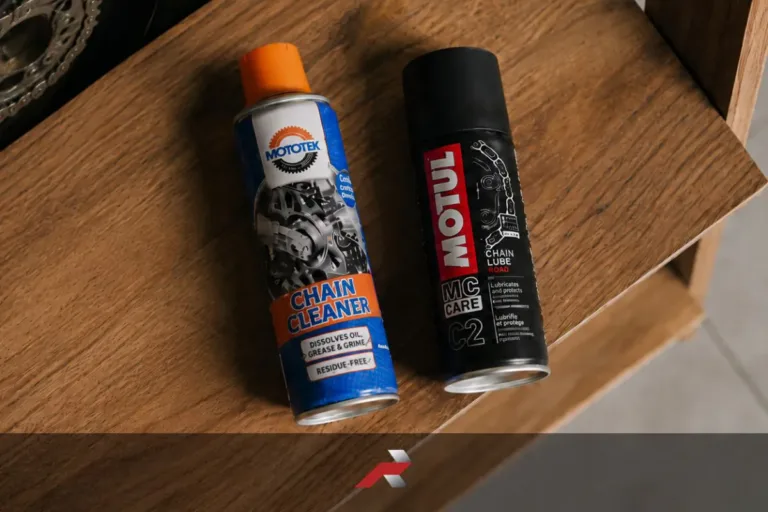
For riders looking for a proper cleaning solution, our Real World Chain Maintenance and Daily Riding Care Using D.I.D Chain Cleaner for Motorcycle Ownership Maintenance explains how chain cleaners help remove wet road grime safely without damaging O-ring and X-ring seals.
Now let us talk about method.
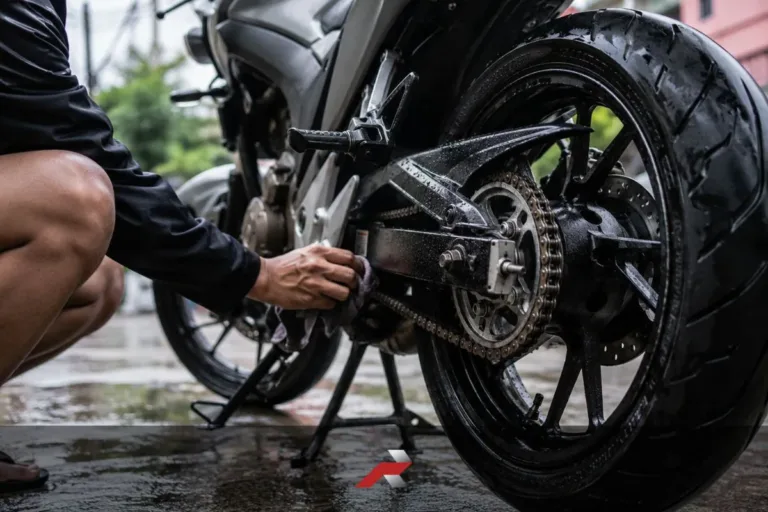
Use a paddock stand if possible. Rotate the rear wheel manually. Never clean with engine running. That shortcut causes injuries every year.
Step 1: Light rinse
Use low pressure water. The goal is removing loose debris, not blasting seals. High pressure washers damage O-rings.
Step 2: Apply dedicated chain cleaner
Avoid gasoline or harsh degreasers. These destroy rubber seals. Use motorcycle specific chain cleaner safe for O-ring chains.
Step 3: Soft brush agitation
Use a three sided chain brush. Gently scrub rollers and side plates. Focus on removing paste like buildup. Using a proper chain cleaning brush also speeds up maintenance, and Understanding Motorcycle Chain Maintenance Tools: Choosing the Oxford Gar Claw Brush for Regular Chain Cleaning and Preventive Maintenance shows why multi-sided brushes clean chains more efficiently than regular brushes.
Step 4: Wipe dry
Let the chain air dry fully before applying lubricant. Moisture trapped under lube causes corrosion.
This is where many riders rush.
Lubricating a wet chain seals in moisture. That speeds up rust formation internally.
After cleaning and drying, inspect tension. Rain exposure and fluctuating temperatures affect slack slightly. If you are unsure how proper slack affects drivetrain balance and overall riding control, review Riding Within Limits for Big Bike Control in the Philippines.
Wet season maintenance is not about perfection.
It is about consistency.
If you ride daily in Metro Manila during peak monsoon, weekly inspection becomes smart ownership. If you ride only weekends, post ride cleaning may be enough.
Chain Care During Rainy Season Philippines works best when it becomes a habit, not a reaction.
Chain Care During Rainy Season Philippines fails most often at the lubrication stage.
Cleaning is visible. Lubrication discipline is where longevity is decided.
Not all chain lubes behave the same under heavy rain and humidity. During monsoon months, you need a formula that resists water wash off but does not attract excessive grime.
If you are choosing a lubricant for wet riding conditions, Motul C2 Chain Lube Road as a Motorcycle Maintenance Choice for Daily Riding and Long Term Ownership explains how road chain lubes are designed to resist water wash-off while maintaining lubrication film on sealed chains.
Here is what matters:
Too thin and it washes away quickly.
Too thick and it traps debris.
Application timing also matters.
Best practice:
Apply chain lube after a ride, not before.
When the chain is warm, lubricant penetrates better into rollers and around seals. Then allow it to sit overnight. This gives time for solvents to evaporate and the protective film to settle.
Avoid spraying immediately before riding in rain. Fresh lubricant mixed with water becomes sling mess and reduces effectiveness.
How often?
In dry season, 500 to 700 km intervals may work.
During monsoon riding, especially daily commuting, relubrication every 300 to 400 km becomes safer practice.
Chain Care During Rainy Season Philippines requires shorter intervals because exposure frequency increases dramatically.
Do not wait for chain noise as a signal. Audible dryness means friction already increased.
Smooth throttle response and consistent driveline feel are early indicators of proper lubrication.
If your chain feels silent, stable, and consistent under acceleration, your maintenance rhythm is working.
Chain Care During Rainy Season Philippines becomes easier when maintenance follows a structured interval instead of guesswork.
Below is a practical interval guide tailored for Philippine riding conditions.
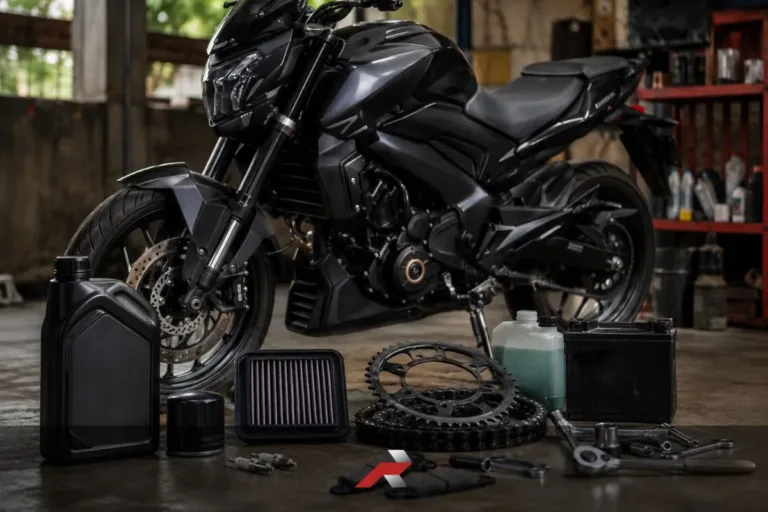
If you ride a midweight platform like the Dominar, you can also review our How to Maintain Your Kawasaki Dominar 400 Chain: Practical Tips for Longer Life for model-specific torque checks, slack adjustments, and lubrication practices under tropical conditions.
Rain exposure changes the cleaning rhythm. A chain that survives 800 kilometers in dry season may require attention every 300 to 500 kilometers during consistent wet riding. Flood contact demands immediate inspection regardless of mileage.
Lubrication intervals must tighten. Slack checks must become frequent. Surface rust must be addressed early before it penetrates rollers and side plates.
Structured intervals remove emotion from maintenance. Discipline replaces assumption.
| Riding Condition | Inspection Frequency | Cleaning Interval | Lubrication Interval | Notes |
|---|---|---|---|---|
| Daily Metro Manila Commute (Rain Exposure 4–5x/week) | Every 3–5 days | Weekly | Every 300–400 km | High humidity + traffic grime accelerate wear |
| Weekend Rider (Occasional Rain) | Before and after rides | Every 2 weeks | Every 400–500 km | Monitor for surface rust |
| Provincial Ride with Mud/Flood Contact | Immediately after ride | Same day | After full drying | Do not delay cleaning |
| Expressway Wet Riding | After long ride | Within 3 days | Every 300 km | High speed spray increases wash off |
| Stored Outdoor Parking | Weekly visual check | As needed | As needed | Humidity alone can trigger corrosion |
Why this matters:
This structured approach reduces:
Chain maintenance is not about obsessive cleaning. It is about environmental adaptation.
Chain Care During Rainy Season Philippines becomes predictable once exposure frequency is understood.
Instead of reacting to noise or rust, you maintain proactively based on riding pattern.
That is the difference between replacing a chain set at 15,000 km versus stretching it safely beyond 25,000 km under proper care.
Chain Care During Rainy Season Philippines often fails not because riders do nothing, but because they do the wrong things repeatedly.
Let’s correct the common mistakes.
First mistake: Using high pressure washers directly on the chain.
High pressure water forces moisture past O-rings and weakens seal integrity. Once internal grease escapes, chain stretch accelerates. Industry maintenance advisories consistently warn against aggressive washing methods.
Second mistake: Using gasoline as a degreaser.
Gasoline strips lubrication aggressively and damages rubber components. It looks effective because it dissolves grime quickly, but long term seal degradation is the tradeoff.
Third mistake: Overlubricating.
More lubricant does not mean better protection. Excess spray attracts dirt and forms grinding paste during wet riding. Balanced application matters more than volume.
Fourth mistake: Ignoring tight spots.
After heavy rain exposure, some chain sections feel tighter than others during rotation. This indicates uneven wear or contamination inside rollers. Ignoring this early sign leads to sprocket damage.
Fifth mistake: Delaying maintenance because the bike “still runs fine.”
Drivetrain damage builds gradually. You will not notice immediate failure.
Instead, you feel subtle changes:
Chain Care During Rainy Season Philippines requires earlier intervention compared to dry months.
Rain does not instantly destroy chains. It accelerates existing weaknesses.
If you clean correctly, lubricate with proper intervals, and inspect consistently, wet season riding does not need to shorten chain lifespan dramatically.
The goal is not perfection.
The goal is controlled wear.
Chain problems during wet months rarely start dramatic.
They begin subtle.
If you ride daily during monsoon season, pay attention to these early indicators:
These are not cosmetic issues.
They are mechanical signals.
After repeated rain exposure, lubrication breakdown happens faster. Once the protective film weakens, corrosion begins at microscopic levels. You may not see it immediately, but friction increases internally.
Another overlooked sign is sprocket tooth shape.
Healthy sprocket teeth look symmetrical. When they begin to hook forward like a wave, uneven chain wear is already happening.
Also check chain alignment.
Heavy rain combined with pothole impact can slightly shift rear axle adjustment if torque was not set properly.
Chain Care During Rainy Season Philippines demands observation discipline.
Five minutes of visual inspection weekly can prevent thousands of pesos in replacement cost.
Wet season riding is not the enemy.
Neglected inspection is.
When you treat warning signs early, drivetrain longevity remains controlled even under harsh Philippine weather.
Chain Care During Rainy Season Philippines also depends on the type of chain installed on your motorcycle.
Not all chains perform equally under high humidity and heavy rainfall exposure.
Most big bikes today use:
Standard chains are cheaper but lack sealed internal lubrication. Under Philippine monsoon conditions, they degrade significantly faster because water and grime penetrate internal moving parts directly.
O-ring and X-ring chains include rubber seals that retain factory grease between pins and bushings. These designs are more suitable for tropical environments because they reduce internal contamination.
However, seals are not invincible.
Improper cleaning methods and harsh chemicals shorten their lifespan. According to technical maintenance advisories published by Top Gear Philippines, proper drivetrain care significantly extends component durability in local riding conditions.
If you are upgrading chains, consider:
Chain Care During Rainy Season Philippines becomes easier when starting with the right hardware.
A high quality sealed chain combined with disciplined cleaning and lubrication reduces risk dramatically.
This does not mean buying the most expensive chain available.
It means selecting components appropriate for your riding frequency and weather exposure.
During monsoon season, sealed chains are not luxury upgrades.
They are smart investments.
Chain Care During Rainy Season Philippines does not end when you turn off the engine.
Where and how you park affects corrosion risk significantly.
Indoor parking with ventilation reduces moisture retention. Even if the bike gets wet during the ride, airflow helps surfaces dry naturally.
Outdoor parking exposes the chain to:
If indoor parking is unavailable, at least use a breathable motorcycle cover. Avoid fully sealed plastic covers that trap moisture inside.
After riding in heavy rain:
Moisture trapped overnight accelerates oxidation, especially on side plates and sprocket surfaces.
Five minutes of post-ride attention makes measurable difference.
If the motorcycle will not be used for two weeks or more during rainy season:
Chain Care During Rainy Season Philippines includes preventive steps during downtime, not only active riding.
Moisture does not pause just because you do.
Ignoring chain maintenance during monsoon months is not just a cosmetic risk.
It becomes a financial one.
A typical big bike chain and sprocket replacement set in the Philippines can cost:
That is significantly higher than the cost of:
Mechanical wear during rainy season compounds quietly. Once elongation exceeds service limit, adjustment will no longer compensate. Replacement becomes unavoidable.
Industry technical guidance from NGK highlights how preventive maintenance protects long-term engine and drivetrain performance, especially in demanding environments.
Chain Care During Rainy Season Philippines is not over maintenance.
It is financial discipline.
Preventive care spreads cost over time. Neglect concentrates cost into one painful replacement moment.
Ownership mindset determines which scenario you experience.
Chain Care During Rainy Season Philippines works best when it becomes automatic.
Maintenance should be deliberate.
It should be consistent.
It should never be panic driven.
Choose one consistent day weekly.
Five minutes is enough to:
Consistency beats intensity.
Rain hides damage.
Even if the chain looks clean, log your mileage. Relubricate based on distance and exposure, not just visible dirt.
Chain Care During Rainy Season Philippines relies on measurable rhythm, not guesswork.
The chain does not work alone.
It interacts with:
A smooth drivetrain supports safer wet riding control.
Rainy season is predictable every year in the Philippines.
Your maintenance discipline should be predictable too.
Clean based on exposure, not calendar days. If you ride daily in heavy rain or floods, clean weekly. If you ride occasionally in wet conditions, every two weeks may be enough. Always inspect after a heavy rain ride and adjust intervals depending on actual usage, not dry season habits.
Using a high pressure washer directly on the chain is not recommended. Strong water pressure can force moisture past O-ring or X-ring seals and weaken internal lubrication. Once the internal grease escapes, chain wear accelerates faster than expected. Low pressure rinsing combined with proper chain cleaner is the safer approach.
No. Rain strips away lubrication faster than dry riding. Even if the chain looks fine, internal surfaces may already be losing protection. Relubricating every 300 to 400 kilometers during frequent wet riding helps prevent friction, rust, and premature wear.
You should measure chain elongation using proper tools or consult a trusted mechanic. If adjustment reaches its limit and slack cannot be corrected, replacement becomes necessary. Visible hooked sprocket teeth and tight spots along the chain are also warning signs. Early inspection prevents sudden failure.
Rain alone does not automatically destroy sealed chains. However, repeated exposure combined with poor maintenance accelerates wear. O-ring and X-ring chains are designed to retain internal grease, but external contamination still affects rollers and seals. Proper Chain Care During Rainy Season Philippines can significantly reduce lifespan loss.
Chain Care During Rainy Season Philippines is not optional maintenance. It is environmental adaptation.
Philippine monsoon conditions expose motorcycle chains to water displacement, abrasive road grime, and persistent humidity. These factors accelerate lubrication breakdown, corrosion, and uneven chain wear if left unmanaged.
The solution is structured discipline.
Clean based on exposure, not appearance.
Lubricate at shorter wet-season intervals.
Inspect weekly for tight spots and rust.
Avoid high pressure washing and harsh chemicals.
Use sealed chains suited for tropical riding.
If you are unsure which sealed chain construction performs better in humid environments, our O-Ring vs X-Ring Motorcycle Chain: Which Is Better for Philippine Riding? explains how sealing design affects lubrication retention and contamination resistance under wet conditions.
When done consistently, Chain Care During Rainy Season Philippines protects:
Throttle smoothness
Sprocket lifespan
Fuel efficiency
Overall drivetrain cost
Rain does not automatically shorten chain life.
Neglect does.
Wet season riding in the Philippines is predictable every year. Riders who adjust maintenance timing accordingly avoid premature replacement expenses and maintain mechanical consistency.
Chain maintenance during monsoon months is not about obsession.
It is about control.
And control is what responsible big bike ownership is built on.
Featured photo by RobiMotoPH