Skip to content
Contact & Community
📍 Metro Manila, Philippines
🌐 robimotoph.com
✉️ hello@robimotoph.com
📱 +63 917 517 0594
📍 Metro Manila, Philippines
🌐 robimotoph.com
✉️ hello@robimotoph.com
📱 +63 917 517 0594

Postponed battery replacement often starts as a small delay. The bike still starts, so you let it pass. Over time, starting becomes slower, lights dim at idle, and the horn sounds weaker. These are early warnings that many riders ignore. A weak battery affects more than ignition. It impacts charging balance, lighting performance, and overall reliability. This guide explains how postponed battery replacement shows up in real riding, what patterns to watch after months of daily use, and how to decide between stretching battery life or replacing it before it leaves you stranded in traffic or late for work.
Postponed battery replacement does not usually start with a dead bike. It starts with a longer crank than usual. You press the starter, the engine turns slowly, but it still fires up, so you shrug and ride.
A few days later, the headlight dips slightly when idling. The horn sounds weaker. You tell yourself it can wait another month.
That is how postponed battery replacement usually unfolds. Not with sudden failure, but with small electrical warnings that build over time.
If you need a refresher on how your electrical system depends on stable voltage, revisit Motorcycle Battery: A Rider’s Essential Power Source efore going deeper. It grounds the basics so the warning signs make more sense.
The first sign of postponed battery replacement is rarely dramatic. It is subtle.
Instead of a sharp and confident crank, you hear a slower rotation. The engine turns, pauses for a split second, then catches. On a cold morning, it feels slightly labored.
You might blame the weather. You might assume the fuel level is low. In many cases, this is postponed battery replacement showing its first symptom. Voltage drops gradually before total failure occurs.
Before these warning signs escalate, review basic inspection routines in our Motorcycle Maintenance Guide to understand how charging discipline, grounding checks, and routine electrical inspections extend battery life.
Postponed battery replacement does not fail without notice. It sends signals through slow cranking, dimming lights, and inconsistent ignition behavior. Recognizing those early patterns prevents roadside breakdowns and unnecessary starting system stress.
This is the dangerous stage. The bike still starts. That gives you confidence.
However, each slow crank means the battery voltage is dipping lower than it should. Repeated low voltage starts stress the starter motor and relay. Over time, this creates a chain reaction of electrical wear.
Watch your instrument cluster during startup. If the display resets, flickers, or dims before stabilizing, voltage drop is happening. That drop means the battery can no longer deliver stable current under load.
In daily stop and go riding, repeated restarts amplify this weakness. Short trips do not give enough time for full recharge, especially if you ride in traffic with constant idling. Patterns like this mirror how repeated commuting habits reinforce mechanical stress in machines, similar to behavior reinforcement cycles tracked through Japan’s urban rider compliance system.
Traffic exposes battery weakness faster than long highway runs.
On open roads, steady RPM keeps the charging system active. In heavy traffic, you idle more. Cooling fans engage. Brake lights stay on. Signals blink constantly.
All of these draw current.
When stuck in slow traffic, the radiator fan switches on. If your battery is weak, you may notice the idle speed fluctuating slightly when the fan activates. That momentary strain shows limited reserve capacity.
Your turn signals may blink slightly slower at idle. The horn may sound thinner. These are not random quirks. They are voltage-related signs.
Postponed battery replacement shows itself through these small electrical compromises before it causes total failure.
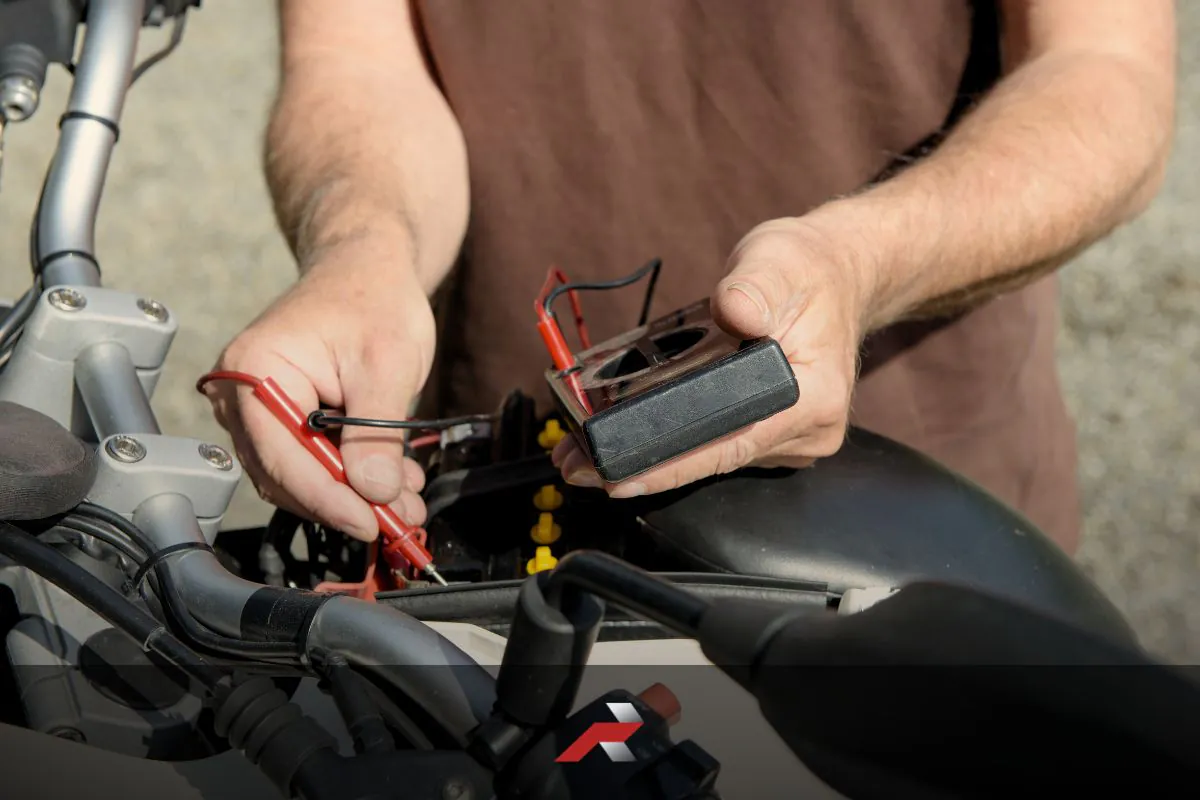
With a basic voltmeter, measure battery voltage before starting. A healthy fully charged unit should read around 12.6 volts. If it sits below 12.3 volts consistently, capacity is already declining.
Then check while idling. If voltage drops sharply when lights and fan operate, replacement planning should begin.
This is where most riders hesitate.
A new battery costs money. The old one still works. So you delay.
But think about your riding pattern.
If you are unsure which replacement type best suits your usage, review Motorcycle Battery Brands Comparison PH: Best AGM and Lead Acid Options for Filipino Riders to understand how AGM and lead-acid options perform under daily commuting, weekend riding, and heavy accessory loads.
Short rides with frequent stops do not fully recharge the battery. In this case, postponed battery replacement increases risk of sudden no-start situations at gas stations, parking lots, or office basements.
Even weekend riding has risk. Long parking periods allow natural discharge. When you finally start the bike, the battery faces a heavy load after days of inactivity.
Stretching battery life saves short-term cash. Replacing early saves time and stress.
If reliability matters more than squeezing extra months, replacing before total failure makes sense.
Below is a simplified reference table based on typical usage patterns.
| Battery Age | Common Riding Pattern | Typical Symptoms | Risk Level |
|---|---|---|---|
| 0 to 1 year | Daily or weekend use | Strong start, stable lights | Low |
| 1 to 2 years | Mixed short trips | Slight slow crank | Moderate |
| 2 to 3 years | Frequent traffic use | Flicker, weak horn | High |
| 3+ years | Irregular use | Hard starting, resets | Very High |
Age alone does not decide failure. Usage pattern matters more.
If your riding includes constant restarts and heavy electrical load, postponed battery replacement can show signs earlier than expected.
Small symptoms do not stay small.
Repeated low voltage starts strain the relay contacts. Over time, you may hear a clicking sound without engine turnover. At that stage, you may replace both battery and relay instead of just one component.
A weak battery forces the regulator and stator to work harder to maintain charge. While they are designed for regulation, unstable load patterns increase heat stress.
This does not mean immediate failure. It means gradual wear.
Modern motorcycles rely on stable voltage for sensors and fuel injection. Unstable supply can cause random dash resets or inconsistent idle behavior.
Postponed battery replacement often leads to misdiagnosis. Riders suspect fuel issues when the real cause is electrical weakness.
If your headlight slightly dims when revving at idle or when the brake is applied, do not ignore it.
For deeper insight into how lighting performance links to electrical health, see Weak Headlight Output Causes and Solutions for Daily Motorcycle Riding. Lighting problems often connect back to battery condition.
Let us talk practical numbers.
A standard motorcycle battery ranges depending on brand and type. It is a predictable expense. Installation is simple for most bikes.
Downtime is minimal. You replace it, test start, and ride.
If the battery fails unexpectedly:
Downtime becomes unpredictable. Stress increases.
Postponed battery replacement shifts control away from you. Replacing early keeps control in your hands.
It is not about fear. It is about reducing uncertainty.
High humidity and frequent wet conditions accelerate corrosion at terminals. If your battery is already weak, heavy rain months increase risk of sudden failure.
Clean terminals regularly. Apply dielectric grease lightly. Small prevention steps extend service life.
Most last between two to three years depending on usage and charging health. Heavy traffic riding shortens lifespan.
You can, but slow cranking and voltage dips indicate declining capacity. Waiting increases risk of sudden no start.
Not always. At low RPM, charging output may not fully replenish what was consumed during startup.
Over time, repeated low voltage starts can stress relays and increase charging system workload.
Replacing a failing battery on time reduces unnecessary roadside incidents and wasted component replacements.
RobiMotoPH
Postponed battery replacement rarely feels urgent until the day the engine refuses to turn.
The warning signs come early. Slower cranking. Dimming lights. Weak horn. Dashboard flicker.
You see them. You hear them.
The choice is simple. Either plan the replacement while the bike still runs fine, or let the battery decide the day it stops.
Ignoring early symptoms often leads to harder starting patterns and intermittent no-crank situations. If those issues are already appearing, review Hard Starting Issues: Causes and Practical Fixes for Dominar 400 Riders to understand how battery weakness affects ignition stability and starter performance.
On the road, reliability is quiet. When everything works as expected, you forget it is even there.
Keep it that way.