Skip to content
Contact & Community
📍 Metro Manila, Philippines
🌐 robimotoph.com
✉️ hello@robimotoph.com
📱 +63 917 517 0594
📍 Metro Manila, Philippines
🌐 robimotoph.com
✉️ hello@robimotoph.com
📱 +63 917 517 0594

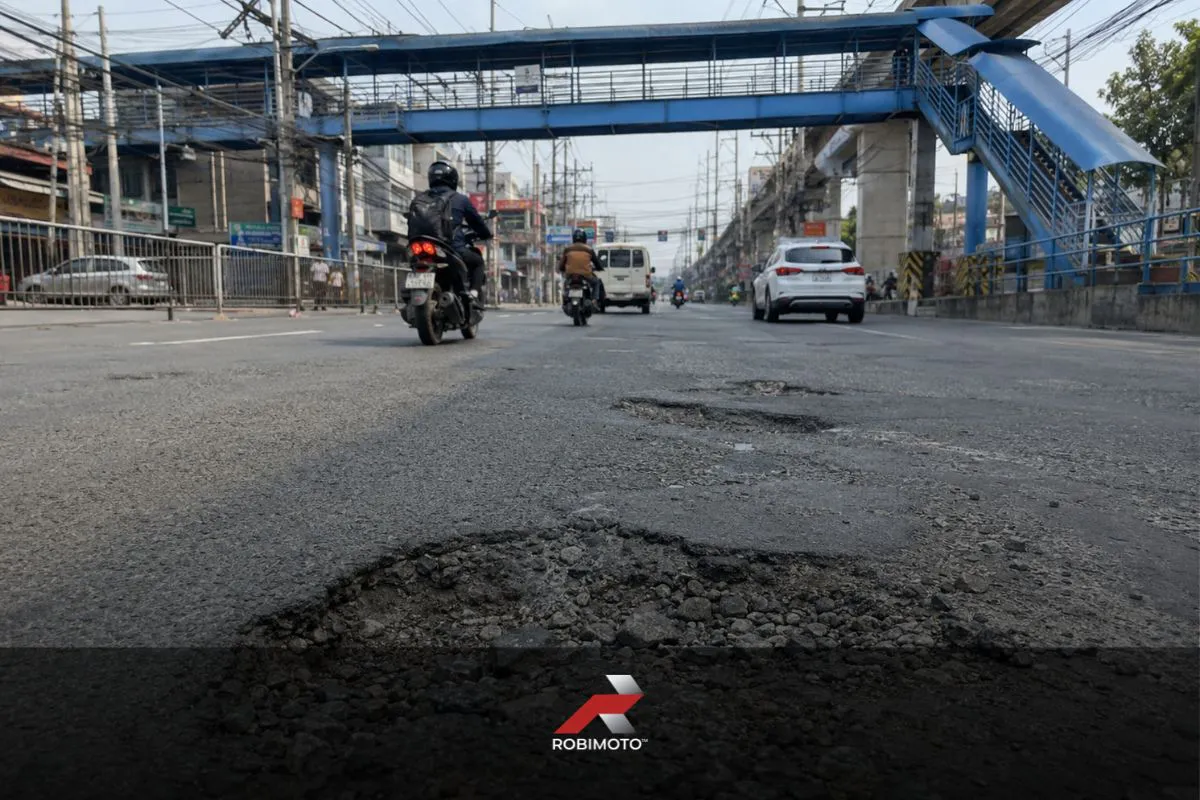
Motorcycle road safety in the Philippines cannot depend on riders alone. We are expected to keep our bikes roadworthy, wear proper gear, carry complete documents, and follow traffic rules. That responsibility is fair. But what happens when the road itself has deep potholes, loose gravel, poor lighting, flooding, or unfinished repairs without clear warnings? Even a careful rider can be caught off guard. This article looks at road safety as a shared responsibility among riders, authorities, contractors, and communities. If motorcycles are inspected before they are considered roadworthy, it is fair to ask: who makes sure our roads are safe?
Motorcycle road safety in the Philippines should not end with checkpoint inspections. Riders are expected to keep their motorcycles roadworthy, wear proper helmets, carry complete documents, and follow traffic rules. All of that is fair and necessary. But even a careful rider can be placed in danger by an unmarked pothole, loose gravel, poor drainage, or unfinished roadwork.
Bad roads are never an excuse for speeding, reckless overtaking, worn tires, or weak brakes. Riders still need to slow down, scan ahead, and adjust to changing conditions. Personal responsibility remains the first layer of protection. At the same time, it is fair to ask whether the road itself is safe enough for the vehicles using it every day.
RobiMotoPH has previously discussed how road conditions in the Philippines affect motorcyclists and why motorcycle safety requires personal commitment. This article brings those two discussions together. Road safety is not simply riders versus authorities. It is a shared responsibility involving motorcycle owners, enforcement agencies, road authorities, contractors, and local communities.
Sa biyahe, puwedeng maayos ang motor at maingat ang rider. Pero isang lubak na walang babala, puwedeng sumira sa buong araw.
Inspections should not stop after checking a motorcycle’s lights, tires, exhaust, registration, and rider equipment. Damaged roads must also be repaired. Excavations need proper barriers. Flood-prone sections require visible warnings. Missing signs and faded markings should not become normal parts of the daily commute.
The question is simple: if riders and motorcycles must be roadworthy, who ensures that the roads are safe enough to ride on?
Motorcycle road safety in the Philippines depends on more than checkpoints and vehicle inspections. Riders must maintain their motorcycles, follow traffic rules, and slow down when road conditions become uncertain. However, potholes, loose gravel, flooding, missing signs, and poorly secured roadworks can still put careful riders at risk. Road authorities and contractors must also inspect hazards, post visible warnings, and repair dangerous sections before someone gets hurt.
Motorcycle inspections matter because they help confirm that a bike meets basic safety and registration requirements. However, inspecting the motorcycle covers only one side of road safety. Even a compliant and well-maintained bike can be placed at risk by damaged pavement, poor drainage, missing warnings, or unsecured construction areas.
The Land Transportation Office requires motor vehicles to undergo roadworthiness inspection as part of the registration process. Checks may cover lights, brakes, tires, steering, suspension, emissions, and other safety-related parts. [1] These inspections are necessary because a mechanical problem can endanger the rider and other road users.
The rider’s responsibility also continues after registration. Tire pressure, brake condition, working lights, and regular servicing should be checked throughout the year. Our motorcycle maintenance guide for Philippine riders explains how traffic, heat, rain, and rough roads can speed up wear.
But the road itself must also receive proper attention. The Department of Public Works and Highways has guidelines for inspecting and repairing national roads, including procedures for addressing potholes. [2] The issue is not whether standards exist. The real question is whether dangerous sections are found, marked, and repaired before someone gets hurt.
🏍️
Key Analysis: A roadworthy motorcycle lowers the risk of mechanical failure, but it cannot protect a rider from every road hazard. Motorcycle road safety in the Philippines requires both the bike and the road to be properly maintained.
The answer is not to weaken motorcycle inspections. Roads, warning systems, repairs, and construction zones simply deserve the same level of attention.
Motorcycles react more quickly to sudden changes in the road because only two tires keep them balanced. A pothole, loose gravel, steel plate, uneven asphalt, or unfinished road edge can reduce grip and push a rider away from the intended line.
The risk becomes greater at night, during heavy rain, or when another vehicle blocks the rider’s view. A car may pass over a shallow pothole without much trouble. The same pothole can bend a motorcycle wheel, upset its balance, or cause the rider to lose traction.
Common road hazards include:
These hazards also explain why motorcyclists shift within their lane. It is not always reckless weaving. A rider may be avoiding broken pavement, oil, debris, drainage covers, or a hazard hidden behind another vehicle.
Scenario: Two riders approach the same pothole. The first sees it early and changes position smoothly. The second notices it late because a van blocks the view. Rider awareness matters, but a visible warning sign could have helped both riders prepare sooner.
Bad road conditions do not remove rider responsibility. Riders must still slow down, leave enough space, and look farther ahead. However, road authorities must also identify and mark dangerous sections before they become known accident spots.
Safer roads depend on everyone doing their part. Riders must maintain their motorcycles and adjust to changing conditions. Authorities must inspect dangerous sections, enforce safety standards, and make sure hazards are repaired or clearly marked before someone gets hurt.
| Responsible Party | Main Safety Duty |
|---|---|
| Riders | Maintain the motorcycle, wear proper gear, and ride within safe limits |
| Enforcement agencies | Check compliance fairly and focus on genuine safety risks |
| Road authorities | Inspect, repair, mark, and monitor dangerous road sections |
| Contractors | Secure work zones and install visible barriers and warnings |
| Communities | Report hazards with clear photos and exact location details |
Reporting a road hazard also requires useful information. Saying only “may lubak dito” may not be enough for authorities to locate the problem. Include the nearest landmark, lane, direction of travel, date, and a clear photo taken from a safe position.
PRO TIP
Never stop in an active or exposed lane just to photograph a pothole. Move somewhere safe first, then record the location and other details.
This should not become a blame game between riders and government agencies. Riders cannot demand safer roads while ignoring worn tires, faulty lights, or reckless behavior. At the same time, authorities cannot place the entire burden on riders while dangerous road sections remain unmarked or unrepaired.
The goal is simple: reduce preventable risks involving both the motorcycle and the road beneath it.
Motorcycle road safety in the Philippines should never be treated as the rider’s responsibility alone. Riders must keep their motorcycles roadworthy, follow traffic rules, and adjust their speed to actual road conditions. Road authorities and contractors must also find hazards early, repair damaged sections, and install clear warnings before someone gets hurt.
🏍️
Rider Insight: Defensive riding helps us avoid danger, but it should not become the permanent answer to potholes, flooding, poor lighting, and unfinished roadwork.
This is not a call to remove checkpoints or weaken vehicle inspections. Those measures still matter. The point is that motorcycles and roads should receive the same serious attention because both can determine whether a rider gets home safely.
One careful rider may avoid a pothole today. Tomorrow, another rider may not see it because of rain, darkness, or a vehicle blocking the view. Reporting hazards matters, but reports must also lead to visible warnings, proper repairs, and clear accountability.
The discussion should move beyond blaming riders or authorities. Safer Philippine roads require disciplined riders, roadworthy motorcycles, responsible contractors, alert communities, and government agencies that act before dangerous conditions become normal.
Which dangerous road condition in your area has remained unresolved, even after people reported it?
[1] Land Transportation Office. “Rules and Regulations in the Inspection of All Motor Vehicles.” https://lto.gov.ph/wp-content/uploads/2023/10/MC-2020-2240.pdf
[2] Department of Public Works and Highways. “Guidelines on the Maintenance of National Roads.” https://www.dpwh.gov.ph/dpwh/sites/default/files/issuances/do_047_s2024.pdf
Featured image: Editorial composite image created for RobiMotoPH.