Skip to content
Contact & Community
📍 Metro Manila, Philippines
🌐 robimotoph.com
✉️ hello@robimotoph.com
📱 +63 917 517 0594
📍 Metro Manila, Philippines
🌐 robimotoph.com
✉️ hello@robimotoph.com
📱 +63 917 517 0594

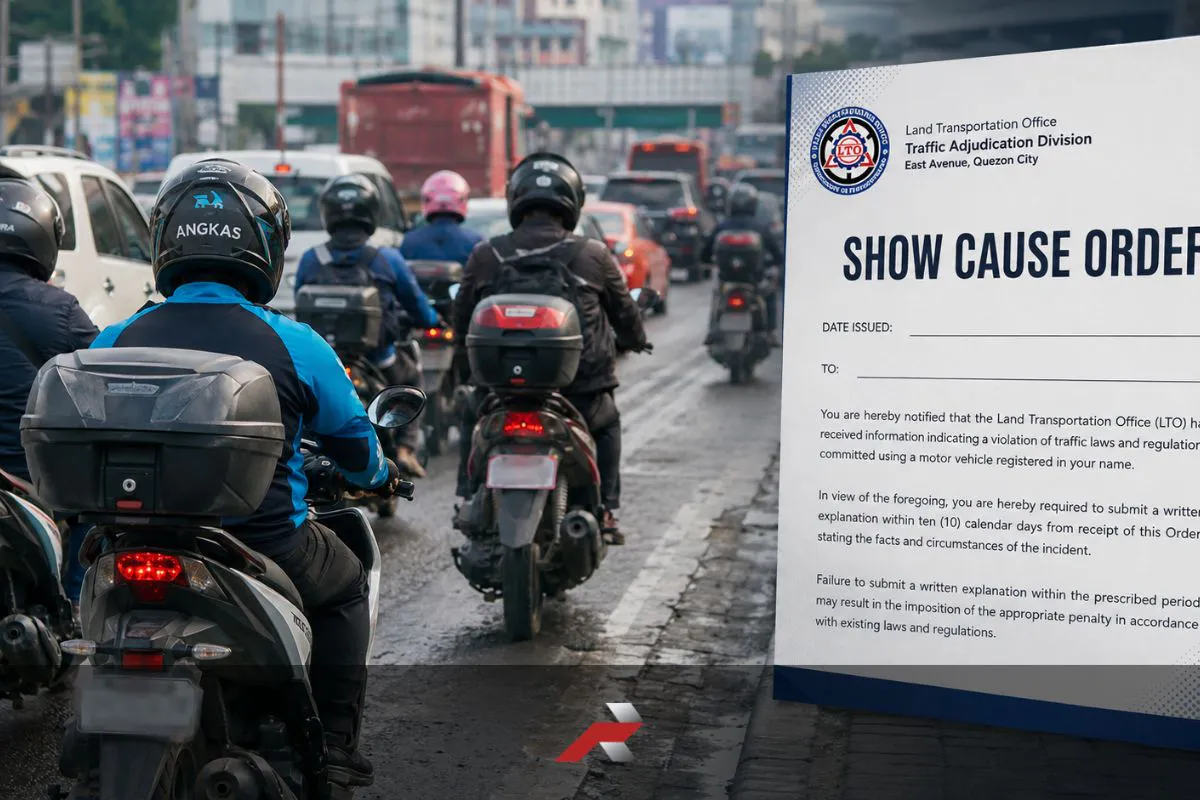
An LTO Show-Cause Order can feel intimidating, especially when it comes after a viral ride video, road rage issue, or online complaint. For Filipino riders, the safest response is not panic, denial, or public arguments. It is to understand the notice, check the details, prepare documents, and respond through the proper channel. This guide explains what riders should do first, what mistakes to avoid, and when to seek legal or official guidance. It also reminds motovloggers that public content can affect their license, reputation, and credibility. Ride smart, respond calmly, and protect your name.
An LTO Show-Cause Order is an official notice asking a rider, driver, or registered owner to explain a possible violation. It does not automatically mean guilt, but it should never be ignored. Recent reports show that LTO has issued show-cause orders involving vloggers, viral road rage videos, and traffic-related content posted online. [1]
The practical response is simple. Read the notice, check the deadline, prepare your documents, and avoid making the issue worse online. If the allegation is serious, do not rely only on comments from friends or group chats.
For the broader explanation of Online Huli, viral rider videos, and how LTO show-cause orders differ from normal apprehension, read this complete rider guide before responding.
The first move after receiving an LTO Show-Cause Order is to read it carefully. Check the name, plate number, vehicle details, alleged violation, date, place, required action, and deadline.
Some riders panic first and understand later. That is risky. A show-cause order is about explanation, so your response should begin with facts. Do not assume everything in the notice is correct, but do not dismiss it either.
Look for these details:
If the notice came from a viral video, check whether the video clearly shows the rider, vehicle, plate, road, and behavior involved. Reports involving vloggers show that public posts can trigger official action when they appear to show traffic violations or unsafe road behavior. [2]
🏍️
Rider Insight: Huwag agad mag-post ng “fake news” or “bashers lang yan.” Kapag official notice na, facts first. Emotion later, kung kailangan pa.
After checking the notice, prepare your documents. At minimum, riders should usually organize a valid driver’s license, OR/CR, valid ID, copy of the notice, and any relevant proof connected to the ride or vehicle.
If someone else used the motorcycle, prepare a clear explanation. If the video lacks context, write the context calmly. If the issue involves road rage, overspeeding, reckless driving, or unsafe behavior, avoid jokes and excuses.
Your explanation should be factual. Do not write like you are replying to a troll. Write like a person who understands that a government office is asking for a formal answer.
A simple structure can help:
If you are unsure how to respond, it is safer to ask help from someone who understands traffic cases or consult the proper office. For riders contesting an alleged violation, this traffic violation guide can help you understand where to start.
One of the worst things a rider can do after receiving an LTO Show-Cause Order is to turn the issue into a public drama. Posting emotional statements, attacking critics, or uploading more clips may make the situation bigger.
This matters more for motovloggers. A public page is not just a diary. It is also a record of how the creator responds under pressure.
In some reported cases, vloggers faced stronger consequences after ignoring show-cause orders or being linked to multiple traffic-related issues. ABS-CBN reported that vehicles of two vloggers were impounded after they allegedly ignored show-cause orders and other violations. [3]
That does not mean every case will end the same way. However, it shows why riders should take the process seriously.
🏍️
Rider Insight: Kapag may official issue, hindi lahat dapat gawing content. Minsan ang pinaka-mature na move ay manahimik muna, ayusin ang dokumento, at sumagot sa tamang proseso.
Some show-cause orders are more serious than others. A simple clarification is different from an issue involving reckless driving, road rage, injury, repeated violations, or public endangerment.
If the notice mentions possible suspension, revocation, vehicle alarm, or administrative charges, treat it as serious. In one reported case involving a motovlogger, Top Gear Philippines noted that the LTO issued a show-cause order requiring the rider to explain why her license should not be suspended or revoked. [4]
That kind of language should not be handled casually.
If you are only confused, ask the concerned office for clarification. If the case may affect your license or livelihood, seek legal guidance. This is especially important for riders who use their motorcycle daily for work, family duties, commuting, business, or content creation.
Your license is not just plastic. It is mobility. Treat it like something worth protecting.
After responding, the next step is prevention. An LTO Show-Cause Order should make riders review their posting habits.
Before uploading ride videos, check the footage carefully. Does it show speed overlay? Is the plate visible? Does the caption sound like bragging? Can the road be identified? Does the clip show behavior that may look unsafe outside your riding circle?
Motorcycle content should build trust, not risk. Riders can still create strong videos without flexing maximum speed, road rage, risky overtakes, or public-road racing.
Sa totoo lang, mas mahirap gumawa ng responsible content. Mas madali ang viral. Pero kung long-term ang goal, credibility wins.
For related rider context, this motovlogger road rage case shows how one public issue can affect both enforcement attention and online reputation.
An LTO Show-Cause Order is an official notice asking a rider, driver, or registered owner to explain a possible violation. It is not automatic guilt, but it requires proper attention.
No. Ignoring it may create bigger problems, especially if the notice has a deadline or requires appearance. Read it carefully and respond through the proper channel.
Prepare your driver’s license, OR/CR, valid ID, copy of the notice, and any supporting proof related to the vehicle, rider, or incident.
Not always. However, if the issue may involve suspension, revocation, road rage, reckless driving, injury, or serious penalties, legal guidance is safer.
Deleting the video may reduce attention, but it may not erase screenshots, downloads, reports, or copies. Avoid making sudden moves without understanding the issue.
Yes, depending on the facts and result of the process. Some publicized cases involving vloggers included license-related actions or stronger enforcement consequences.
You can, but it may not help. If the issue is active, avoid emotional public statements. A calm official response is safer than a noisy comment-section defense.
[1] Inquirer. “LTO warns vloggers breaking traffic rules for video content.” https://newsinfo.inquirer.net/2219236/lto-warns-vloggers-breaking-traffic-rules-for-video-content
[2] Philippine News Agency. “LTO summons vlogger over multiple traffic violations.” https://www.pna.gov.ph/articles/1264619
[3] ABS-CBN News. “LTO impounds two vloggers’ vehicles for allegedly ignoring show-cause orders.” https://www.abs-cbn.com/news/nation/2026/4/20/two-vloggers-vehicles-impounded-for-allegedly-ignoring-lto-orders-1525
[4] Top Gear Philippines. “Moto vlogger Yanna issued a show cause order by LTO.” https://www.topgear.com.ph/news/motoring-news/lto-show-cause-order-yanna-motovlogger-a5361-20250502