Skip to content
Contact & Community
📍 Metro Manila, Philippines
🌐 robimotoph.com
✉️ hello@robimotoph.com
📱 +63 917 517 0594
📍 Metro Manila, Philippines
🌐 robimotoph.com
✉️ hello@robimotoph.com
📱 +63 917 517 0594


“Where can you contest an alleged traffic violation?” — a question thousands of Filipino drivers ask every month. With the rise of NCAP and stricter road monitoring, understanding your rights is essential. Whether you ride in Metro Manila or in the provinces, knowing which office handles your case and how to proceed can save you stress, time, and money. This guide breaks down what it means to contest, where you can legitimately bring your case, the step-by-step process riders should follow, common mistakes to avoid, and why doing this properly fits into a responsible riding culture.
“Where can you contest an alleged traffic violation?” — a question thousands of Filipino drivers ask every month. With the rise of NCAP and stricter road monitoring, understanding your rights is essential. Across Metro Manila to Mindanao, riders and motorists alike face notices. In this article we’ll walk through the meaning of “contest”, the places you can take your case, how to do it step-by-step, mistakes to avoid, and why it matters—not just for you but for the riding community at large.
Contest does not mean simply refusing to pay your ticket and hoping nothing happens. Instead, it means you formally request due process: you ask the relevant adjudicating body to review the citation, you submit your evidence, you attend a hearing (if required), and you await a decision. Under Land Transportation Office (LTO) rules the hearing body has quasi-judicial powers.
When you contest a ticket as a rider, you honour accountability—but you also demand fairness. From a sustainability / community perspective, this builds transparency in the system and helps raise standards of enforcement across the board.
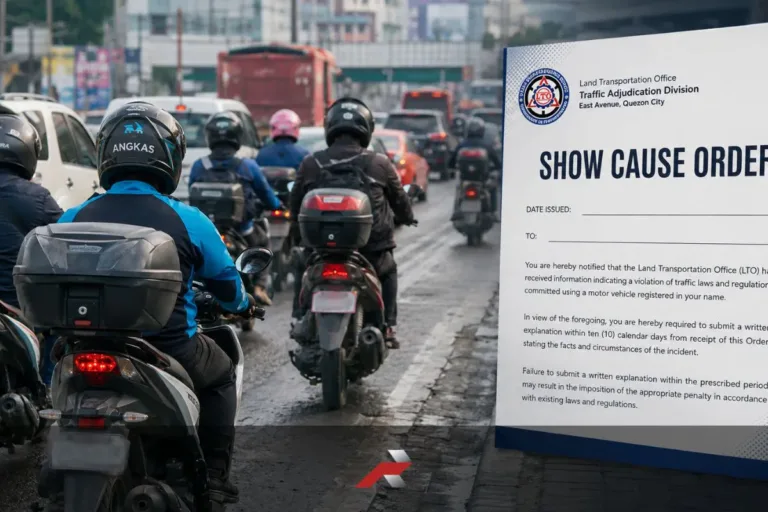
If your citation was issued by or falls under the LTO’s jurisdiction (for example moving violations, plate or licence issues under RA 4136) you will contest it via the LTO’s Traffic Adjudication Service (TAS) or its district/regional offices. The LTO’s “Rules of Procedure in the Adjudication of Land Transportation and Traffic Cases” apply. You’ll find that within Metro Manila the central office handles many contested cases.
For violations issued by the Metropolitan Manila Development Authority (MMDA) under the No Contact Apprehension Policy (NCAP) and other enforcement in Metro Manila, you contest with MMDA’s Traffic Adjudication Division (TAD). Their “May Huli Ka” portal clearly states you may file a contest within 10 working days.
Keep in mind: If your violation is under the NCAP and was caught on camera rather than with a physical ticket, the channel may differ.
Many cities or municipalities outside Metro Manila have local traffic enforcement and adjudication boards. For example, the Quezon City Government site outlines how to submit your ticket and complaint to the city’s Traffic Adjudication Board.
Since processes vary by LGU, you’ll want to check the city/municipality website or go in person to know the steps.
An increasingly used option is the online filing system. For example, the May Huli Ka portal allows motorists to check and contest violations online. Online channels match the digital age—so you can file a formal contest without always needing to stand in line.
Here’s a friendly rider-ready checklist when you ask where can you contest an alleged traffic violation and want to act:
Table: Summary of key deadlines & actions
| Step | Action | Time Limit* |
|---|---|---|
| Gather ticket & evidence | From apprehension date | Immediately |
| File contest letter | To correct adjudication body | ~10–15 working days |
| Attend hearing | When scheduled | Per notice |
| Receive decision | After hearing or review | Varies |
| File reconsideration (if needed) | After decision | ~5 working days (LTO) |
*Deadlines vary by agency—always check your citation or official source.
When riders ask where can you contest an alleged traffic violation and then mess up, it’s often due to avoidable mistakes. Here are four you’ll want to sidestep:
When you ride with awareness, you’re not just defending yourself—you’re contributing to a culture of fairness and accountability in the motorcycling community.
You might ask: “Why bother contesting if I might just pay the fine and move on?” Here’s the deeper angle. When you correctly navigate where you can contest an alleged traffic violation you’re exercising your rights. You’re also helping raise standards for all riders: showing that citations aren’t automatically unchallengeable, that evidence matters, and that enforcement will be held to due process.
Riders Taking Power Back—Transparent Traffic Justice for All.
By contesting violations properly, riders set a precedent for fairness on the road. It strengthens trust between motorists and authorities—and shows that the riding community values discipline and due process as much as freedom.
Use a reliable motorcycle dashcam and back up your clips after every ride. Keeping at least a week’s worth of footage can save you from unfair citations and strengthen your case if you ever need to contest a ticket.
Understanding where can you contest an alleged traffic violation in the Philippines is more than just avoiding fines—it’s about promoting fair enforcement and responsible riding culture in the Philippines. Know the right office, act within deadlines, bring your proof, and you’ll turn a stressful ticket into an opportunity: for yourself, your ride, and your community.