Skip to content
Contact & Community
📍 Metro Manila, Philippines
🌐 robimotoph.com
✉️ hello@robimotoph.com
📱 +63 917 517 0594
📍 Metro Manila, Philippines
🌐 robimotoph.com
✉️ hello@robimotoph.com
📱 +63 917 517 0594

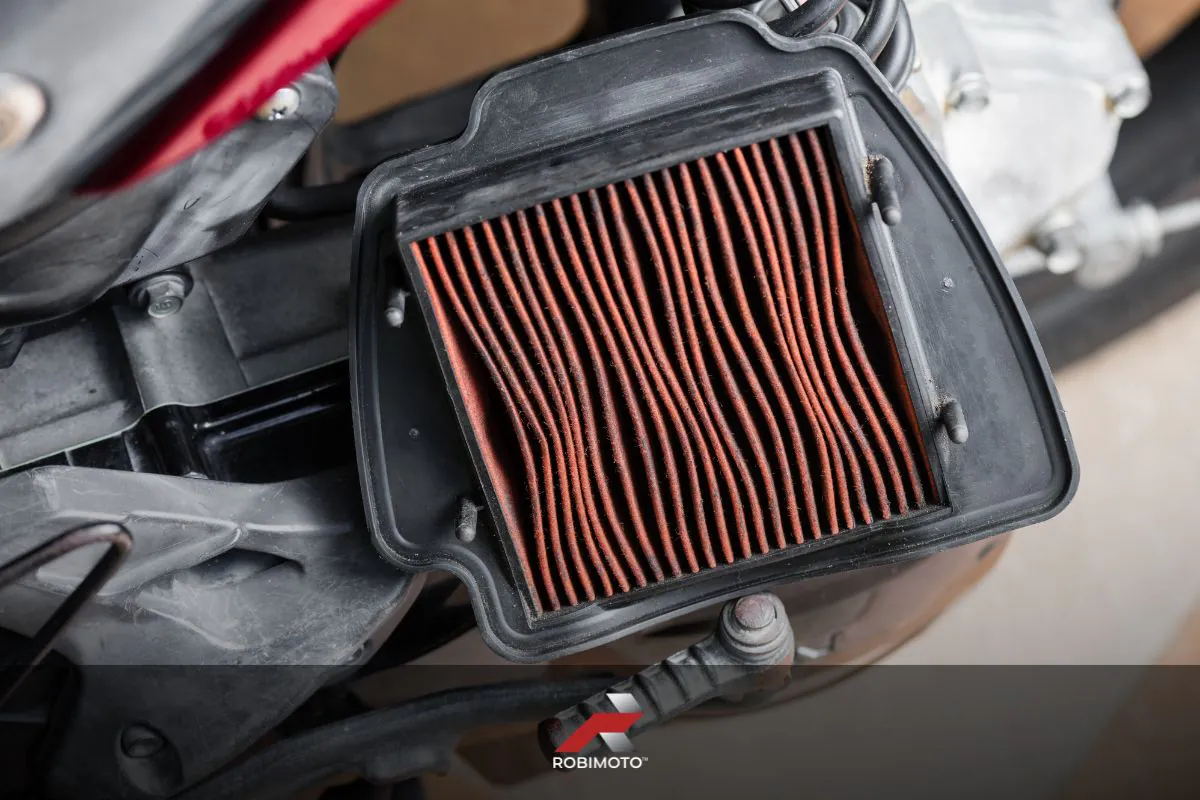
Many riders think an air filter can wait until the next service. In city traffic, stop-and-go rides, and daily commuting, that delay slowly shows up in fuel consumption. The bike still runs, so nothing feels urgent. But over time, throttle response changes, mileage drops, and refueling becomes more frequent. This usually happens without warning lights or clear signs. Delayed air filter replacement and fuel economy loss often go together, especially for bikes used every day. This article looks at how it shows up in real riding, what riders usually notice late, and how small timing decisions quietly affect ownership costs.
Delayed air filter replacement is a common reason riders experience fuel economy loss without realizing it. Many assume that if the engine still pulls, the air filter is fine. That belief is common, especially during daily use in traffic where fuel changes are easy to blame on congestion or riding style. A broader perspective found in the Motorcycle Maintenance Guide explains why airflow health is foundational to efficiency, combustion balance, and long-term performance.
Fuel economy loss from delayed air filter replacement usually creeps in quietly. The bike does not stall or misfire. It simply starts consuming more fuel over time. This shows up often in city riding, where dust, heat, and short trips stack up faster than expected.
The insights here come from real rider use and shop conversations. The value is simple. Help daily riders recognize patterns earlier so decisions feel clearer, not reactive.
Many riders only notice the issue at the gas station. The usual full-tank distance gets shorter. The riding route stays the same, but the refill comes sooner.
In heavy traffic, a partially clogged air filter restricts airflow. The engine compensates by adding more fuel. There is no dramatic symptom. Throttle still responds. Idle feels normal. Yet fuel consumption slowly increases.
This is common for motorcycles used daily in Metro Manila or similar cities. Dust, road grime, and heat build up faster than expected. Riders who follow general service intervals sometimes miss this because usage conditions are harsher than the manual assumes.
This pattern fits with a practical riding reference found in a real-world ownership situation discussed in Poor Fuel Consumption Causes in City Riding Every Daily Rider Should Understand, where everyday traffic conditions quietly increase fuel demand even when the motorcycle feels mechanically fine.
Stop-and-go riding means the engine breathes constantly at low speeds. Heat rises but airflow stays limited. The air filter traps more fine dust in this situation.
Short trips also matter. The bike rarely reaches steady cruising conditions. Moisture and dirt do not burn off as cleanly. Over weeks, the filter loads up faster than expected.
Daily routes often pass roadworks. Even if the bike looks clean, fine dust enters the intake. Riders who commute the same roads daily tend to overlook this because nothing feels different immediately.
Fuel economy loss from delayed air filter replacement usually appears after weeks, not days. That delay makes the cause harder to spot.
After a PMS or quick service, ask the mechanic to show the air filter before reinstalling it, even if replacement is not scheduled, and take note of its color and texture so you have a visual baseline for the next visit.
Some riders replace the air filter early. Others stretch usage to save on parts. Both choices come with trade-offs.
Replacing early restores airflow and fuel balance sooner. The downside is higher parts cost over time, especially for paper filters.
Stretching usage saves money short-term. However, fuel consumption often rises quietly. Over several tanks, that added fuel cost can offset the savings.
Many riders decide based on riding frequency. Daily commuters feel the effect sooner than weekend riders. A rider discussion documented by a local forum community often reflects this balancing act, especially in urban use, as seen in conversations shared on Motorcycle Philippines.
There is no single correct choice. The key is knowing what you trade when delaying replacement.
| Riding Pattern | Filter Condition | Fuel Use Trend | Typical Rider Reaction |
|---|---|---|---|
| Daily city commute | Partially clogged | Gradual increase | Blames traffic first |
| Mixed city and highway | Moderately dirty | Slight increase | Notices later |
| Weekend only | Lightly dirty | Stable | Delays replacement |
| Dusty route exposure | Heavily loaded | Noticeable rise | Replaces after drop |
Numbers vary by bike and route. The pattern stays similar across many models.
After several months, patterns become clear. Riders notice they refuel more often. The bike feels slightly heavier off the line. Throttle input increases without obvious gain.
Many riders then replace the air filter and feel the change immediately. Fuel economy improves. Throttle feels lighter. This leads to the realization that the loss happened slowly, not suddenly.
A common mistake is assuming fuel economy loss is normal aging. In reality, delayed air filter replacement is often part of the story. Long-term ownership references from international riding coverage, such as practical maintenance observations shared by Motorcycle News, often point to airflow neglect as a silent factor in efficiency loss.
Fuel cost is only part of the picture. More frequent refueling takes time. Daily riders feel this quickly.
There is also downtime risk. A heavily clogged filter can lead to rough running during hot conditions. Riders may schedule an unscheduled service just to regain normal behavior.
Replacing the air filter earlier usually takes minutes. Delaying it can lead to extra shop visits later. For riders balancing work and family schedules, that convenience gap matters more than the part price itself.
If fuel consumption rises but riding habits stay the same, delay your next refuel by one day after replacing the air filter and observe whether the range returns before assuming deeper engine issues.
Yes. Restricted airflow forces the engine to adjust fuel delivery to maintain combustion balance. In daily city riding, this often results in gradual fuel consumption increase without obvious performance problems.
Often no. Most riders do not notice dramatic throttle changes. The engine still pulls normally, but fuel range shortens over time, making the issue more visible at refueling than during acceleration.
Safe intervals depend on riding conditions. Daily city use with dust, heat, and traffic shortens service life significantly compared to occasional weekend riding on cleaner, open highways.
It depends on filter type. Reusable filters can be cleaned and re-oiled properly. Standard paper filters, once heavily loaded with debris, perform best when fully replaced rather than cleaned.
No. It corrects airflow-related efficiency loss, but fuel economy also depends on riding style, tire pressure, engine condition, traffic patterns, and overall maintenance consistency.
Replacing an air filter closer to actual city usage reduces unnecessary fuel burn and avoids extra shop visits caused by slow-building efficiency loss.
RobiMotoPH
Delayed air filter replacement and fuel economy loss rarely feel urgent. The bike keeps running. Traffic stays the same. Nothing dramatic happens. Yet over time, small efficiency drops quietly compound.
Daily riders benefit most from noticing patterns early. Not to rush decisions, but to avoid guessing later. Airflow restriction does not always cause misfires. Sometimes it first shows up as subtle fuel increase or slight idle instability.
For riders experiencing small changes in smoothness or traffic behavior, revisit Rough Idle Problems in Daily Riding Explained for City Motorcycle Use to understand how airflow, combustion balance, and daily riding conditions connect.
Calm observation protects efficiency.
Timely maintenance protects cost.