Skip to content
Contact & Community
📍 Metro Manila, Philippines
🌐 robimotoph.com
✉️ hello@robimotoph.com
📱 +63 917 517 0594
📍 Metro Manila, Philippines
🌐 robimotoph.com
✉️ hello@robimotoph.com
📱 +63 917 517 0594

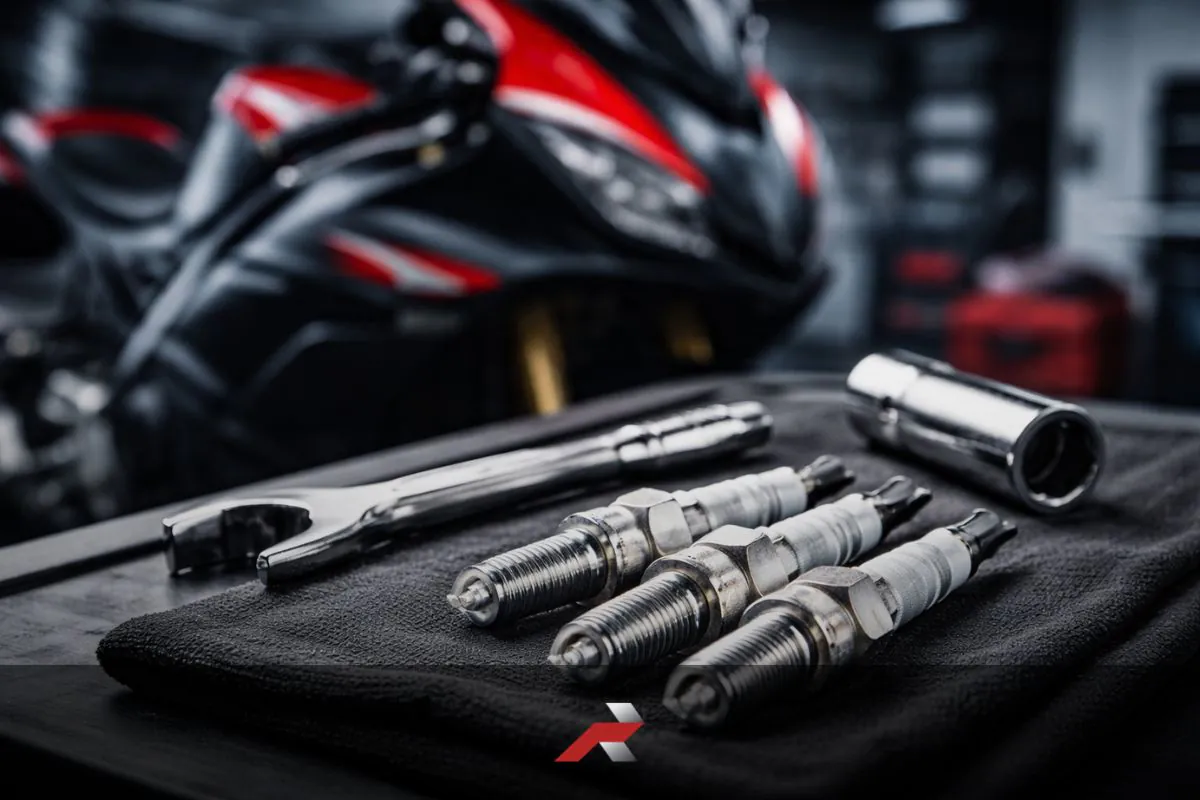
Is a spark plug upgrade worth it for big bikes in the Philippines? Many riders assume changing from stock to iridium or performance plugs instantly adds power. The truth is more technical. This guide breaks down ignition theory, combustion efficiency, throttle response, fuel economy, and real-world ownership cost. We analyze when upgrading makes sense and when it is just marketing hype. Whether you ride daily in city traffic or cruise on expressways, this deep dive will help you decide based on logic, not trends.
Spark Plug Upgrade Worth It is a durability question, not a horsepower question.
For most stock 400cc to 900cc motorcycles in the Philippines, upgrading from standard nickel to iridium does not produce significant power gains. What it improves is ignition consistency, electrode lifespan, and long-term reliability under heat and traffic conditions. Riders who understand this distinction usually approach upgrades from a maintenance perspective rather than a performance myth, the same mindset emphasized in a broader Motorcycle Maintenance Guide that explains why foundation care matters more than bolt-on hype.
That distinction matters.
A spark plug performs one function: it ignites the compressed air-fuel mixture inside the combustion chamber. It does not increase compression, modify fuel mapping, or alter engine timing. Those parameters ultimately define your power output.
So when does upgrading make sense?
It makes sense when:
It makes less sense when:
Philippine riding conditions introduce additional stress. High humidity, stop-and-go traffic, and repeated heat cycles accelerate component wear. In those environments, material durability becomes relevant.
But performance claims must stay realistic.
If your motorcycle already:
Then the plug is not limiting engine output.
For riders who want deeper understanding of ignition-related maintenance decisions, review Motorcycle Battery Brands Comparison PH because electrical health often gets misdiagnosed as spark plug weakness.
This article breaks down combustion theory, cost analysis, climate impact, and ownership logic so you can decide based on mechanical reasoning, not trends.
Spark Plug Upgrade Worth It depends on application, not hype.
Before answering whether a Spark Plug Upgrade Worth It makes sense, you need to understand what the spark plug actually does inside your engine.
The spark plug does not increase engine output.
It cannot unlock hidden horsepower.
Its sole purpose is to ignite the air-fuel mixture precisely.
Let’s break it down properly.
Every time your piston reaches the top of the compression stroke, the plug fires. That spark must be:
Modern 400cc to 900cc bikes use ECU-controlled ignition timing. The system already optimizes spark advance based on RPM and throttle input. Changing the plug does not change timing. It only influences spark quality.
If combustion is already efficient, gains will be small.
Stock plugs usually use nickel alloy electrodes.
Upgraded plugs use:
Iridium is harder and resists wear longer. That means:
But here is the reality check: durability is not the same as increased power.
You get longer service life, not guaranteed horsepower.
Spark strength becomes critical when:
For stock daily bikes in city traffic, ignition stress is moderate. For tuned engines, track use, or aggressive riding, ignition demands increase.
So the real question is not “Is upgrading cool?”
It is:
Is your current plug limiting performance?
If not, you are replacing something that is already doing its job.
Spark Plug Upgrade Worth It becomes a serious question once riders start chasing smoother throttle and better fuel economy. The problem is this: many riders upgrade before diagnosing whether there is even a performance bottleneck.
Let’s separate expectation from mechanical truth.
On a stock, well-maintained 400cc to 900cc motorcycle, upgrading from standard nickel to iridium rarely produces measurable horsepower gains. Dyno tests across multiple platforms typically show changes within margin of error, often less than 1 percent.
Why?
Because the engine already burns the mixture efficiently with a properly gapped stock plug. If combustion is complete, there is no extra power left to unlock.
A stronger spark does not create more fuel.
It only ensures the existing mixture ignites consistently.
If your bike:
Then your plug is not restricting performance.
This is where confusion happens.
Many riders report “better throttle response” after upgrading. In some cases, that is real. In others, it is psychological reinforcement because you installed a performance part.
Here is what actually changes:
A fine-wire iridium electrode requires less voltage to fire. That can result in more stable ignition under high load or high RPM. The effect feels like smoother delivery, especially on older coils.
But smoother is not the same as stronger.
You may feel refinement. You will rarely feel a dramatic power jump.
Metro Manila traffic involves:
In these conditions, plug upgrades can help maintain combustion stability over longer service intervals. However, fuel savings are typically minimal if your old plug was still healthy.
If your plug was worn, carbon-fouled, or beyond service interval, replacing it restores efficiency. That is maintenance. Not performance enhancement.
The honest conclusion at this stage:
Spark plug upgrades improve consistency and longevity more than raw output.
If your goal is reliability, yes it may be worth it.
If your goal is noticeable horsepower, manage expectations.
Before deciding anything, look at ownership economics.
A standard nickel spark plug for most 400cc–900cc bikes in the Philippines costs around ₱250 to ₱400. An iridium plug can range from ₱600 to ₱1,200 depending on brand and source.
That is easily 2x to 3x the price.
Now ask the right question:
Are you paying for performance, or paying for lifespan?
Nickel plugs usually require replacement every:
Iridium plugs can last:
For a rider who covers 8,000 km per year, that difference matters. For someone riding only on weekends, the financial advantage shrinks.
Longevity is the primary value proposition.
Here is a common mistake.
Riders delay replacing worn plugs. The engine becomes slightly rough. Throttle feels inconsistent. Cold starts worsen.
Then they install iridium.
The bike suddenly feels smoother.
They credit the material upgrade.
In reality, they replaced a worn part with a fresh one.
That improvement is restoration, not enhancement.
This is the same mechanical misunderstanding discussed in Best Brake Pads for Daily City Riding in the Philippines: A Complete Buyer’s Guide for Big Bike Owners where performance perception often comes from replacing tired components.
Fresh parts feel better because old parts were underperforming.
If you:
Iridium can make sense purely for reduced maintenance frequency.
If you:
The financial return is smaller.
The math is simple:
If durability matters to your riding pattern, upgrade makes sense.
If you change plugs regularly anyway, standard may already be optimal.
Performance marketing sounds exciting.
Ownership logic is quieter, but smarter.
Spark Plug Upgrade Worth It becomes less about power and more about reliability when we look at long-term ownership in Philippine conditions.
Heat is the real enemy here.
Big bikes running in Metro Manila traffic experience:
All of that stresses ignition components.
Iridium plugs use a fine-wire center electrode that resists wear better than standard nickel. The material has a higher melting point and maintains gap consistency longer. That matters when the engine repeatedly heats and cools throughout daily commuting.
A consistent gap means:
It does not create more power. It preserves ignition efficiency.
Humidity affects combustion quality. During rainy months, moisture in the air slightly alters mixture behavior. A sharper, more stable spark can improve cold starts and reduce hesitation during warm-up.
The improvement is subtle but noticeable on older engines.
If your bike already starts cleanly and idles smoothly, the difference will feel minor. If you experience occasional hesitation, a fresh high-quality plug can improve consistency.
If you prioritize:
Then Spark Plug Upgrade Worth It leans toward yes.
If you prioritize immediate horsepower gains, it leans toward no.
The benefit is durability and stability, not acceleration magic.
Before making a decision, compare specifications instead of marketing claims. The table below summarizes practical differences relevant to big bike owners in the Philippines. If you are still running stock plugs and unsure whether symptoms are already developing, review Missed Spark Plug Replacement Symptoms That Slowly Change How Your Bike Rides before deciding whether an upgrade is necessary or simple replacement is enough.
| Specification | Standard Nickel Plug | Iridium Plug |
|---|---|---|
| Electrode Material | Nickel Alloy | Iridium Fine-Wire |
| Average Lifespan | 10,000–15,000 km | 30,000–50,000 km |
| Heat Resistance | Moderate | High |
| Electrode Wear Rate | Faster | Very Slow |
| Spark Voltage Requirement | Higher | Lower |
| Gap Stability Over Time | Degrades Faster | Maintains Consistency |
| Cost Range (PH) | ₱250–₱400 | ₱600–₱1,200 |
| Ideal Rider Type | Low-mileage or strict maintenance riders | High-mileage daily commuters |
The biggest advantage of iridium is durability.
Erosion occurs at a much slower rate.
Stable electrode spacing is preserved over time.
That stability lowers the voltage required from the ignition system.
What it does not promise is extra horsepower.
The lower voltage requirement can slightly reduce strain on older ignition systems. That matters on aging bikes. It matters less on newer, electronically optimized engines.
If you calculate cost per kilometer, iridium often becomes comparable to nickel over long distances. The upfront price is higher, but the replacement interval is longer.
For riders who accumulate high mileage yearly, fewer replacements mean:
For occasional riders, the advantage becomes convenience rather than financial savings.
This table clarifies one thing:
The upgrade is about longevity and ignition stability.
It is rarely about measurable performance gains.
Spark Plug Upgrade Worth It is not a hype question. It is an ignition system question.
Strip away marketing language and look at engineering basics.
A spark plug creates a controlled electrical arc across a fixed gap. That arc ignites the compressed air-fuel mixture at a precise moment. The strength and consistency of that spark determine how cleanly combustion begins.
It does not create power.
It triggers the burn.
Iridium plugs use a very fine center electrode.
Because the tip is thinner, electrical energy concentrates more efficiently at the firing point. That means:
Over time, this matters.
Standard nickel electrodes wear faster. As they erode, the gap slowly increases. A larger gap demands more voltage to fire. That increases stress on the ignition system.
Iridium resists electrode erosion better than standard nickel plugs.
Based on our detailed review in Understanding NGK Iridium Spark Plugs for Dominar 400 Maintenance and Daily Riding, the high melting point of iridium helps maintain electrode gap stability over longer mileage. Stable gap means consistent ignition demand and reduced stress on the ignition system over time.
That is a durability advantage.
Now let’s address power claims.
Independent dyno comparisons between fresh standard plugs and fresh iridium plugs on stock engines usually show minimal horsepower difference. Gains, if any, fall within testing margin.
If combustion is already efficient, there is no extra output waiting to be unlocked.
A stronger spark does not inject more fuel.
It does not change compression ratio.
It does not alter ECU mapping.
Engine design determines power ceiling.
Where does the advantage show up?
Under stress, spark stability becomes more important. Misfire prevention becomes valuable.
In Philippine riding conditions with heavy traffic, high humidity, and repeated heat cycles, durability can matter over long mileage. But the benefit is gradual and long-term.
The engineering conclusion is clear.
Iridium improves ignition consistency and lifespan.
It does not transform engine output.
If your goal is sustained reliability, Spark Plug Upgrade Worth It leans yes.
If your goal is instant horsepower, stay realistic.
Before spending money, you need to know when upgrading is unnecessary.
Some engines already operate efficiently with stock plugs.
Low-mileage riders rarely see measurable improvement.
Cost-to-benefit ratio varies depending on usage.
If your motorcycle:
Then your ignition system is already doing its job.
Replacing a properly functioning component will not suddenly unlock hidden power.
You are swapping functional for functional.
Some riders replace spark plugs exactly at manufacturer-recommended mileage.
If you already change plugs every 10,000 to 15,000 km, the durability advantage of iridium shrinks. You are not allowing enough wear time for the longevity difference to matter financially.
In this case, the upgrade becomes convenience, not necessity.
Rough throttle. Poor fuel economy. Hard starting.
These symptoms are often blamed on spark plugs.
But they may actually be caused by:
Upgrading the plug will not fix underlying system issues.
It may temporarily mask them.
Mechanical diagnosis should come before parts replacement.
Sometimes the smartest move is not upgrading.
It is maintaining properly.
Spark Plug Upgrade Worth It becomes more interesting when we consider Philippine climate and fuel quality.
High humidity.
High ambient heat.
Stop-and-go traffic.
These conditions influence combustion behavior more than many riders realize.
Spark plugs are manufactured with specific heat ranges. The heat range determines how quickly the plug dissipates combustion heat into the cylinder head.
Too hot, and you risk pre-ignition.
Too cold, and you risk carbon fouling.
Upgrading to iridium does not automatically change heat range. That specification must match factory recommendation unless you are tuning the engine.
According to combustion guidance explained in technical resources from Visordown, incorrect plug selection can lead to inefficient burn or long-term engine stress. Material alone does not determine performance. Application matters.
If you upgrade but ignore correct heat rating, you gain nothing.
Philippine pump fuel quality is generally stable, but riders sometimes switch between octane levels. Higher compression engines are more sensitive to spark timing and mixture consistency.
A stable electrode gap supports consistent ignition timing. That can reduce minor hesitation in high-load scenarios. But it does not compensate for poor fuel quality or incorrect octane use.
Fuel determines energy content.
Spark determines ignition timing.
They work together.
In hot climates with heavy traffic, durability and stable spark behavior matter more than peak power.
Spark Plug Upgrade Worth It becomes a durability decision, not a climate performance hack.
If your goal is improved combustion stability over long mileage in tropical conditions, the upgrade can support that objective.
If your goal is power increase due to humidity alone, expectations should remain grounded.
At this point, the debate should feel clearer.
Spark plugs are not magic.
They are ignition tools.
Your decision should be based on usage, not hype.
Let’s simplify it.
Start with your yearly mileage.
If you ride:
Durability matters. Fewer replacements reduce downtime and maintenance frequency.
If you ride occasionally and accumulate low mileage, the lifespan advantage becomes less significant.
Your riding volume determines value.
Ask yourself honestly:
If yes, diagnose first.
The issue may be battery health, fuel delivery, or ignition coils. Installing a premium plug without identifying the root cause wastes money.
Healthy engines rarely show dramatic gains from material upgrades alone.
Some riders optimize for convenience. Others optimize for cost.
If you prefer:
The upgrade aligns with that philosophy.
If you prefer:
Standard plugs already perform reliably.
The smart choice depends on how you ride and maintain your motorcycle.
Before modifying anything, always check what your motorcycle manufacturer specifies.
Service manuals clearly indicate:
These specifications are not random. They are engineered around combustion chamber design, compression ratio, and ECU mapping.
According to technical discussions published by Top Gear Philippines, many performance myths in the local riding community come from replacing factory-matched components without understanding system balance. Engines are calibrated as complete systems, not isolated parts.
Upgrading material while ignoring correct heat range or gap can introduce inefficiencies.
Manufacturers prioritize:
They do not prioritize aftermarket marketing claims.
If your manual already specifies iridium from factory, then the upgrade question disappears. The manufacturer already decided durability was necessary.
If your manual specifies standard nickel, that means the engine operates efficiently within that specification.
Upgrading outside factory guidance is a personal decision, not a requirement.
The safest starting point is always the service manual.
Spark Plug Upgrade Worth It depends on expectations.
If you expect horsepower gains, you may be disappointed.
If you expect durability and ignition consistency, you may be satisfied.
Let’s simplify the final checkpoints.
You gain:
You do not gain guaranteed horsepower.
Durability is the main upgrade.
It makes sense if:
In those scenarios, material strength supports long-term consistency.
You can stay stock if:
For many stock 400cc to 900cc bikes, factory plugs already perform efficiently.
Spark Plug Upgrade Worth It is not about excitement. It is about application.
Choose based on usage, not trends.
For most stock 400cc motorcycles, the performance gain from upgrading is minimal. If the factory plug is healthy and within service interval, combustion is already efficient. The main advantage of upgrading to iridium is longer lifespan and more stable ignition over time, not extra horsepower.
In most stock engines, no significant horsepower increase should be expected. Dyno testing often shows differences within margin of error when comparing fresh standard and fresh iridium plugs. The upgrade improves durability and consistency rather than raw output.
If your current spark plug is worn or fouled, replacing it can restore lost efficiency. However, upgrading from a healthy standard plug to iridium usually produces only minor fuel economy changes. Fuel mapping, riding style, tire pressure, and maintenance habits influence consumption more than plug material alone.
Iridium resists heat and electrode wear better than nickel, which can be helpful in high-temperature stop-and-go traffic conditions. The material maintains gap stability longer under repeated heat cycles. However, it does not directly counteract humidity or poor fuel quality. Proper heat range selection remains more important than material alone.
Replacement interval depends on material and riding pattern. Standard nickel plugs are typically replaced every 10,000 to 15,000 km. Iridium plugs can last 30,000 km or more under normal use. Always follow manufacturer specifications before extending intervals.
Spark Plug Upgrade Worth It is not a yes or no question. It is a usage-based decision.
If your goal is instant horsepower, the upgrade will likely disappoint. Engine power is determined by compression, fuel delivery, and ECU mapping. Spark plug material does not rewrite those fundamentals.
If your goal is long-term ignition stability, fewer replacements, and consistent combustion under Philippine heat and traffic conditions, the upgrade becomes logical.
Iridium offers:
What it does not offer is guaranteed acceleration gains.
For stock 400cc to 900cc motorcycles that are properly maintained, factory plugs already perform efficiently. For high-mileage commuters or riders who prefer extended service intervals, upgrading can simplify ownership.
The mechanical truth is simple.
Spark Plug Upgrade Worth It when durability and maintenance efficiency are your priority.
It is not worth it if you expect dramatic performance transformation.
Choose based on riding pattern, not marketing.
For riders experiencing subtle hesitation, unstable idle, or changing throttle feel, it is also worth revisiting how ignition consistency affects daily behavior. If those symptoms sound familiar, review Rough Idle Problems in Daily Riding Explained for City Motorcycle Use to understand how spark plug condition connects to real-world traffic performance.
Maintenance logic first. Upgrade logic second.
That order keeps decisions rational.