Skip to content
Contact & Community
📍 Metro Manila, Philippines
🌐 robimotoph.com
✉️ hello@robimotoph.com
📱 +63 917 517 0594
📍 Metro Manila, Philippines
🌐 robimotoph.com
✉️ hello@robimotoph.com
📱 +63 917 517 0594


The Evolution of Motorcycles in the Philippines reveals how two-wheeled machines grew from tricycles and motorelas into modern superbikes. This story highlights culture, innovation, and icons that continue to define Filipino moto-heritage.
The evolution of motorcycles in the Philippines tells more than the story of machines. It reflects how Filipinos turned two wheels into tools for livelihood, mobility, and culture.
From post-war sidecars to today’s growing superbike scene, motorcycles have shaped daily life across the country. What started as simple transport evolved into a powerful mix of practicality, business, and passion. In many cities and provinces, motorcycles now outnumber cars on the road, highlighting their role as one of the most accessible forms of mobility.
This article builds on our earlier piece, Motorcycle History in the Philippines, and dives deeper into how motorcycles evolved over decades. The journey spans from humble tricycles to world-class racing icons, from rugged utility bikes to high-tech superbikes.
Ultimately, the evolution of motorcycles in the Philippines mirrors the Filipino spirit: adaptive, passionate, and always moving forward.
The earliest phase in the evolution of motorcycles in the Philippines was marked by ingenuity. After World War II, motorcycles trickled into the country through surplus imports. Filipinos, ever resourceful, transformed them into something uniquely ours—the motorized tricycle.
By attaching handmade sidecars, motorcycles became affordable public transport. In Luzon, the three-wheeled tricycle became the king of short-distance travel. In Mindanao, the motorela; our-wheeled and boxier; dominated city streets, accommodating more passengers in comfort.
These innovations filled the gap where buses and jeepneys could not reach. More importantly, they proved how Filipinos adapted machines to local needs. Based on reports, tricycles remain one of the most widely used transport modes nationwide, serving millions daily.
Thus, the evolution of motorcycles in the Philippines began not with imported luxury, but with grassroots creativity and necessity.
As cities expanded, motorcycles transitioned from novelty to necessity. By the 1970s, models like Honda’s TMX series and Yamaha’s RS-100T became workhorses of the road. These bikes were simple, durable, and built for carrying heavy loads. Many became the backbone of tricycle transport.
Underbone motorcycles soon joined the scene. Their step-through design, lightweight build, and low fuel consumption made them ideal for commuting. Models like the Honda Wave and Suzuki Raider quickly captured the market.
Motorcycles also became tools of livelihood. Riders earned through tricycle operations, deliveries, and messenger services. Even today, delivery apps like Grab and Foodpanda thrive because motorcycles remain the most efficient option.
This stage in the evolution of motorcycles in the Philippines highlighted their economic impact. They were no longer just personal vehicles; they became partners in survival, powering both families and businesses.
The story of motorcycles is not complete without speed and fame. The evolution of motorcycles in the Philippines entered a new era with the rise of racing and pop culture.
Maico Greg Buncio, a four-time superbike champion, inspired countless young riders before his untimely passing. His legacy lives on in local racing circuits and rider communities.
Meanwhile, celebrities added glamour to the culture. Dingdong Dantes rode a Ducati to his wedding. Kim Atienza showcased his love for vintage bikes. Jay Taruc told stories of riders through Motorcycle Diaries. Paulo Avelino confessed that riding brought him calm.
These icons helped motorcycles become more than transport; they became symbols of freedom, passion, and identity. Their influence made motorcycling aspirational, proving that the evolution of motorcycles in the Philippines extends beyond the road and into culture itself.
The rise of iconic brands shaped the evolution of motorcycles in the Philippines. Honda’s TMX line became the tricycle operator’s favorite. Yamaha’s RS-100T sold over two million units by 2005, cementing its role in transport history. Suzuki, with models like the Raider and Smash, brought sportiness to the masses. Kawasaki added power through its Dominar and Ninja lineups.
Sales figures reflect this dominance. Based on reports, annual motorcycle sales in the Philippines now reach over two million units, making the country one of the largest two-wheeler markets in Southeast Asia. Honda alone commands more than half of the share, with scooters like the Click leading demand.
Brands not only sold bikes, they defined eras. Each generation of riders remembers their first Honda Cub, Yamaha underbone, or Suzuki Raider. This legacy underscores how deeply the evolution of motorcycles in the Philippines is tied to brands that listened to local needs.
Today, the motorcycle landscape continues to diversify. Commuter underbones remain strong, but a new wave of superbikes has entered the picture. Models from Kawasaki, BMW, and Ducati are no longer rare sights in Metro Manila or provincial highways.
Riders chase not just practicality, but also adrenaline and prestige. Big bikes fuel travel groups, long-distance touring, and lifestyle clubs. Motorcycling has evolved into a statement of freedom and aspiration.
Technology also drives change. Modern motorcycles now feature anti-lock braking systems (ABS), smartphone connectivity, digital dashboards, and eco-friendly engines. Electric motorcycles and scooters are gradually making their way into the market, with some models already being tested in Metro Manila (Rappler). These greener alternatives show how technology is shaping the future of two-wheelers.
This chapter of the evolution of motorcycles in the Philippines shows that two wheels are no longer only about getting from point A to point B; they represent progress, safety, and modern identity.
The future promises even greater shifts. Electric two-wheelers are expected to grow as cities adopt sustainable transport. Governments may push policies supporting cleaner mobility.
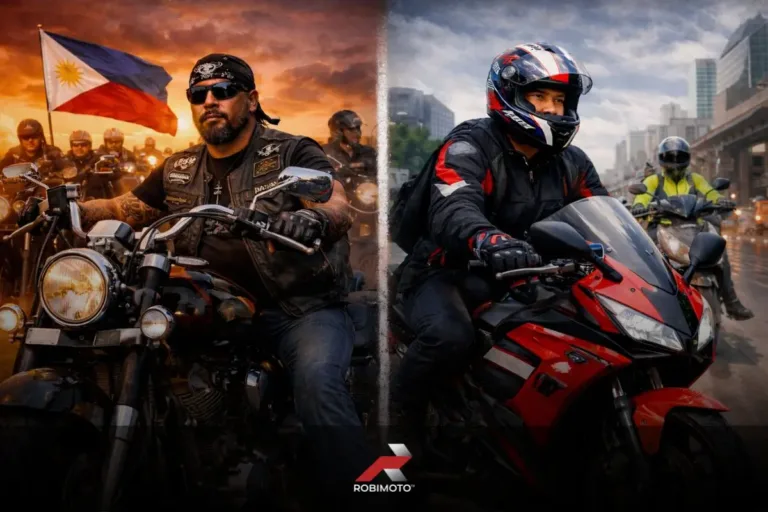
Motorcycle communities also continue to influence road safety and riding culture. Groups advocate for proper gear, training, and discipline. As seen with the rise of motorcycle clubs, camaraderie will remain at the heart of Filipino motorcycling.
With rapid sales growth and evolving technology, the evolution of motorcycles in the Philippines is far from over. Instead, it points to a future where motorcycles remain the lifeline of the nation—fueling economy, culture, and freedom for generations to come.
The evolution of motorcycles in the Philippines is a story of transformation. From humble tricycles built through ingenuity to modern superbikes driven by aspiration, motorcycles reflect the resilience and adaptability of Filipino riders.
Over the decades, these machines have become more than transportation. They support livelihoods, shape communities, and influence the country’s growing motorcycle culture. Two wheels now represent mobility, opportunity, and personal freedom for millions of Filipinos.
As the industry continues to evolve, the road ahead remains wide open. New riders, new technologies, and new machines will continue shaping the next chapter of the Philippine motorcycle story.