Skip to content
Contact & Community
📍 Metro Manila, Philippines
🌐 robimotoph.com
✉️ hello@robimotoph.com
📱 +63 917 517 0594
📍 Metro Manila, Philippines
🌐 robimotoph.com
✉️ hello@robimotoph.com
📱 +63 917 517 0594

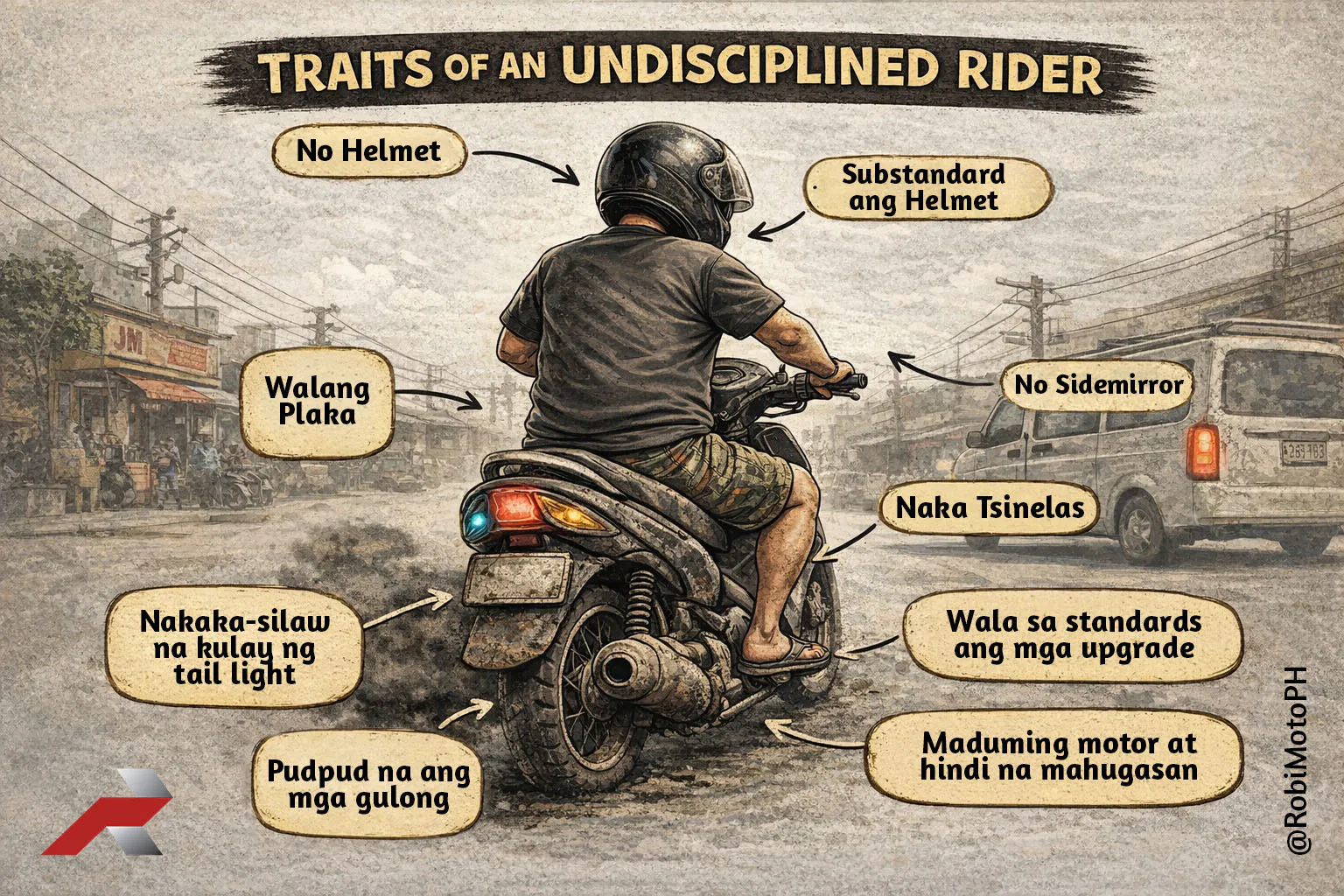
Undisciplined rider traits are more than bad habits. They reflect a deeper issue of responsibility, awareness, and respect on the road. In the Philippines, where daily riding is part of life, small decisions like skipping a helmet or ignoring maintenance can lead to serious consequences. This reflection explores real behaviors seen on the streets and what they reveal about rider mindset. More than pointing out mistakes, this article challenges every rider to rethink discipline, ownership, and accountability. Because in the end, riding is not just about moving forward. It is about how you carry yourself on every road you take.
Undisciplined rider traits are easy to spot on the road, yet often ignored in daily riding. These behaviors are not just minor mistakes. They reflect deeper issues in responsibility, awareness, and respect for others. In the Philippines, where motorcycles are part of everyday life, discipline is not optional. It is a necessity. A missing helmet, faulty lights, or poor maintenance may seem small, but each one carries risk. Over time, these habits shape not just individual riders, but the entire motorcycle community. This reflection looks beyond the surface and asks a simple question. What kind of rider are we becoming?
Undisciplined rider traits usually show up in small, everyday decisions. No helmet for short rides. Slippers instead of proper gear. Missing plates, broken lights, or ignored maintenance. These are not rare cases. They are common sights on Philippine roads.
At first glance, these actions look harmless. Some even treat them as normal. Yet over time, these habits create a pattern. A rider begins to rely on shortcuts instead of responsibility. Convenience slowly replaces discipline.
According to a report from ↗ Top Gear Philippines about motorcycle safety tips for riders in the Philippines, many accidents are not caused by speed alone, but by poor preparation and lack of awareness.
What makes this more serious is how these behaviors influence others. New riders copy what they see. Communities normalize what is repeated. Before long, undisciplined rider traits become part of the culture instead of the exception.
And that is where the real problem begins. Not on the road, but in the mindset behind the ride.
Undisciplined rider traits do not start on the road. They begin in the mind.
Every decision reflects a choice. Wear a helmet or skip it. Fix the problem or ignore it. Follow standards or take shortcuts. These are not accidents. These are patterns.
The danger is not just the behavior. It is the thinking behind it. A mindset that says, “Okay lang,” even when it is not.
Over time, this thinking becomes identity.
And once a rider believes that discipline is optional, the road becomes unpredictable. Not just for them, but for everyone around them.
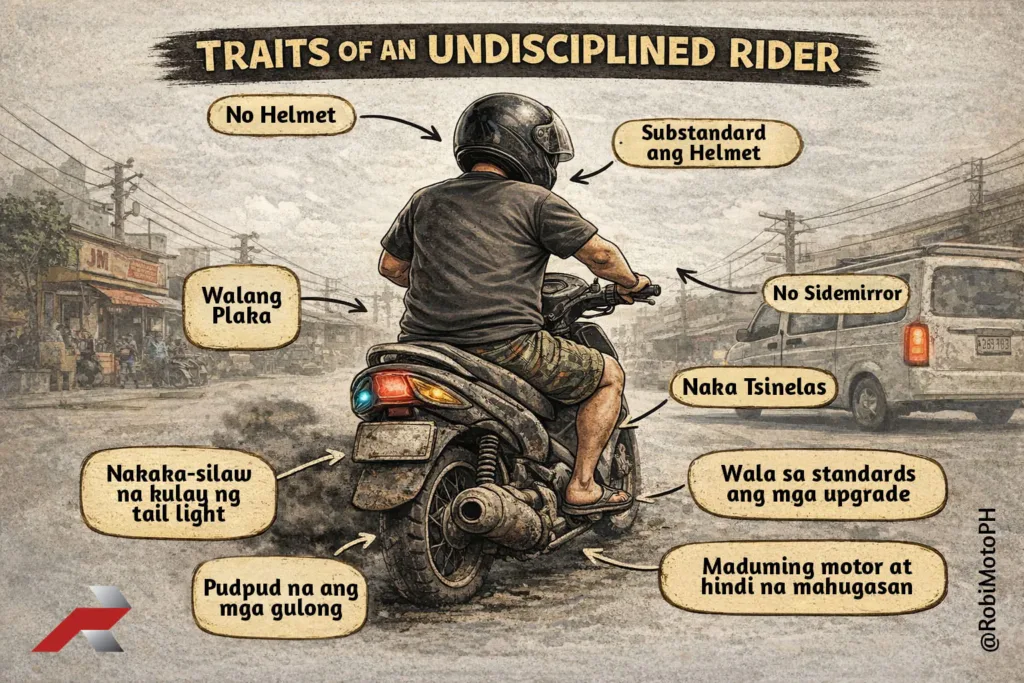
Undisciplined rider traits do not stay as small habits forever. They grow into consequences that riders often fail to anticipate. A missing helmet is not just a violation. It is a risk to life. Faulty lights are not just defects. They reduce visibility and reaction time. Poor maintenance is not just neglect. It leads to mechanical failure at the worst possible moment.
Many riders only realize the importance of discipline after something goes wrong. By then, the lesson becomes costly. Injuries, damage, or legal issues become part of the experience.
This is why discipline must be built early. It is not something you switch on when needed. It is something you practice daily.
If you want to understand how habits shape your riding behavior over time, read How Riding Changes Your Daily Discipline Through Real Ownership Habits. It shows how consistent actions, even small ones, build a stronger and more responsible rider identity.
Because in the end, riding is not about avoiding penalties. It is about protecting life.
Undisciplined rider traits often come from waiting too long to take responsibility. Some riders only act when they are called out, fined, or involved in an incident. By then, the damage is already done.
Real discipline works differently. It does not wait for reminders or enforcement. It starts even when no one is watching.
A responsible rider checks the bike before riding. Wears proper gear even for short trips. Fixes issues before they become problems.
These actions may seem basic, but they define character.
Because responsibility is not forced. It is chosen, daily, on every ride.
For a deeper understanding of safe riding practices, refer to the ↗ Suzuki Philippines safety riding guide, which highlights the importance of preparation, awareness, and discipline on every ride.
Undisciplined rider traits are not random behaviors. They follow patterns that repeat across different riders and situations. When you break them down, each habit has a clear consequence. This is where awareness becomes practical.
Instead of guessing what is wrong, riders can clearly see the connection between behavior and outcome. Discipline is no longer abstract. It becomes measurable and visible.
Here is a simple breakdown that reflects real-world riding conditions in the Philippines.
| Undisciplined Habit | Responsible Behavior | Real-World Impact |
|---|---|---|
| No helmet on short rides | Always wear full-face helmet | Reduces risk of fatal head injuries |
| Broken or modified tail light | Maintain proper red tail light | Improves visibility and prevents accidents |
| Riding in slippers or shorts | Use proper riding gear | Protects from injury during slides |
| Ignoring PMS schedule | Follow maintenance intervals | Prevents sudden mechanical failure |
| No side mirrors | Install and use mirrors properly | Improves awareness of surroundings |
| Missing or covered plates | Keep plates visible and updated | Avoids legal issues and promotes accountability |
This is the reality. Small discipline, big difference.
Undisciplined rider traits do not stay personal. They affect how the public sees all riders. One mistake becomes a stereotype. One bad habit becomes a label for the entire community.
This is why systems like MAY HULI KA: MMDA’s New NCAP Violation Portal Promotes Transparency and Discipline matter. They reinforce accountability, not just punishment. They remind riders that every action is recorded, and every violation has a consequence.
But beyond enforcement, real change still depends on the rider.
Because discipline is not proven when you are watched. It is proven when you choose to do what is right, even when no one is checking.
Undisciplined rider traits are not limited to riding habits. They often mirror how a person handles responsibility in daily life. The same mindset that ignores small issues on the road can appear in decisions off the bike.
Life in the Philippines is not easy. Rising fuel prices, long commutes, and daily pressure can wear anyone down. It becomes tempting to cut corners just to get through the day. Yet these moments reveal character more than comfort ever will.
If you have ever felt the weight of uncertainty while riding through daily challenges, read Riding Through Uncertain Times, Fuel Prices, and Daily Commuting in the Philippines. It reflects how discipline and faith quietly shape how we move forward, even when the road feels heavy.
Because discipline is not just about following rules. It is about staying grounded when things are hard.
And sometimes, the way you ride says more about your life than you realize.
Undisciplined rider traits are easy to point out in others, but harder to admit in ourselves. That is why this conversation matters. It is not about calling out riders. It is about calling them up.
Every habit, no matter how small, shapes the kind of rider we become. Over time, those choices define safety, reputation, and even life itself.
Before jumping into common questions, it is worth asking one thing.
Are we riding with discipline, or just getting by?
Undisciplined rider traits are unsafe habits such as not wearing proper gear, ignoring maintenance, and disregarding traffic rules. These behaviors increase risk and reflect poor responsibility on the road.
They reduce reaction time, visibility, and overall safety. Small habits like faulty lights or no helmet can quickly lead to serious accidents.
Yes. Discipline is a learned behavior. Consistent habits like proper gear use, regular maintenance, and awareness can reshape how a rider approaches safety.
They influence perception and behavior. When repeated, these habits become normalized, affecting how the public views the entire motorcycle community.
Yes. Skill without discipline leads to risky decisions. Discipline ensures that skill is used safely and responsibly on the road.
Undisciplined rider traits are not just habits to avoid. They are warnings of what happens when responsibility is taken lightly. Every ride is a chance to choose discipline over convenience.
In the Philippines, where riding is part of daily life, the standard we set matters. It shapes how others see us and how safe our roads become.
Discipline is not about perfection. It is about consistency.
Because at the end of the day, being a rider is not just about moving forward. It is about carrying yourself with responsibility, respect, and purpose on every road you take.
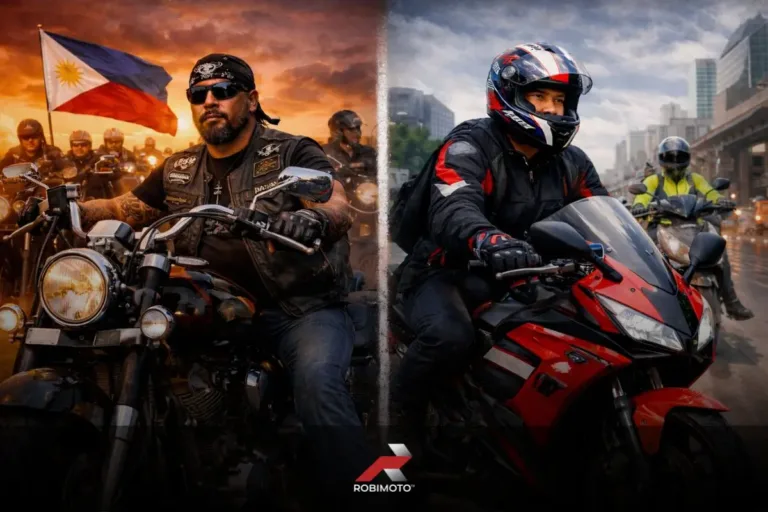
Featured image: Editorial composite image created for RobiMotoPH.