Skip to content
Contact & Community
📍 Metro Manila, Philippines
🌐 robimotoph.com
✉️ hello@robimotoph.com
📱 +63 917 517 0594
📍 Metro Manila, Philippines
🌐 robimotoph.com
✉️ hello@robimotoph.com
📱 +63 917 517 0594

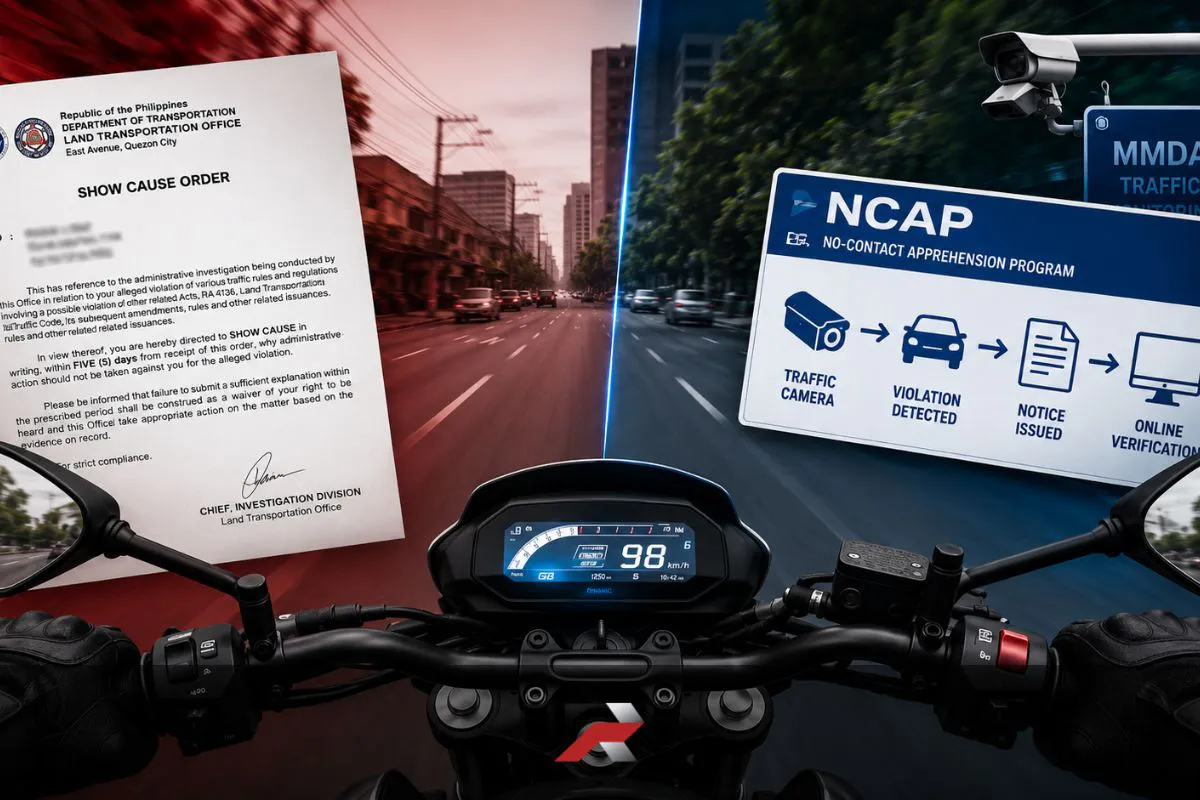
Show-Cause Order vs NCAP is an important difference for Filipino riders who post ride videos online. Many riders think both are the same because neither always involves a roadside stop. However, NCAP usually involves official traffic camera enforcement, while a show-cause order may come from a viral video, public complaint, or investigation. This guide explains how the two processes differ, why ride videos can create risk, and what motovloggers should avoid before posting speed clips or public-road content. For riders, the goal is simple: understand the process, protect your license, and post responsibly.
Show-Cause Order vs NCAP is not just a technical difference. It affects how riders understand enforcement, evidence, and response. NCAP usually refers to camera-based traffic enforcement, while a show-cause order asks a rider, driver, or registered owner to explain a possible violation.
The confusion happens because both can happen after the ride. There may be no roadside stop, no checkpoint, and no immediate ticket. From the rider’s point of view, it feels like the same thing: “Walang humuli sa akin, pero may notice.”
But the process is different.
For the broader background on online enforcement and viral riding videos, start with this complete rider guide before comparing the two processes.
NCAP, or no-contact apprehension, is commonly linked to official traffic camera systems. Instead of being stopped by an enforcer, the alleged violation is captured by a camera, processed, and connected to the registered vehicle.
Based on reports about the Supreme Court’s 2025 action, NCAP implementation has gone through legal review, including a partial lifting of the temporary restraining order for MMDA’s program. [1]
For riders, NCAP usually involves three things: a recorded violation, an official camera system, and a notice connected to the vehicle record. This is why riders often associate NCAP with traffic cameras, license plate capture, and online violation checking.
Riders who want a more focused look at checking possible violations can read this NCAP portal guide for more context.
🏍️
Rider Insight: NCAP is not just “nahuli online.” It is usually tied to an official monitoring system. Kaya hindi porket walang enforcer sa harap mo, automatic walang record.
A show-cause order is different because it asks the person involved to explain. It may be issued after a viral video, complaint, public report, or incident that appears to show a possible violation.
This is where motovloggers need to be careful. A ride video can show more than a route. It can show speed, lane behavior, road context, plate details, captions, and even the rider’s attitude in the comments.
Reports involving vloggers show that traffic-related online content can attract LTO attention when the post appears to show violations or unsafe behavior. [2]
Unlike NCAP, a show-cause order does not always begin from an official traffic camera. It may begin from a video that people share, report, criticize, or send to authorities.
For riders who already received a notice, this show-cause order guide explains what to prepare before responding.
Riders confuse Show-Cause Order vs NCAP because both may happen without an actual roadside apprehension. No one stopped the rider during the incident. The notice or issue appears later.
However, the source is different. NCAP usually starts from an official camera enforcement system. A show-cause order may start from a viral video, complaint, or investigation.
The response is also different. With NCAP, the concern often involves checking the violation, vehicle record, payment, or contesting process. With a show-cause order, the rider may need to explain why no action should be taken.
That difference matters because a wrong response can make the issue worse. Treating a show-cause order like a simple online ticket may cause riders to underestimate it. Treating NCAP like a random viral complaint may also miss the formal process behind it.
Ride videos can create risk when they show possible traffic violations or unsafe public-road behavior. Speed overlays, dashboard shots, road signs, plates, captions, and comments can all add context.
This becomes more serious when the video is public. A rider may post for entertainment, but viewers may interpret the clip as proof of overspeeding, reckless riding, or disregard for traffic rules.
Based on a report from Inquirer, LTO has warned vloggers against creating content that shows traffic violations, especially when the content encourages unsafe road behavior. [3]
That warning matters because many riders now use action cameras, helmet cameras, and dashboard clips as part of their content. The camera is not the problem. The problem is when the footage makes unsafe riding look normal.
🏍️
Rider Insight: A video is not judged by your intention alone. Viewers also see the speed, road, caption, and behavior. Minsan content sa iyo, evidence ang dating sa iba.
Before uploading, riders should review the video like a stranger would. Do not only ask, “Maganda ba ang shot?” Ask, “Will this look responsible if LTO, MMDA, a brand, or a non-rider sees it?”
Check these details:
If the answer feels risky, edit the video or do not post it. Strong motorcycle content does not need to show maximum speed on public roads.
For riders who want to track NCAP-related updates, this MMDA NCAP website update can help explain what riders and drivers should watch online.
No. NCAP usually involves official traffic camera enforcement, while a show-cause order asks a rider, driver, or owner to explain a possible violation.
Yes, reported cases show that public videos and online content can trigger official attention when they appear to show traffic violations or unsafe behavior.
No. NCAP is called no-contact apprehension because the alleged violation is usually captured without a roadside stop.
Yes. If a video, complaint, or report raises a possible violation, a rider may be asked to explain through the proper process.
It is safer to avoid unnecessary speed overlays on public-road videos. If the number does not add useful context, it may only create risk.
Post route guides, road condition updates, community rides, gear preparation, scenic clips, and responsible riding lessons. These build credibility without creating unnecessary legal risk.
[1] Inquirer. “SC lifts TRO vs enforcement of MMDA, LGUs’ no-contact apprehension program.” https://newsinfo.inquirer.net/2061778/sc-lifts-tro-vs-enforcement-of-mmda-lgus-no-contact-apprehension-program
[2] Top Gear Philippines. “Moto vlogger Yanna issued a show cause order by LTO.” https://www.topgear.com.ph/news/motoring-news/lto-show-cause-order-yanna-motovlogger-a5361-20250502
[3] Inquirer. “LTO warns vloggers breaking traffic rules for video content.” https://newsinfo.inquirer.net/2219236/lto-warns-vloggers-breaking-traffic-rules-for-video-content