Skip to content
Contact & Community
📍 Metro Manila, Philippines
🌐 robimotoph.com
✉️ hello@robimotoph.com
📱 +63 917 517 0594
📍 Metro Manila, Philippines
🌐 robimotoph.com
✉️ hello@robimotoph.com
📱 +63 917 517 0594

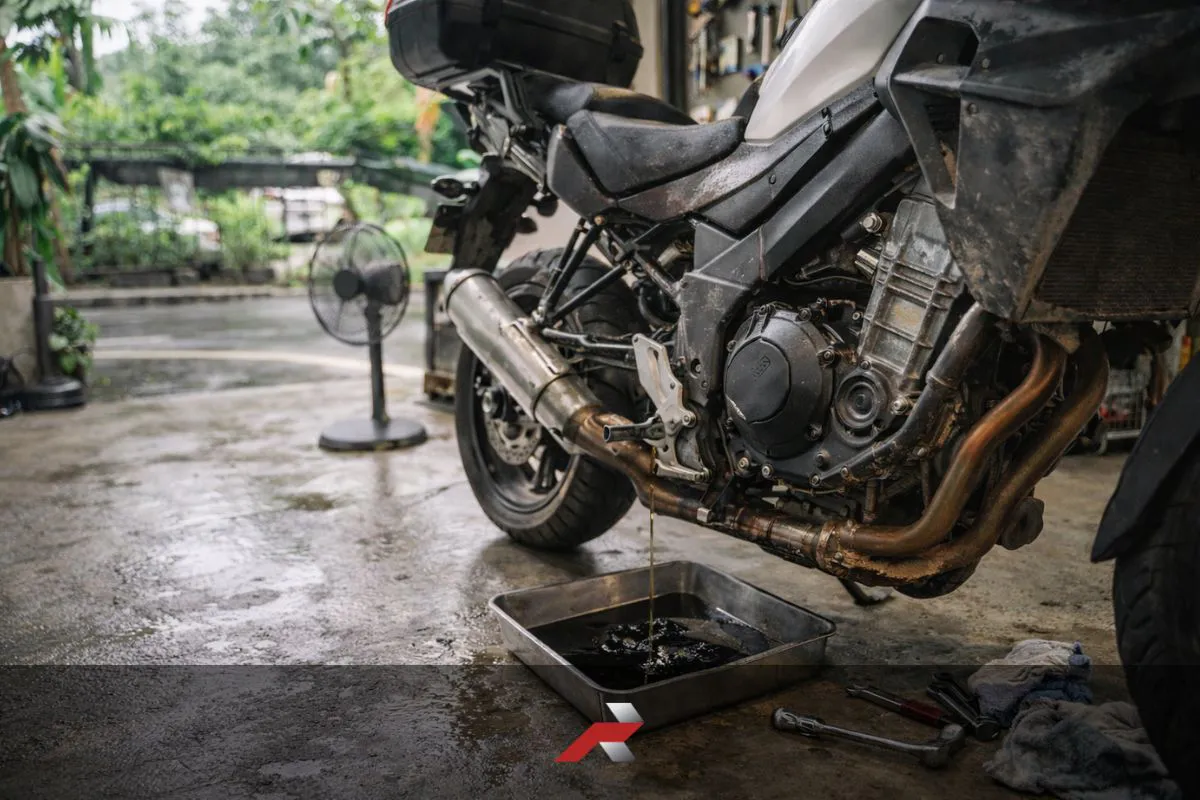
Many riders ask about the correct big bike oil change interval Philippines riders should follow, but the answer is not always the same for everyone. Oil change interval depends on traffic conditions, riding style, engine size, oil type, and climate. In the Philippines, heat, humidity, heavy traffic, and short rides can shorten oil life faster compared to highway riding. Changing oil too early wastes money, but changing oil too late can damage the engine. This guide explains oil change intervals for big bikes, what affects oil life, and how Filipino riders can build a proper and practical maintenance schedule.
If you own a big bike, understanding the big bike oil change interval Philippines riders should follow is one of the most important parts of motorcycle maintenance. Engine oil is not just for lubrication. It also cools the engine, cleans internal parts, and protects metal components from wear. When oil becomes dirty or loses its viscosity, engine wear increases and performance slowly drops.
Many riders simply follow the manual. Others follow advice from friends or mechanics. The problem is that riding conditions in the Philippines are very different from other countries. Heavy traffic, hot weather, short rides, and frequent stop-and-go situations all affect how long engine oil lasts. Because of this, the oil change interval for big bikes in the Philippines is usually shorter than what manuals suggest.
Changing oil too early wastes money. Changing oil too late risks engine damage. The goal is to find the correct interval based on how and where you ride.
This guide will explain oil change intervals for big bikes, factors that affect oil life, and how Filipino riders can build a practical maintenance schedule that protects the engine and saves money in the long run.
Many riders ask a simple question: when should I really change my oil? The answer is not a single number. Oil change interval depends on usage, environment, and engine stress. A big bike used for long highway rides will have a different oil life compared to a bike used daily in city traffic.
Manufacturers usually recommend oil change intervals between 5,000 km and 10,000 km for big bikes using fully synthetic oil. However, these recommendations are often based on ideal riding conditions such as open roads, consistent speeds, and moderate temperatures. Philippine riding conditions are far from ideal. Traffic, heat, dust, and short rides all shorten oil life.
Because of this, many experienced riders follow a more realistic oil change schedule instead of strictly following the manual.
There are several reasons why oil does not last as long in tropical countries. High ambient temperature causes oil to thin faster. Stop-and-go traffic increases engine heat. Short rides prevent oil from reaching optimal operating temperature, which leads to moisture buildup inside the engine.
Dust and pollution also contaminate oil faster. These conditions mean that oil degrades faster compared to highway riding in cooler countries. This is why many big bike owners in the Philippines change oil earlier than the manufacturer interval.
Instead of focusing only on mileage, riders should also consider time, riding conditions, and engine feel.
Oil change should not be treated as a standalone task. It is part of a larger maintenance schedule that includes chain cleaning, brake inspection, coolant checks, and tire inspection. Riders who follow a complete maintenance schedule usually have fewer mechanical problems and lower long-term ownership costs.
If you want a full maintenance timeline for big bikes in tropical conditions, you can follow this guide:
Big Bike Maintenance Schedule for Tropical Climate Philippines
When maintenance is done on schedule, the motorcycle becomes more reliable, safer, and more enjoyable to ride. Oil change interval is just one part of responsible big bike ownership, but it is one of the most important.
Understanding the big bike oil change interval Philippines riders should follow is important, but mileage alone should not be your only basis. Your motorcycle will often show signs when the oil is already degraded. Learning these signs can prevent engine damage and expensive repairs.
One of the first signs of old oil is a rough engine feel. Gear shifts may feel harder. Engine vibration may increase slightly. The motorcycle may feel less smooth during acceleration.
Fresh oil improves lubrication between moving parts. When oil breaks down, friction increases. This is why the engine feels rougher over time.
Old oil cannot absorb heat properly anymore. If you notice that your engine temperature is higher than usual, degraded oil may be one of the reasons. This is common during long rides or heavy traffic situations.
Heat is one of the biggest enemies of engine oil. Once oil overheats repeatedly, it loses its protective properties.
Checking oil color is one of the easiest ways to monitor oil condition. Fresh oil is usually light brown or amber. Old oil becomes dark and dirty because it carries carbon deposits and contaminants from the engine.
Dark oil is normal over time, but very thick, black, or dirty oil means it is already time to change.
Oil change interval is not only based on mileage. Riding style has a big effect on how fast engine oil degrades. Two riders with the same motorcycle can have very different oil change intervals depending on how they use their bikes.
Motorcycles used daily in city traffic experience more engine stress. Stop-and-go traffic means constant acceleration and braking. Airflow is limited, so the engine runs hotter. Heat breaks down oil faster and reduces its ability to lubricate engine parts.
Highway riding is easier on engine oil. The engine runs at a steady RPM. Airflow helps cool the engine. Oil temperature stays more stable. Because of this, oil can last longer for motorcycles used mostly for long rides.
This is why riders who use their big bike for daily commuting should change oil earlier compared to riders who use their bikes mainly for weekend rides.
Short rides are actually harder on engine oil. When you ride short distances, the engine does not reach full operating temperature long enough. This causes moisture and fuel dilution inside the oil. Over time, this reduces oil performance and protection.
Long rides allow the engine to reach proper operating temperature. Moisture evaporates and oil circulates properly. In many cases, motorcycles used for long distance touring can extend oil change intervals slightly compared to daily short-distance commuting bikes.
Weather conditions in the Philippines also affect oil life. Rainy season riding introduces moisture and humidity into the engine and oil system. Flooded roads, water splashes, and humid air all contribute to faster oil contamination.
Riders who frequently ride in wet conditions should be more strict with maintenance schedules. Aside from oil change, chain cleaning and lubrication should also be done more frequently. You can follow this maintenance approach here: Complete Big Bike Maintenance Guide for Wet Roads and Humid Climate
When you understand how riding style affects oil life, you will stop asking for a single oil change interval number. Instead, you will start building a maintenance schedule based on your actual riding conditions.
Another important factor in the big bike oil change interval Philippines riders should follow is the type of engine oil used. Not all oils last the same distance because different oil types have different heat resistance, lubrication properties, and lifespan. Choosing the correct oil type helps extend engine life and determines how often oil should be replaced.
Mineral oil is the most basic type of engine oil.
However, it breaks down faster under high temperature and heavy traffic conditions.
For this reason, smaller motorcycles or older engines are usually the ones that use mineral oil.
Oil change intervals for this oil type are therefore shorter.
Semi-synthetic oil provides better protection and longer lifespan compared to mineral oil.
Many riders choose this oil for daily riding because it offers a balance between cost and performance.
In addition, semi-synthetic oil performs better in traffic and high temperature conditions.
Fully synthetic oil offers the best heat resistance, lubrication, and engine protection.
Most big bikes use this oil because engines run hotter and operate at higher RPM.
As a result, oil life is longer and performance remains stable during long rides and high engine temperature conditions.
In general, better oil quality means longer oil life.
However, riding conditions still determine the real oil change interval.
Many riders think that using expensive oil means they can extend oil change intervals. This is not always true. Even if oil is fully synthetic, riding conditions still affect oil life.
Heavy traffic, short rides, and hot weather will still shorten oil life even if you use premium oil. Oil quality helps, but riding conditions still matter more.
There is no single number that fits all motorcycles, but we can create a realistic guide for Filipino riders. The table below is based on riding conditions, oil type, and usage patterns commonly seen in the Philippines. This type of reference table helps riders build a practical maintenance schedule instead of guessing.
| Riding Condition | Oil Type | Recommended Oil Change Interval |
|---|---|---|
| Daily heavy traffic | Fully Synthetic | 3,000 – 4,000 km |
| Mixed city and highway | Fully Synthetic | 4,000 – 5,000 km |
| Mostly long rides | Fully Synthetic | 5,000 – 6,000 km |
| Daily heavy traffic | Semi-Synthetic | 2,500 – 3,500 km |
| Weekend riding only | Fully Synthetic | Every 6 months or 5,000 km |
| Short distance daily rides | Fully Synthetic | 3,000 – 4,000 km |
This table is not a strict rule. It is a practical guideline based on real riding conditions in the Philippines. Riders should still monitor engine feel, oil color, and engine temperature.
Oil change interval should be based on both mileage and time. Even if you do not reach the mileage interval, oil should still be replaced after several months because oil degrades over time even when the motorcycle is not used frequently.
Oil change interval can also vary depending on engine size and engine design. Bigger engines usually run hotter, hold more oil, and are often used for long rides, which affects oil life differently compared to smaller displacement engines.
Motorcycles around 400cc like Dominar, Ninja 400, or KTM 390 are often used for daily riding and city traffic. Because of frequent stop-and-go traffic and shorter rides, oil usually degrades faster. A practical oil change interval for 400cc motorcycles in Philippine conditions is around 3,000 to 4,000 km using fully synthetic oil.
Motorcycles in the 650cc category are often used for mixed riding, including city riding and long rides. These engines usually have better cooling systems and larger oil capacity. Oil change interval can typically be 4,000 to 5,000 km depending on riding conditions.
Big bikes 900cc and above are often used for touring, long rides, and highway riding. Because of stable engine temperature and larger oil capacity, oil life may last slightly longer. Oil change interval can be around 5,000 to 6,000 km, but time interval should still be considered.
Engine size alone should not determine oil change interval. Riding conditions, traffic, weather, and riding habits still have a bigger impact on oil life.
Understanding the big bike oil change interval Philippines riders should follow is not just about maintenance scheduling. It is about engine life, performance, fuel efficiency, and long-term ownership cost. Many riders focus on accessories, tires, and upgrades, but engine oil is still the most important fluid inside the motorcycle.
Engine damage does not happen in one day. It happens slowly over time. When oil loses its viscosity and lubrication properties, metal parts inside the engine start to wear faster. This wear is not immediately noticeable. The motorcycle may still run normally, but internal engine components are already experiencing more friction.
Over time, this can lead to lower compression, higher engine temperature, increased fuel consumption, and reduced engine life. Regular oil change is one of the cheapest ways to protect a big bike engine.
Many riders think oil is only for lubrication, but engine oil also works as a cleaning agent. Oil collects carbon deposits, metal particles, and combustion byproducts inside the engine. This is why oil becomes dark over time.
If oil is not replaced on time, these contaminants continue to circulate inside the engine. This increases engine wear and reduces engine efficiency.
Many riders try to extend oil change intervals to save money. In reality, skipping oil changes costs more in the long run. Engine repair is very expensive. Oil change is one of the cheapest maintenance tasks for a big bike.
Think of oil change as insurance for your engine. It is a small, regular expense that protects a very expensive machine.
Many big bike owners change oil regularly, but some still make mistakes that affect engine life and performance. Oil change interval is not only about when to change oil. It is also about how maintenance is done and how the motorcycle is used.
One common mistake is following only mileage and ignoring time. Some riders do not reach the recommended mileage because they use the motorcycle only occasionally. However, engine oil still degrades over time due to moisture, temperature changes, and air exposure. Even if mileage is low, oil should still be changed after several months.
Another mistake is mixing different oil brands or oil types. Mixing oils may reduce performance and protection. It is better to stick to one oil type and viscosity recommended for the motorcycle.
Some riders also forget to replace the oil filter regularly. Dirty oil filters reduce oil circulation and make new oil dirty faster. Ideally, the oil filter should be replaced every oil change or every other oil change depending on the motorcycle model.
Overfilling and underfilling oil is another common problem. Too much oil increases pressure inside the engine. Too little oil reduces lubrication. Both situations can damage the engine over time.
Proper oil change is not only about draining and refilling oil. It is part of responsible motorcycle ownership and long-term engine care.
Understanding the big bike oil change interval Philippines riders should follow is not about memorizing a number. The better approach is to build your own oil change schedule based on how you actually use your motorcycle. Every rider has different riding habits, routes, and riding frequency.
Start by identifying how you use your motorcycle most of the time. If you ride daily in heavy traffic, your oil will degrade faster due to heat and stop-and-go conditions. If you mostly ride on weekends for long rides, oil life may last longer because the engine operates at stable temperature and RPM.
Short rides, especially less than 10 km per ride, are actually harder on engine oil compared to long rides. The engine does not reach optimal temperature long enough, which causes moisture buildup inside the oil.
The best way to manage oil change interval is to track both mileage and time. Some riders reach 3,000 km quickly. Others take several months before reaching that mileage. Oil degrades not only from mileage but also from time, heat cycles, and exposure to air and moisture.
Many mechanics recommend changing oil every 3,000 to 5,000 km for big bikes used in Philippine conditions. However, time interval should also be considered. Even if mileage is low, oil should be changed every 4 to 6 months.
If you want more technical explanation about oil change frequency and how engine oil degrades over time, you can read this article from Fluid Solutions about engine oil change frequency.
Understanding how oil degrades helps riders make smarter maintenance decisions instead of guessing oil change intervals.
The most important part is consistency. It is better to follow a consistent oil change schedule rather than changing oil randomly. Riders who maintain their motorcycles on schedule usually experience fewer breakdowns and lower maintenance costs over time.
Oil change interval is not only maintenance. It is part of discipline and responsible motorcycle ownership.
Oil change is simple, but doing it properly makes a big difference in engine life and performance. Small maintenance habits can extend engine life significantly over time.
Before changing oil, run the engine for a few minutes. Warm oil flows better and drains more completely. Cold oil is thicker and may leave more old oil inside the engine.
Do not drain oil immediately after a long ride because the oil may be too hot. Let the engine cool down slightly before draining.
Oil filter traps dirt, metal particles, and carbon deposits. If the oil filter is not replaced, new oil will become dirty faster. Many mechanics recommend replacing the oil filter every oil change or every other oil change depending on usage and motorcycle model.
Dominar riders who want a model-specific reference can also check this Kawasaki Dominar 400 oil filter guide before buying a replacement filter.
Oil filter is inexpensive compared to engine repair, so it is usually better to replace it regularly.
Always use the oil viscosity recommended in the motorcycle manual. Using oil that is too thin or too thick can affect lubrication and engine performance.
Common oil viscosity for big bikes is 10W-40 or 15W-50, but always check the manual for the correct specification.
Owning a big bike is not only about riding fast or going on long rides. Maintenance is part of ownership, and oil change is one of the most basic responsibilities of a rider. Riders who maintain their motorcycles properly usually experience fewer problems, better performance, and lower long-term costs.
Many experienced riders do not wait for problems before doing maintenance. Instead, they follow a schedule and listen to the engine regularly. Oil level checks become part of their routine, not an afterthought. These simple habits make a big difference in motorcycle reliability.
Oil change interval is not just a mechanical schedule. It reflects how disciplined a rider is when it comes to maintenance and ownership. A well-maintained motorcycle is safer, more reliable, and more enjoyable to ride.
If you plan to keep your motorcycle for many years, regular oil change is one of the best things you can do for your engine. Engines that receive consistent oil changes usually last longer and perform better compared to engines that only receive maintenance when problems appear.
Maintenance may cost money today, but neglect usually costs more in the future.
To summarize the big bike oil change interval Philippines riders should follow, it is important to understand that oil change interval depends on riding conditions, oil type, and maintenance habits. There is no single number that applies to all riders, but there are practical guidelines that most riders can follow.
If you use your big bike daily in traffic, a safe oil change interval is around 3,000 to 4,000 km. Traffic, heat, and stop-and-go riding shorten oil life faster compared to highway riding.
If your riding includes both city traffic and highway riding, oil change interval can be around 4,000 to 5,000 km depending on oil type and riding habits.
If you mostly use your motorcycle for long rides and weekend rides, oil change interval can be extended slightly. However, oil should still be replaced every few months even if mileage is low.
The best approach is still to monitor mileage, time, engine feel, and oil condition instead of relying on mileage alone.
Most big bikes in the Philippines should change oil every 3,000 to 5,000 km depending on traffic, riding style, and oil type. Daily city riding usually requires shorter intervals than highway riding.
You can use the manual as a guide, but Philippine riding conditions are more severe due to traffic, heat, and humidity. Many riders shorten the interval compared to the manual recommendation.
Yes, fully synthetic oil lasts longer and performs better under high temperature and long rides. However, riding conditions still affect oil life, so interval should not be extended too much.
Oil change should be based on both time and mileage. Even if mileage is low, oil should still be changed every few months because oil degrades over time.
Delaying oil change can cause increased engine wear, overheating, reduced performance, and possible engine damage over time. Regular oil change helps protect the engine and maintain performance.
Understanding the correct big bike oil change interval Philippines riders should follow is not about finding one perfect number. It is about understanding riding conditions, engine stress, oil type, and maintenance habits. Riders in the Philippines ride in heavy traffic, high temperature, humid weather, and sometimes flooded roads. These conditions shorten oil life compared to ideal riding environments.
For most big bike owners, a practical oil change interval is between 3,000 km and 5,000 km using fully synthetic oil. Riders who ride daily in traffic may need shorter intervals. Riders who mostly do long rides can extend slightly, but oil should still be changed based on time, not only mileage.
The most important lesson is consistency. Regular oil change is cheaper than engine repair. It improves engine life, performance, and reliability. Riders who follow a maintenance schedule usually have fewer problems and lower long-term ownership cost.
If you are new to big bike ownership and want to understand maintenance, gear, and buying decisions, you can start with this guide: Beginner Motorcycle Buying Guide
In the end, oil change is not just maintenance. It is part of responsible motorcycle ownership. A well-maintained motorcycle will always be safer, more reliable, and more enjoyable to ride.
Featured image: Editorial composite image created for RobiMotoPH.