Skip to content
Contact & Community
📍 Metro Manila, Philippines
🌐 robimotoph.com
✉️ hello@robimotoph.com
📱 +63 917 517 0594
📍 Metro Manila, Philippines
🌐 robimotoph.com
✉️ hello@robimotoph.com
📱 +63 917 517 0594

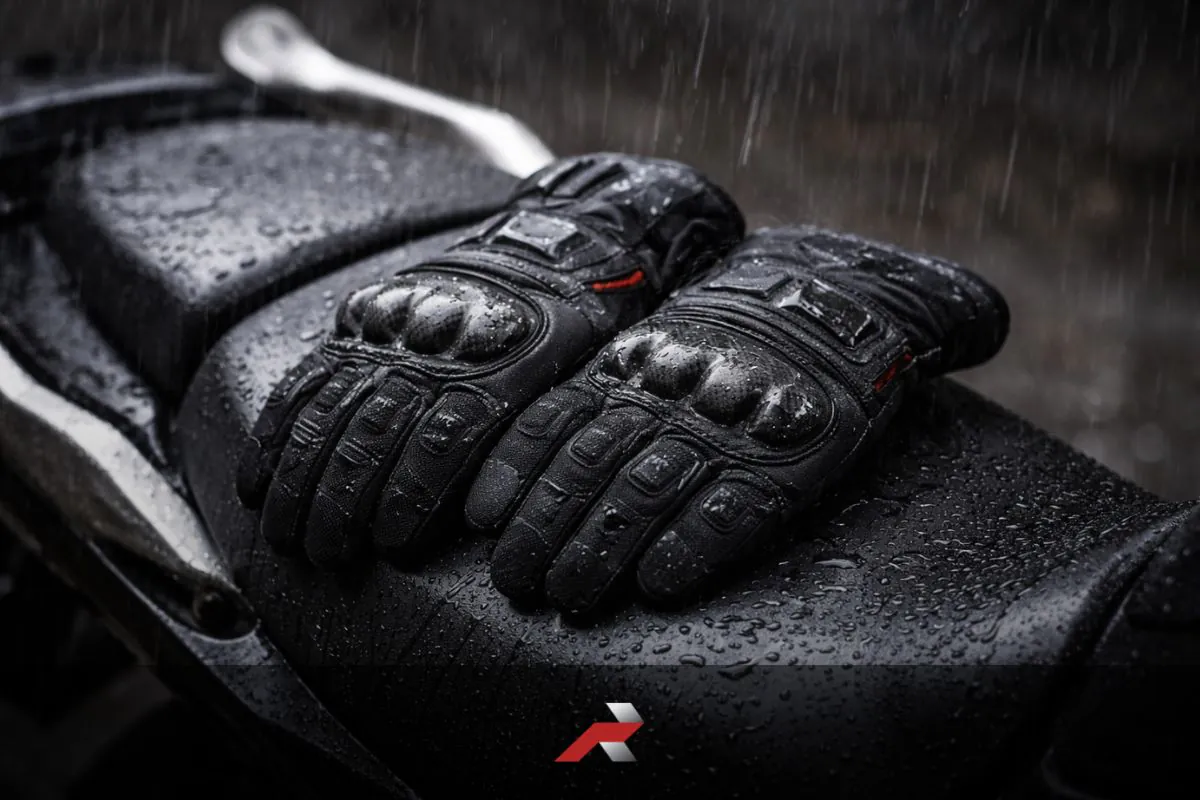
Choosing rain riding gloves that actually work requires more than checking a waterproof label. Philippine riding conditions demand balance between grip, breathability, impact protection, and seam sealing. This guide explains membrane technologies, leather versus textile construction, fit mistakes, CE standards, and real-world testing methods. Whether you commute daily in Metro Manila or tour during monsoon season, understanding glove construction prevents loss of control in wet conditions. Learn how to evaluate waterproof integrity, palm grip behavior under rain, and maintenance practices to extend glove lifespan. Make smarter decisions before the next heavy downpour hits.
Choosing rain riding gloves that actually work is not about looking “weather-ready.” It is about survival, control, and consistency in real Philippine riding conditions.
Heavy rain reduces visibility on EDSA.
Floodwater conceals potholes and surface damage.
A slipping throttle hand during an overtake exposes poor glove grip.
That is when glove choice becomes serious.
Many riders buy “waterproof” gloves based on label claims. Few test them in real stop-and-go traffic, long expressway runs, or tropical downpours that last hours. The difference between comfort and compromised control often comes down to material, membrane, and grip science.
If you already read our breakdown on wet braking physics in Brake Performance in Wet Roads Explained, you understand that traction decreases in the rain. Reduced traction means smoother inputs matter more. And smoother inputs require dry, controlled hands.
This is where most glove marketing fails riders.
Winter gloves built for cold climates are excessive in Philippine weather.
Light summer gloves lack sustained waterproof performance.
Choosing rain riding gloves that actually work requires balance.
This guide focuses on:
Because choosing rain riding gloves that actually work means thinking beyond “waterproof.” It means asking:
Grip must remain stable after 45 minutes of rain.
Breathability must survive 32°C humidity.
Protection must hold if a slide happens.
Let’s break it down properly.
Most riders do not notice glove failure until mid-ride.
By then, control is already compromised.
Regular gloves are built for airflow and comfort in dry conditions. Philippine rain exposes their weaknesses fast.
Many so-called “rain gloves” rely only on water-resistant outer coatings. These coatings repel light drizzle. But tropical downpours are not light drizzle.
Once exposed to sustained rain:
When gloves absorb water, they become heavier. Increased weight reduces tactile sensitivity. Reduced sensitivity affects throttle control, brake modulation, and clutch feel.
There is a difference between resisting water for 10 minutes and blocking water for an hour.
Water-resistant is not waterproof.
Philippine rain is humid, not cold.
Unlike European riding conditions, you are not fighting freezing temperatures. You are fighting trapped heat. Waterproof membranes block rain, but poor designs also block airflow.
If breathability is weak:
Wet outside. Wet inside.
Internal moisture is just as dangerous as external water. When sweat saturates the palm area, control precision drops.
Not all palm materials behave the same under moisture.
Low-cost synthetic leather often:
Silicone grip prints may peel over time. PU coatings lose friction when saturated.
In heavy rain, even small micro-slippage at the throttle can cause jerky acceleration input. On wet asphalt, that is risky.
Choosing rain riding gloves that actually work means understanding how materials behave under both rain and sweat, not just reading “waterproof” on a tag.
Rain does not just reduce traction on the road.
It reduces control in your hands.
When gloves lose grip under sustained moisture, the first thing that changes is throttle precision. Micro-slippage causes unintended input. On a dry road, that might feel annoying. On wet asphalt, it can destabilize the rear wheel.
Emergency braking becomes less predictable too. If your palm shifts even slightly during a sudden squeeze, braking force becomes inconsistent. Wet roads already extend stopping distance. Reduced hand stability adds another layer of risk.
Then comes the human factor.
When grip feels uncertain, riders tense up.
Tension leads to abrupt movements.
Abrupt movements lead to overcorrection.
That is how panic reactions begin.
A glove that absorbs water, shifts internally, or becomes slick under rain compromises more than comfort. It affects smoothness. And smoothness is survival in wet conditions.
Choosing rain riding gloves that actually work is not about staying dry. It is about maintaining mechanical precision when conditions are already working against you.
If you are still building your foundation on proper riding gear and control principles, revisit Beginner Motorcycle Buying Guide: Start Your Ride Right. Understanding exposure level, riding frequency, and safety priorities helps you avoid gear decisions that look minor but carry real consequences.
Control begins at the hands.
Lose that, and everything downstream becomes unstable.
When choosing rain riding gloves that actually work, focus on function first.
Look for membranes like:
These are layered systems, not just coatings. They block water while allowing vapor escape. That balance matters in tropical riding.
Even the best membrane fails if seams are not sealed. Check product specs. If seam sealing is not mentioned, assume minimal protection.
The palm should combine:
Smooth leather alone becomes slick in heavy rain.
Rain does not cancel crash risk. In fact, crash probability increases in wet roads. Hard knuckle armor maintains impact protection without absorbing water.
Short gloves allow rain to drip into sleeves. A longer cuff with adjustable closure prevents water entry from the wrist.
Many riders underestimate this detail. But in heavy downpour, wrist gaps are the first leak point.
Choosing rain riding gloves that actually work means evaluating protection, grip, and waterproofing as a system. Not separately.
Not every rider needs top-tier gloves.
But not every rider should go cheap either.
Choosing rain riding gloves that actually work depends on riding intensity, exposure time, and risk level. A short city commute in light rain is different from sustained highway riding during monsoon season.
Before deciding purely on price, review what truly separates entry-level construction from premium refinement. For a deeper breakdown of materials, protection zones, waterproofing systems, and real-world performance, read Motorcycle Gloves Guide for Filipino Riders: Safety, Comfort, and Real-World Insights. It explains when budget gloves are sufficient and when premium features become critical.
Here is how to decide.
Budget rain gloves can work if:
For light commute use, basic water-resistant gloves may hold up.
They are:
But understand the trade-off:
Budget works for emergency use.
It is not built for sustained abuse.
For most Philippine riders, mid-range gloves are the smartest investment.
Ideal if you:
Mid-tier gloves usually offer:
They balance:
If you ride 5 days a week, this is often the safest long-term value.
Premium gloves are not about status.
They are about sustained performance.
They make sense if you:
Premium models typically include:
For heavy rain riders, premium prevents repeated replacement.
Short rides tolerate compromise.
Long exposure punishes weak construction.
Choosing rain riding gloves that actually work is not about price.
It is about matching glove capability to your real-world riding load.
Not all rain gloves serve the same riding style.
A 20-minute Metro Manila commute in traffic is very different from a 2-hour expressway run under monsoon rain. Exposure time changes everything.
Daily Manila commuters need something different from weekend expressway riders.
City riders face:
Because of this, ideal daily rain gloves should offer:
Refueling requires taking them off.
Entering buildings means removing them again.
Even simple tasks like checking your phone force you to pull them off multiple times daily.
Bulky insulation becomes frustrating fast.
For city use, flexibility matters more than extreme waterproof endurance. You need:
If gloves feel heavy after 30 minutes, they are not ideal for daily commute use.
Long-distance riders face a different challenge.
Sustained rain exposure reveals weaknesses quickly. What feels fine for 15 minutes may fail after 90.
For touring or expressway riding, look for:
At 80 to 100 kph, wind pressure forces water into weak seam points. Cuff length becomes critical. Short gloves allow water to enter through sleeves.
Long exposure also increases fatigue. If the liner shifts or palm grip degrades, control precision drops over time.
If you already follow proper seasonal preparation like discussed in Best Motorcycle Tires for Rainy Season Philippines, you understand that rain riding is a system. Tires, brakes, and gloves must work together.
Choosing rain riding gloves that actually work depends heavily on riding duration.
Ask yourself honestly:
Are you riding 20 minutes in traffic?
Or 2 hours under unpredictable weather?
Match glove construction to exposure time. Short rides tolerate compromise. Long rides punish it.
Choosing rain riding gloves that actually work often comes down to one core decision: leather or textile.
Both materials behave very differently in Philippine rain conditions.
Leather offers serious advantages:
For aggressive riders or big bike owners, leather palm construction gives more stable throttle feel. It compresses slightly under grip pressure and maintains tactile feedback.
But leather has weaknesses in tropical rain.
Untreated leather absorbs water. Once soaked:
Repeated soaking and drying cycles can cause cracking. If not maintained properly, leather gloves degrade faster than expected in humid climates.
Textile gloves offer:
They are more comfortable for daily commuting, especially in Metro Manila heat.
However, abrasion resistance is usually lower unless reinforced with synthetic overlays or leather panels. Cheap textile gloves can tear more easily during slides.
Waterproof textile gloves also depend heavily on membrane quality. Without proper reinforcement, durability may suffer over time.
Hybrid gloves combine leather palm with textile upper construction.
This configuration:
For riders using bikes like the Dominar 400 or midweight 650s, torque sensitivity matters. Smooth throttle control in wet conditions requires consistent palm grip.
That is where hybrid construction often shines.
Choosing rain riding gloves that actually work in Philippine conditions usually means balancing abrasion resistance, drying behavior, and humidity management — not choosing one material blindly.
Choosing rain riding gloves that actually work becomes easier with structured comparison.
| Feature | Entry-Level Rain Gloves | Mid-Range Waterproof Gloves | Premium Membrane Gloves |
|---|---|---|---|
| Waterproofing | Water-resistant coating | Membrane-based (Hipora) | Gore-Tex or equivalent |
| Breathability | Low to moderate | Moderate | High |
| Palm Grip | Synthetic PU | Reinforced microfiber | Advanced multi-layer grip |
| Knuckle Protection | Foam padding | Hard molded armor | Carbon or composite |
| Cuff Length | Short | Medium | Extended touring cuff |
| Dry Time | Fast | Moderate | Moderate |
| Ideal Use | Light commute rain | Daily heavy rain | Long rides & expressways |
| Price Range PH | Budget | Mid-tier | Premium |
Choosing rain riding gloves that actually work requires understanding real waterproof technologies, not just marketing labels.
In wet Philippine riding conditions, membrane performance determines whether your hands stay controlled or compromised.
Gore-Tex gloves use an expanded polytetrafluoroethylene membrane engineered with billions of microscopic pores.
Each pore is approximately 20,000 times smaller than a water droplet but large enough to allow water vapor molecules to escape.
This creates two key advantages:
That balance matters in tropical climates where humidity is high even during rain.
However, Gore-Tex gloves are typically more expensive due to licensing costs and manufacturing standards. They also require proper seam sealing and bonding to perform optimally.
Alpinestars Drystar and Hipora membranes offer similar functional concepts but at different cost structures.
Hipora membranes use polyurethane-based layered construction. They are lightweight and flexible, which suits daily commuting.
Drystar systems focus on internal waterproof inserts combined with breathable outer textiles. They perform well in moderate to heavy rain.
The real difference is often:
Not all gloves using these membranes are equal. Construction quality matters more than membrane name alone.
When evaluating gloves, ask:
Bonded membranes reduce water pooling between layers. They dry faster. They maintain consistent fit when wet.
Floating inserts are cheaper but can bunch or twist inside the glove during prolonged exposure.
Membranes are only as strong as their seam sealing. Poorly taped seams become leak points under wind pressure.
Also check liner type:
In Philippine conditions, mid-range membrane gloves often deliver the best balance between cost, breathability, and waterproof reliability.
Choosing rain riding gloves that actually work means understanding how membrane science, seam construction, and liner design function together as a system — not separately.
Fit affects waterproof integrity more than most riders realize.
Even the best membrane fails if the glove size is wrong.
Waterproof systems are built with layered construction. When the glove is stretched or compressed incorrectly, those layers lose efficiency. That is when leaks start appearing.
If gloves are too tight:
Tight gloves also reduce circulation. Reduced circulation increases internal moisture. That moisture has nowhere to escape if breathability is compromised.
Over time, seam stress weakens waterproof sealing.
If gloves are too loose:
Loose gloves create micro-movements inside the palm. In heavy rain, that internal sliding affects throttle precision and brake modulation.
Waterproof does not mean floodproof. Once water enters through the cuff, oversized gloves trap it longer.
When choosing rain riding gloves that actually work, check for:
Simulate throttle input before buying. Rotate your wrist. Flex your fingers.
Try gloves in the afternoon when hands are slightly swollen. That reflects real riding conditions in Philippine heat.
Correct fit protects waterproof integrity.
Wrong fit shortens lifespan fast.
Choosing rain riding gloves that actually work means testing beyond marketing claims. Labels say “waterproof.” Real-world riding says otherwise.
Professional gear testing typically includes controlled evaluation methods such as:
These tests measure how materials behave under stress, not just light rain exposure.
For example, CE standards for motorcycle gloves outline minimum safety requirements for impact resistance, abrasion protection, and seam strength under the EN13594 framework.
This European certification evaluates knuckle protection performance and structural durability. While CE approval is not legally required in the Philippines, it provides a useful baseline indicator of protective integrity.
However, waterproof performance must also be evaluated dynamically.
Water behaves differently under airflow. A glove that passes a static water test may still leak during high-speed riding because wind pressure forces water into stitching gaps.
If you want practical evaluation, try this method:
Pay attention to:
Avoid relying on sink immersion tests alone. Submersion does not replicate airflow pressure or throttle movement stress.
Choosing rain riding gloves that actually work requires combining certification standards with real-world testing. Lab data shows structural strength. Actual riding reveals functional reliability.
Waterproof membranes degrade if abused.
Most glove failures are maintenance failures.
After Every Heavy Rain Ride:
Avoid These Common Mistakes:
High heat damages membrane bonding.
Harsh chemicals break down DWR coatings.
Residue blocks breathable pores.
When Cleaning:
If water stops beading on the surface, apply a DWR reproofing spray designed for technical riding gear. This restores outer-layer water resistance without harming the membrane.
Gore explains proper membrane care here. Although written for footwear, the membrane principles apply to gloves.
And remember, glove care follows the same logic as jacket care. Waterproof systems rely on membrane integrity and surface treatments working together. If you want a full breakdown of how rain protection layers function in tropical riding, read Waterproof Riding Jackets Buyer Guide PH: How to Choose the Right Rain Jacket for Big Bike Riders in the Philippines. The same membrane and DWR principles apply across technical riding gear.
Storage Matters Too:
Proper care extends waterproof performance beyond one season.
Neglect shortens lifespan fast.
Choosing rain riding gloves that actually work becomes simple when you stop relying on marketing and start inspecting construction.
Use this checklist before paying at the counter.
Do not rush.
Do not assume.
Inspect properly.
Rain does not reduce crash risk.
In fact, wet roads increase it.
Before buying, confirm:
Press on the knuckle area. It should feel structured, not soft and hollow.
Examine the palm carefully. The heel of the palm should have extra reinforcement. That is the first contact point in a slide.
Waterproof gloves must still function as crash protection gear. Never sacrifice impact safety for water resistance.
Not all “waterproof” labels mean membrane protection.
Ask:
Turn the glove inside out if possible. Inspect stitching density.
Loose or uneven stitching increases leak points.
Check the cuff area. Rain usually enters through the wrist first. The closure should feel secure and adjustable.
If no waterproof system is described in detail, assume limited rain performance.
Fit determines control.
Too tight:
Too loose:
Wear both gloves.
Grip an imaginary throttle.
Simulate braking motion.
Finger mobility should feel natural. No pulling at the fingertips. No pressure points at the knuckles.
Choosing rain riding gloves that actually work is not complicated. It just requires discipline.
Never skip inspection.
Even experienced riders make avoidable mistakes when buying rain gloves. Marketing is loud. Construction details are quiet.
Do not let aesthetics override function.
Aggressive design, racing graphics, and bold branding do not guarantee wet performance.
Rain riding gloves are performance tools. If waterproof membrane type is not specified, if seam sealing is unclear, or if palm grip material is basic, style will not save you in heavy rain.
Looks fade. Slippery throttle input does not.
Many riders focus only on palm and knuckle armor.
But water usually enters through the wrist first.
Short cuffs allow rain to run down jacket sleeves directly into the glove. Extended cuffs with secure closure create a proper seal. Without that seal, even premium membranes fail.
Wrist design is not cosmetic. It is structural.
Too tight stretches seams and stresses the membrane.
Too loose allows liner movement and water pooling.
Improper fit reduces waterproof efficiency and control precision. Always test finger curl, wrist seal, and throttle simulation before purchasing.
Sizing mistakes shorten glove lifespan fast.
Water-resistant coatings handle light drizzle.
They do not handle sustained tropical downpour.
If no membrane system is mentioned, assume limited protection. Choosing rain riding gloves that actually work requires verified waterproof construction, not surface treatment alone.
Water does not enter through large holes.
It enters through stitching.
Seam density reveals construction quality. Internal taping confirms waterproof integrity. Reinforcement at high-stress areas protects against early failure.
Membranes block water. Weak seams invite it.
Smart riders inspect construction before buying.
Unprepared riders trust the label.
Choose wisely.
Rain gloves use waterproof membranes and seam sealing. Regular gloves focus more on airflow. Rain gloves balance waterproofing with grip retention under moisture.
Not necessarily. Mid-range gloves with good membrane construction often perform close to premium. Fit and construction quality matter more than brand price.
Rain covers work temporarily. But they reduce tactile feel. Integrated waterproof gloves offer better long-term consistency.
With proper care, 2 to 3 rainy seasons. Aggressive daily use shortens lifespan.
No. Quality rain gloves maintain CE protection standards. Always check certification.
Choosing rain riding gloves that actually work is not about brand loyalty. It is about maintaining control, protection, and consistency in real Philippine riding conditions.
Rain reduces tire traction.
Humidity increases internal sweat.
Water weakens poor construction quickly.
Because of this, glove selection directly affects throttle precision, braking smoothness, and crash protection in wet environments.
For Philippine riders, the correct rain glove must include:
Short rides may tolerate entry-level protection. Daily commuting requires mid-range durability. Long touring under monsoon exposure demands premium membrane reliability.
Choosing rain riding gloves that actually work means matching glove capability to riding intensity, exposure time, and climate conditions. It also means inspecting construction details instead of trusting marketing labels.
The wrong glove compromises control.
The right glove preserves it.
In heavy rain, grip is discipline. Protection is preparation. Breathability is endurance.
Choose based on function.
Ride with confidence.