Skip to content
Contact & Community
📍 Metro Manila, Philippines
🌐 robimotoph.com
✉️ hello@robimotoph.com
📱 +63 917 517 0594
📍 Metro Manila, Philippines
🌐 robimotoph.com
✉️ hello@robimotoph.com
📱 +63 917 517 0594

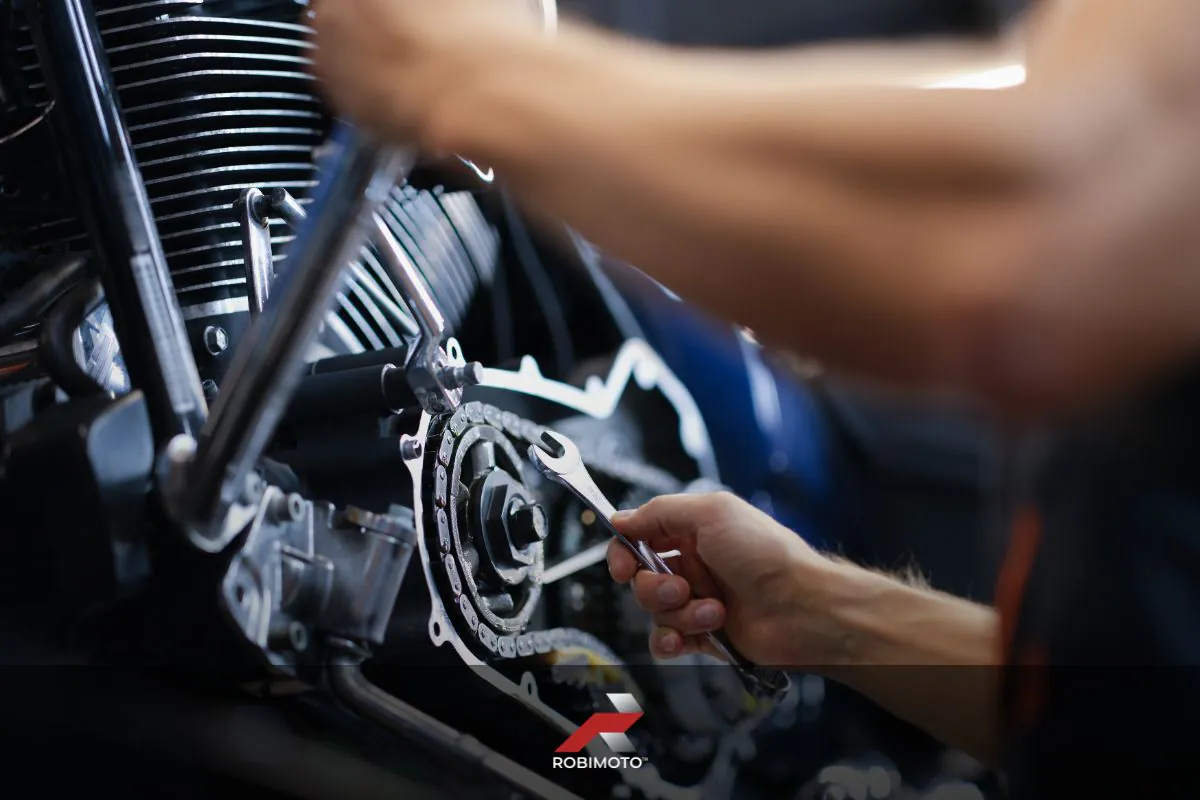
Chain vibration is one of those problems riders often feel before they fully understand it. You notice it during traffic crawls, slow turns, or steady cruising when the bike should feel smooth but does not. The rear feels unsettled. The throttle feels jumpy. Over time, the ride becomes tiring. This article breaks down chain vibration causes and proper adjustment using real street conditions, service realities, and long-term ownership habits. It explains how vibration shows up, why it happens, and what practical fixes actually work without theory or sales talk.
Most riders assume chain vibration only comes from worn parts or neglected maintenance. In real traffic, that belief does not always hold up. Chain vibration causes and proper adjustment often come down to small setup details that feel harmless until miles add up. Like tire pressure, suspension sag, and braking feel discussed in the Motorcycle Maintenance in the Philippines: A Real-World Guide for Riders, chain behavior is part of a larger maintenance rhythm, not a standalone issue.
Stop-and-go riding, uneven roads, and heat cycles change how the chain behaves over time. A setup that felt fine after service can feel wrong weeks later. These insights come from real rider use, not lab conditions.
If you understand how vibration starts and what actually fixes it, riding becomes calmer, smoother, and drivetrain components last longer.
Chain vibration rarely announces itself loudly at first. It sneaks in during slow rolling traffic, steady throttle cruising, or light acceleration from a stop. You feel it through the foot pegs or seat rather than hear it.
Often, it shows up after rain, dust exposure, or delayed cleaning. Dirt builds unevenly. Lubrication thins out. Slack changes without you noticing. This pattern connects closely with a real-world ownership situation described in Delayed Chain Cleaning and Its Long-Term Damage in Daily Riding, where neglect slowly turns into vibration.
Vibration also appears after rear tire changes or wheel adjustments. The chain itself did not change, but alignment did. That mismatch causes uneven pull.
The key detail is timing. Vibration builds gradually. Most riders notice it weeks after a service, not immediately after.
Many bikes develop vibration even when parts still look fine. The reason is tolerance stacking. Small changes add up.
Chain slack might be within range but not centered correctly. The rear axle might sit slightly off. Sprockets might wear unevenly long before teeth look sharp.
Heat also plays a role. Chains expand when hot. A chain adjusted too tight when cold becomes stressed during long rides. That tension creates pulsing feedback.
Another overlooked cause is mixed riding style. Slow crawling one day and long highway runs the next place different loads on the same chain. Adjustment that works for one condition can feel wrong in another.
Chain vibration causes are often explained mechanically, but riders feel them physically. The most common sensation is pulsing at steady speed. The bike feels like it surges slightly without throttle input.
Another sign is noise that comes and goes. It disappears under acceleration and returns when coasting. This confuses riders and delays diagnosis.
Uneven chain stretch also matters. Chains do not wear evenly along their length. One tight spot can throw off the entire adjustment. If slack is set at a loose section, the tight section binds. That binding becomes vibration.
This is why visual inspection alone does not tell the full story.
After any chain adjustment, ride slowly in second gear for five minutes, then recheck slack while the chain is warm. This reveals tension changes that cold checks miss and helps you talk clearly with your mechanic if vibration returns.
When vibration appears, riders usually choose between tightening, loosening, or replacing parts. Each option has trade-offs.
Tightening reduces lash but increases stress. Loosening adds smoothness but risks slap. Replacement solves problems but costs time and money.
A calm approach works best. First, verify alignment using the axle blocks and visual reference, not just markings. Second, find the tightest chain section and adjust based on that point.
Some riders compare notes through forums and local discussions, including rider feedback compiled by Motorcycle Philippines where long-term use patterns show that adjustment accuracy matters more than chain brand.
Fixes should aim for balance, not extremes.
Over time, riders learn that chain adjustment is not one-and-done. It is a repeating relationship.
Chains stretch unevenly. Riding conditions change. Suspension settles. What worked last season might feel wrong now.
A common mistake is chasing silence. Some noise is normal. Eliminating every sound often creates more vibration. Another mistake is relying only on shop adjustments without understanding what feels right on the road.
Long-term riders also notice that vibration often returns faster after rushed service. Quick adjustments without test rides leave problems unresolved.
Patterns like these appear in ownership stories and workshop notes shared by international sources such as MCN Garage, where extended testing shows that careful setup delays wear more than frequent replacements.
| Situation Observed | Likely Cause | Practical Response |
|---|---|---|
| Pulsing at steady speed | Uneven chain stretch | Adjust at tight spot |
| Noise during coasting | Slack imbalance | Recheck alignment |
| Vibration after tire change | Axle misalignment | Realign rear wheel |
| Jerky low-speed ride | Chain too tight when hot | Set slack after warm ride |
| Repeated vibration after service | Rushed adjustment | Test ride and remeasure |
These situations reflect common ownership experiences rather than ideal conditions.
Chain vibration slowly increases running costs. Bearings wear faster. Sprockets wear unevenly. Fuel use creeps up due to friction. Riders who want a step-by-step reference can review Motorcycle Chain Adjustment Tips for Kawasaki Dominar 400 to understand how small alignment errors translate into long-term drivetrain stress.
Downtime also increases. What starts as a minor slack issue becomes premature chain and sprocket replacement. Riders lose riding days waiting for parts or shop availability.
Convenience matters too. A smooth chain reduces fatigue during long traffic rides. It also makes low-speed control easier, especially in tight spaces.
These effects are rarely dramatic at first. They accumulate quietly until ownership feels heavier than it should.
When a shop adjusts your chain, ask which section they used as reference. That single question often reveals whether the adjustment accounted for uneven stretch or not.
It often feels like light pulsing or uneven feedback at steady speed before any loud noise appears.
Yes. Misalignment or incorrect slack can cause vibration even on fresh chains and sprockets.
No. Too much tension increases stress and often creates more vibration once the chain heats up.
Check after major rides, tire changes, or when riding feel changes, not just by mileage.
Lubrication helps, but it cannot correct alignment or uneven stretch issues.
Proper chain adjustment reduces early part replacement and keeps common motorcycles running longer without unnecessary downtime.
RobiMotoPH
Chain vibration causes and proper adjustment come down to awareness, not perfection. Riders who notice small changes early avoid bigger issues later. Smooth riding is rarely about new parts. It is about setup that matches real conditions.
For a broader riding perspective, this aligns with a long-term ownership reflection shared in How to Maintain Your Kawasaki Dominar 400 Chain: Practical Tips for Longer Life, where patience, inspection habits, and consistent care matter more than reactive fixes.
When maintenance becomes a rhythm instead of a repair response, riding feels lighter, ownership feels intentional, and costs stay predictable.