Skip to content
Contact & Community
📍 Metro Manila, Philippines
🌐 robimotoph.com
✉️ hello@robimotoph.com
📱 +63 917 517 0594
📍 Metro Manila, Philippines
🌐 robimotoph.com
✉️ hello@robimotoph.com
📱 +63 917 517 0594


The Motorcycle Noise Regulation Philippines policy is getting stricter as cities like Pasig and Manila penalize riders with loud exhausts. This guide breaks down what every rider should know—from the 99 dB noise limit set by LTO to local ordinances and real enforcement on the road. Stay informed, keep your bike compliant, and ride with respect for the community and environment.
Noise control is no longer a side topic for riders. Cities like Pasig and Manila are tightening rules, catching those who run modified or open pipes. Whether you ride a scooter or a big bike, it’s time to understand what Motorcycle Noise Regulation Philippines really means; because it’s not just about fines, it’s about respect.
There’s a reason you’re hearing more stories about muffler violations. Based on reports, the Land Transportation Office (LTO) has set a 99-decibel noise limit for all motorcycles under Memorandum Circular No. 2020-2240.
Sound levels are measured 0.5 meters from the exhaust at a 45° angle, between 2,000–2,500 rpm. Anything louder fails inspection and risks penalty.
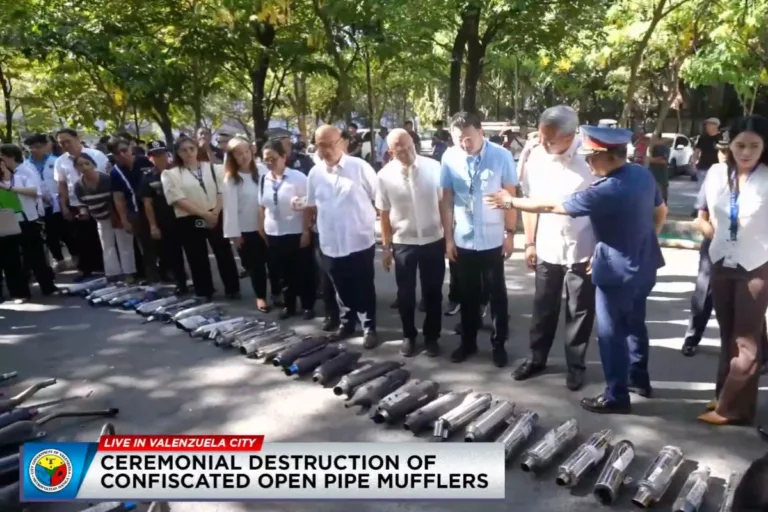
But enforcement doesn’t end there. Local governments like Pasig City have joined in, implementing Ordinance No. 29, Series of 2023, penalizing riders with modified or open mufflers. It’s part of a growing effort to reduce noise pollution and promote community well-being.
Keep a simple sound level meter in your toolbox. It helps you test your pipe before an inspection. Shop a motorcycle sound meter here.
Pasig’s ordinance targets exhausts that emit “excessive loud sound” from modified or open mufflers. It doesn’t specify a decibel limit but empowers local officers to stop and inspect motorcycles that disrupt public peace.
First-time offenders face fines, while repeat violators risk confiscation or removal of their exhaust systems. The rule applies to all types of motorcycles, regardless of engine size.
What makes Pasig’s move significant is its community-centered approach. Instead of simply punishing, it opens doors for riders to understand why noise control matters; to protect neighborhoods, schools, and hospitals from daily sound fatigue.
Many riders modify exhausts for performance, not noise. The goal is usually better airflow, less restriction, and improved throttle response. But when tuning turns into volume, that’s where regulation steps in.
If you’re unsure whether your setup meets the limit, visit a Motor Vehicle Inspection System (MVIS) center. These facilities use calibrated equipment to check sound levels accurately.
For riders in Valenzuela or nearby cities, checking your registration status and inspection results has also become easier with LTO’s online systems.
Noise pollution doesn’t just affect hearing; it impacts stress levels, sleep, and even community trust. The World Health Organization has long classified environmental noise as a serious health risk.
When riders cooperate with sound limits, it’s more than compliance, it’s civic mindfulness. Every quiet start-up at 6 a.m., every conscious throttle near a school, becomes part of a sustainable riding culture.
How Pasig Riders Are Leading the Way in Responsible Exhaust Culture
This is where ESG storytelling takes root. Sustainable riding isn’t just about emissions, it’s also about reducing waste and community impact. When riders maintain or repair existing exhaust systems instead of constantly replacing them, it saves materials and money while cutting landfill waste.
| Location | Noise Limit / Condition | Penalty / Notes |
|---|---|---|
| National (LTO MC 2020-2240) | 99 dB at 2,000–2,500 rpm | Re-inspection or rejection if above limit |
| Pasig City (Ord. 29-2023) | “Excessive loud sound” | Fines, possible confiscation of muffler |
| Manila City (Proposed) | 99 dB limit | Progressive fines ₱1,000–₱5,000 |
| Pasay City (Ord. 6009) | “Noisy exhausts prohibited” | Fines up to ₱4,000, license revocation possible |
Enforcement often gets a bad rap, but it can also serve as education. Some riders claim inconsistent measurements or bias toward smaller bikes. Transparency here matters. Cities can improve by publishing clear IRRs (Implementing Rules and Regulations) and training officers to use decibel meters properly.
Need to replace your stock muffler? Choose one with LTO-approved certification. Browse compliant mufflers here.
Meanwhile, riders can support each other by spreading verified information. Local clubs in Pasig and Cainta are already holding muffler awareness meet-ups to discuss lawful sound setups and share tuning experiences that comply with the 99 dB standard.
This is real community ESG in motion—riders taking part in creating peace, not noise.
Can Quiet Be the New Cool? The Rise of Motorcycle Noise Regulation Philippines
As Motorcycle Noise Regulation Philippines gains traction, one truth stays clear: responsible riders protect the reputation of all riders. Whether you’re passing through Pasig or parking in Valenzuela, your exhaust speaks for your discipline.
Let’s build a culture where compliance and pride coexist. Not because we fear penalties, but because we value the people who share the road—and the quiet moments that make riding fulfilling.
DISCLAIMER: RobiMotoPH is a Shopee Affiliate. Some of the links in this article are affiliate links, which means we may earn a small commission if you purchase through them; at no extra cost to you. This helps us keep creating helpful motorcycle content for the community. Ride safe, mga Ka-Robi!