Skip to content
Contact & Community
📍 Metro Manila, Philippines
🌐 robimotoph.com
✉️ hello@robimotoph.com
📱 +63 917 517 0594
📍 Metro Manila, Philippines
🌐 robimotoph.com
✉️ hello@robimotoph.com
📱 +63 917 517 0594

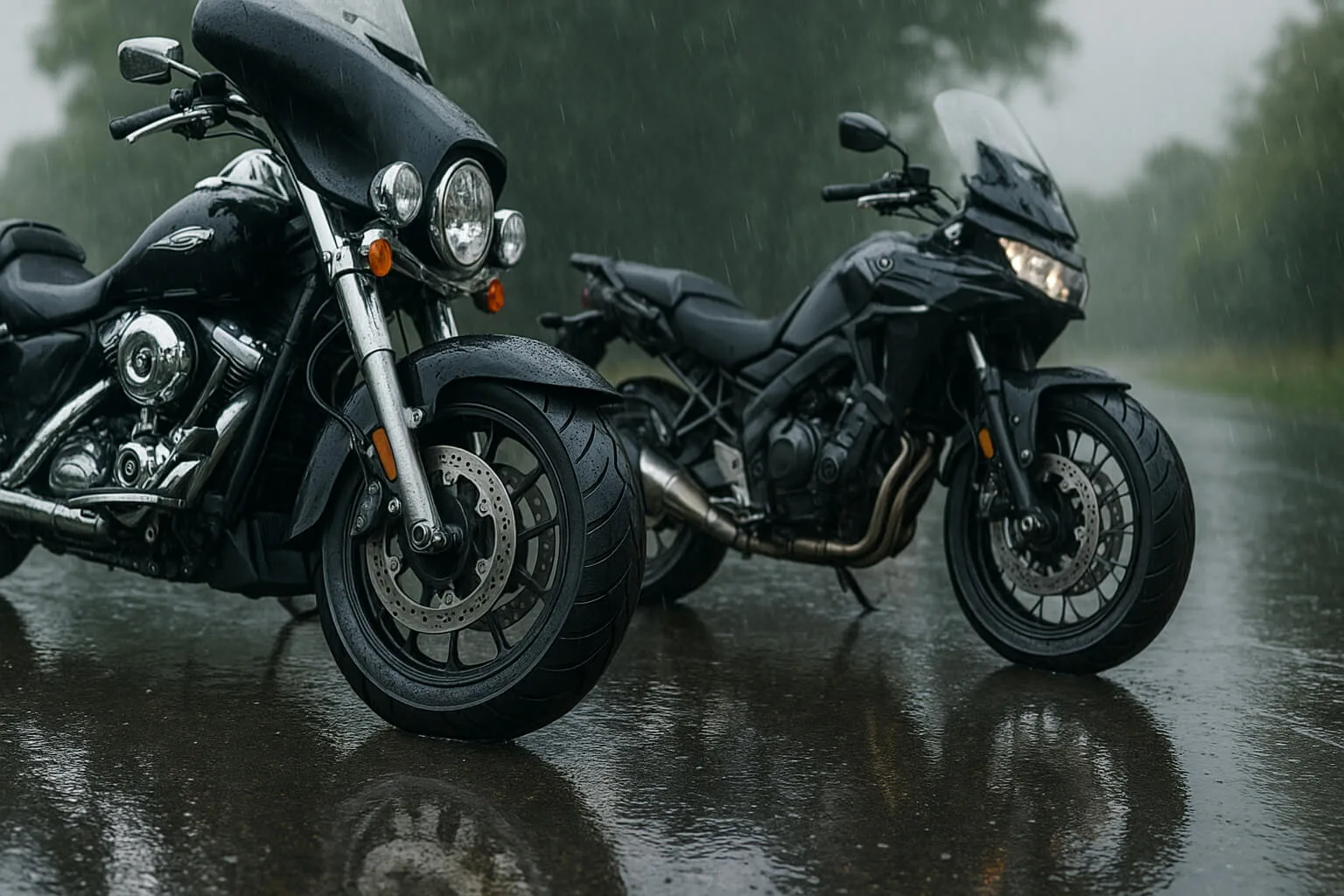
Choosing the right motorcycle tire becomes critical during the rainy season, especially for riders using mid to large displacement bikes for daily commuting or long-distance travel. Wet roads reduce traction and increase braking distance, making tire selection a serious safety decision. This guide compiles widely trusted sport touring and road tire options that riders commonly recommend for wet conditions. Instead of focusing on marketing claims, the article examines real-world rider feedback, tire design features, and practical considerations for Philippine road conditions. The goal is to help big bike owners understand which tires are known for stability, water evacuation, and predictable grip during rainy rides.
Rainy season tires for big bikes are not optional upgrades when you’re riding in heavy rain. They become your primary safety system the moment the road turns wet. Power, suspension, and electronics mean nothing if your rubber cannot hold the road.
When traction drops, everything changes. Braking distances increase. Cornering becomes unpredictable. Even smooth throttle inputs demand more precision.
In wet conditions, your tires are not background components. They are your first line of defense.
For newer riders especially, tire selection is not just a performance upgrade. It is a safety decision. If you are still building your foundation as a big bike owner, start with Beginner Motorcycle Buying Guide: Start Your Ride Right. Understanding your motorcycle’s weight, power delivery, and intended riding style helps you choose the right tires for wet conditions.
Rainy season tires for big bikes are engineered around four core principles: water evacuation, wet grip, structural stability, and load capacity.
Let’s break them down.
Rain performance starts with tread design.
Wet roads create a thin layer of water between the tire and asphalt. If that water cannot escape quickly, the tire rides on top of it. That is hydroplaning. And hydroplaning means zero control.
Rain-ready tires use:
These features create escape paths for water. The faster water moves away from the contact patch, the more rubber stays in contact with the pavement.
For heavier motorcycles, this matters even more. Big bikes generate stronger torque and braking forces. Without proper tread evacuation, traction loss happens abruptly, not gradually.
In wet riding, tread is not aesthetic. It is functional engineering.
Next is compound formulation.
Rain tires use softer rubber compounds compared to dry-focused performance tires. Softer rubber stays pliable in cooler, wetter conditions. That flexibility increases mechanical grip on damp asphalt.
However, there is a trade-off.
Softer compounds:
Harder compounds:
For rainy season riding in the Philippines, grip should take priority over extreme longevity. Wet traction is not the place to compromise.
The key is balance: enough softness for rain, enough durability for daily commuting.
Big bikes are heavy. That weight transfers aggressively during braking and cornering.
Sidewall stiffness determines how stable the tire remains under load. A weak sidewall flexes excessively, which can cause vague steering feedback and instability on slick surfaces.
A properly engineered rain tire for big motorcycles must:
Stability builds confidence. Confidence reduces panic inputs. And in wet conditions, smooth control is everything.
Riding a big bike in the rain is not just about slowing down. It is about understanding how drastically physics changes when the road gets wet.
In dry conditions, friction works in your favor. In rain, that friction is reduced. And reduced friction exposes weaknesses in both rider input and tire quality.
This is where tire choice becomes critical.
The biggest risk in wet weather is loss of traction.
Water creates a thin barrier between rubber and asphalt. That barrier reduces grip during acceleration, cornering, and braking. A tire not designed for wet conditions may break traction abruptly instead of progressively.
On a heavy big bike, sudden traction loss is harder to recover from. The weight amplifies momentum. Recovery requires skill, but prevention starts with proper tires.
Hydroplaning occurs when a tire cannot channel water away fast enough and ends up riding on a thin film of water instead of gripping the pavement.
When this happens, steering inputs feel light. Braking becomes vague. Control disappears without warning.
Quality rainy-season tires prevent this through:
These features allow water to escape quickly, restoring rubber-to-road contact.
If you want specific tire models that perform well in Philippine monsoon conditions, read Best Motorcycle Tires for Rainy Season Philippines. That guide breaks down proven options for local riders based on wet grip performance and real-world usability.
Braking distances increase significantly on wet roads.
Even with ABS, your stopping power depends on available traction. If the tire compound and tread cannot maintain grip, the braking system cannot compensate fully.
A proper rain tire:
In rain, braking confidence is not optional. It is survival.
Tires do more than grip the road. They shape rider behavior.
When you trust your tires, your inputs become smoother.
When you doubt them, you tense up.
Tension leads to abrupt throttle changes and overcorrection.
Good wet-weather tires restore stability and predictability. And predictability reduces panic.
Confidence in the rain is not about riding aggressively. It is about riding smoothly and deliberately, knowing your equipment supports you.
In wet conditions, tires are not accessories. They are your primary safety interface with the road.
The right tire choice reduces hydroplaning risk, shortens braking gaps, improves stability, and increases rider confidence.
In rain, traction is everything.
Not all rain tires are built the same. Big bikes place heavier demands on rubber, requiring higher load capacity, reinforced construction, and consistent stability during wet braking.
Below are brands that consistently deliver in real-world Philippine rainy conditions.
These are not hype picks. These are proven performers.
Michelin continues to lead the sport-touring tire category with the Road 6, designed for riders who demand stability, durability, and confidence in changing weather conditions.
The Road 6 uses Michelin’s advanced tread design and compound technology to improve wet braking performance while extending tire lifespan. The tread pattern helps channel water away from the contact patch, maintaining traction during rainy rides.
Built for real-world riding, the Road 6 balances wet road grip, everyday durability, and long-distance comfort. It is a practical option for daily commuters, weekend riders, and long-distance tourers.
Best for: Sport touring and premium all-weather riding
Strength: Consistent wet grip and long tread life
Pirelli splits its rain performance between street confidence and touring capability.
The Angel GT is built for urban riders and long-distance touring. It offers predictable lean stability and solid water dispersion without sacrificing dry-road handling.
Best for:
Angel GT → City + touring balance
The Battlax T32 improves on the older T31 with enhanced Pulse Groove technology. This design increases water flow efficiency and improves grip during acceleration and braking.
It handles heavyweight big bikes confidently and maintains traction even after extended use.
Best for: Heavyweight naked and sport-touring bikes
Strength: Balanced wet grip and durability
| BRAND | MODEL | BEST FOR | WET GRIP RATING | TREAD LIFE | PRICE RANGE |
|---|---|---|---|---|---|
| Michelin | Road 6 | All-weather, Premium Touring | ⭐⭐⭐⭐⭐ | ⭐⭐⭐⭐ | $$$$ |
| Pirelli | Angel GT | Urban + Long-distance | ⭐⭐⭐⭐ | ⭐⭐⭐⭐⭐ | $$$ |
| Bridgestone | Battlax T32 | Heavyweight Bikes | ⭐⭐⭐⭐ | ⭐⭐⭐⭐ | $$$ |
This comparison helps narrow down options based on riding style, budget, and performance expectations. However, real-world performance depends on proper tire pressure, riding behavior, and overall safety setup.
And this is where we will later insert the internal link to your Riding Boots article — but not here yet. That link belongs in the safety strategy section, not the brand breakdown.
Choosing the best rainy season tire for big bikes is not about brand loyalty.
It is about matching the tire to your riding reality.
Ask yourself three things:
Let’s break that down.
Your riding style determines how aggressive your tire needs to be.
Daily Commuter
If you ride in Metro traffic, deal with sudden braking, painted lines, and unpredictable puddles, prioritize:
You need confidence in stop-and-go situations.
Weekend Sport Rider
If you ride twisties in Antipolo or Tagaytay during cloudy weekends, look for:
Performance matters more than mileage here.
Long-Distance Tourer
If you ride highways during monsoon season:
Touring riders need balance, not extremes.
Not all big bikes load tires the same way.
Sport Touring Bikes
Balanced performance tires like Road 6, Angel GT, or T32 work well.
Adventure and Dual-Sport Bikes
If you mix asphalt and light gravel, choose rain-capable tires that still handle varied surfaces.
Heavyweight Tourers and Nakeds
Prioritize strong sidewall support and higher load ratings. Wet grip must remain consistent under weight transfer.
A tire that works on a 650cc twin may behave differently on a 1000cc inline-four or a fully loaded touring machine.
Before buying, check:
Rain performance means nothing if the tire cannot properly support your motorcycle.
Never downsize for aesthetics. Never ignore manufacturer recommendations.
Cheaper tires may save money upfront.
But if they lose wet grip quickly, you pay in safety and replacement cycles.
Premium tires often:
In rain riding, performance consistency matters more than the initial price tag.
Here’s something riders rarely admit:
Confidence changes how you ride.
If you constantly doubt your tires, you become tense.
Tension causes abrupt throttle and brake inputs.
Abrupt inputs increase risk.
The right tire reduces mental load.
And reduced mental load means smoother, safer riding.
Choose based on:
If rain riding is occasional, you can compromise.
If rain riding is weekly reality, invest properly.
Rain accelerates wear.
Water carries debris, oil residue, sand, and fine gravel. These contaminants reduce grip and slowly degrade rubber performance.
Proper maintenance keeps your rainy season tires performing the way they were designed to.
Wet grip depends heavily on tread depth.
As grooves wear down, water evacuation becomes less efficient. That increases hydroplaning risk.
During rainy months:
In wet conditions, “still usable” is not the same as “still safe.”
Cold mornings and temperature shifts affect tire pressure.
Underinflated tires:
Overinflated tires:
Check pressure weekly. Always measure when tires are cold.
Correct PSI improves:
Tire lifespan
Braking stability
Water dispersion
Rainy roads hide hazards.
Potholes, metal plates, sharp debris, and broken asphalt edges can damage sidewalls.
Look for:
Small damage can escalate quickly in wet conditions.
Oil and grime accumulate faster during rainy season.
After heavy rain rides:
Clean rubber restores surface traction and prevents premature compound breakdown.
Even unused tires degrade over time.
Check the DOT production code.
Rubber hardens with age, reducing wet grip significantly.
If your tire is 4–5 years old, even with good tread, wet performance may already be compromised.
Age matters as much as wear.
Improper balance causes uneven wear.
Uneven wear reduces predictable traction in rain.
If you feel vibration, instability, or irregular wear patterns, have your tires checked immediately.
Smooth rotation equals consistent contact.
Rain riding demands more discipline.
Tires are your only contact with the road.
Maintenance protects that contact.
Good tires plus poor maintenance equals false confidence.
Good tires plus disciplined care equals real safety.
Even the best rainy season tire for big bikes cannot compensate for poor riding inputs.
Rain reduces traction.
Reduced traction demands smoother control.
Smoother control requires discipline.
Wet riding is less about speed and more about precision.
Abrupt throttle, sudden braking, and sharp steering corrections are the biggest mistakes riders make in the rain.
Instead:
Smooth inputs keep weight transfer predictable. Predictability preserves traction.
Wet roads increase braking distance significantly.
Even premium rain tires cannot defy physics.
Double your normal following gap.
Anticipate traffic flow earlier.
Avoid last-second braking decisions.
Space equals reaction time.
Reaction time equals control.
Road markings, pedestrian lanes, steel plates, and manhole covers become extremely slippery when wet.
In Metro Manila traffic, these surfaces are everywhere.
If you must cross them:
Treat them like ice.
Puddles are not always shallow.
Some conceal potholes beneath the surface.
Others cover uneven asphalt that can shift your balance.
Hidden debris may also sit just below the waterline.
Slow down before entering standing water.
Keep the bike upright.
Maintain steady throttle.
Do not accelerate aggressively while exiting.
In the rain, braking balance matters.
ABS helps.
Skill helps more.
Train yourself to brake smoothly before emergencies happen.
Rain riding is not just about tires. It is a full safety strategy.
Your footwear matters just as much as your traction.
Wet roads demand:
If you’re unsure which riding boots match your style and protection needs, read Riding Boots: Casual vs Touring vs Sport – Complete 2026 Guide for Big Bike Riders in the Philippines.
Because when the road is slick, your boots are your second line of defense after your tires.
Rain is not the enemy.
Overconfidence is.
Slow down.
Be deliberate.
Ride within visible limits.
Wet riding rewards patience and punishes ego.
Not every rider needs top-tier racing rain tires.
But not every rider should go cheap either.
The real question is not “What’s the most expensive?”
The real question is “What level of wet performance do I actually need?”
Let’s break it down honestly.
Budget rain tires are attractive because:
For riders who:
A mid-range tire can be enough.
If rain exposure is occasional, you don’t need race-level compound technology.
Cheaper tires often:
This means:
You may save ₱5,000 today.
But replace them sooner.
Or worse, compromise safety.
In wet riding, performance consistency matters more than peak performance.
Premium tires usually offer:
If you ride:
Premium tires become less of a luxury… and more of an insurance policy.
The ROI is not speed.
The ROI is control.
Choose budget or mid-range if:
Safety is not about spending the most.
It’s about matching the product to your risk profile.
Premium is worth it if:
If rain riding is part of your lifestyle, not an exception, invest accordingly.
Expensive rain tires are not automatically better for everyone.
But consistent wet grip, predictable handling, and braking stability are not features you want to compromise on.
In rain, traction equals confidence.
Confidence equals control.
Control equals safety.
Choose based on your riding reality, not just your wallet.
Not all big bikes behave the same in the rain.
Weight distribution, riding posture, power delivery, and intended use all influence how a tire performs in wet conditions. Choosing the right rainy season tire for big bikes means matching rubber characteristics to motorcycle category.
Here’s how to think about it.
Examples: Ninja 650, Z900, Tracer 900, Versys 1000, GSX-S1000GT
Sport touring riders need balance.
You want:
Best tire profile:
Ideal for riders who commute during the week and ride long distances on weekends.
Examples: Z900, MT-09, CB650R, GSX-S750
Naked bikes often deliver aggressive torque and upright riding posture. That means strong weight transfer during braking.
Prioritize:
Best tire profile:
These bikes need confidence in traffic and stability during sudden throttle input.
Examples: Versys 650, V-Strom 650, Africa Twin, KTM Adventure
Adventure bikes are heavier and often ride mixed terrain.
You need:
Best tire profile:
Pure street rain tires may lack versatility for occasional rough roads.
Examples: Gold Wing, R1250RT, full luggage setups
These bikes are heavy, especially when loaded.
Prioritize:
Best tire profile:
Weight amplifies traction demands. Cheap tires become obvious very quickly on heavyweight machines.
Examples: ZX-6R, CBR600RR, R6
Rain riding on supersports requires precision.
You want:
Best tire profile:
If rain riding is frequent, consider sport-touring over pure track rubber. Track-focused tires are not designed for heavy water evacuation on public roads.
Match the tire to:
Rain performance is not one-size-fits-all.
The best rainy season tire for big bikes is the one aligned with how you actually ride.
If you ride regularly during the rainy season, yes. Standard tires may work in light rain, but dedicated rain-capable sport-touring tires offer better water evacuation, shorter braking distances, and more predictable cornering. In wet conditions, traction consistency matters more than peak dry performance.
Lifespan depends on compound type, riding style, and maintenance. Softer wet-focused compounds may wear faster than harder touring compounds. On average, expect 8,000 to 15,000 kilometers for quality sport-touring tires, depending on throttle habits and road conditions.
Always follow your manufacturer’s recommended PSI. Do not reduce pressure for extra grip in the rain. Underinflation increases instability and heat buildup. Proper pressure ensures consistent contact patch and predictable braking behavior.
Check your tread depth first. If grooves are shallow or wear bars are visible, water evacuation is already compromised. Inspect the rubber for hardening, cracks, or uneven wear. Even if tread looks decent, aged or damaged tires lose wet grip quickly and increase braking distance in rainy conditions.
ABS helps prevent wheel lockup, but it does not increase traction. Tire grip determines how much braking force can be safely applied. Even with ABS, poor-quality or worn tires significantly increase stopping distance in rain.
Rain does not forgive poor preparation.
The right rainy season tires for big bikes are not upgrades. They are foundational safety components. Water evacuation, compound quality, structural integrity, and correct load rating all determine how confidently you ride when roads turn slick.
Budget options may work for occasional rain exposure. Premium options deliver more consistent grip under frequent wet riding. The key is alignment. Match your tire to your motorcycle, your riding habits, and your actual rainy season exposure.
Maintenance matters just as much as brand choice. Proper pressure, healthy tread depth, and regular inspection preserve wet performance. Even the best tire fails if neglected.
Rain riding rewards discipline.
Choose deliberately.
Maintain consistently.
Ride smoothly.
Because in wet conditions, traction is not just performance.
It is protection.