Skip to content
Contact & Community
📍 Metro Manila, Philippines
🌐 robimotoph.com
✉️ hello@robimotoph.com
📱 +63 917 517 0594
📍 Metro Manila, Philippines
🌐 robimotoph.com
✉️ hello@robimotoph.com
📱 +63 917 517 0594


Choosing the best motorcycle for daily use in the Philippines requires more than following trends. Filipino riders face heavy traffic, rising fuel costs, and unpredictable road conditions every day. This practical guide breaks down scooters, underbones, and standard motorcycles based on fuel efficiency, maintenance cost, comfort, and long-term ownership. Whether you are a beginner commuter, delivery rider, or long-distance traveler, this article helps you match your motorcycle choice with real-world needs and sustainable daily riding conditions.
Choosing the best motorcycle for daily use Philippines riders can depend on is not as simple as picking the most popular model. Every Filipino rider has different routes, budgets, and riding conditions. Some face heavy Metro Manila traffic daily. Others travel long provincial highways. Many prioritize fuel savings. Others value comfort and storage.
Because of these differences, there is no single “perfect” motorcycle. Instead, there are motorcycles that match specific daily realities.
This guide breaks down what truly matters when selecting a motorcycle for everyday use in the Philippines. We will cover fuel efficiency, comfort in traffic, maintenance costs, parts availability, beginner friendliness, and practical model recommendations. The goal is simple: to help you choose a bike that works for your real-life commute, not just one that looks good on paper.
Finding the best motorcycle for daily use in the Philippines is not just about brand preference. It is about survival in real-world conditions. Filipino riders deal with heavy traffic, sudden rain, uneven roads, rising fuel prices, and long commuting hours. The wrong motorcycle choice can cost you time, money, and comfort every single day.
Daily use means consistency. It means your motorcycle must start reliably every morning, handle stop-and-go congestion, and remain affordable to maintain over the years. A bike that looks impressive but drains your budget or strains your body in traffic will quickly become a burden.
Before choosing any specific model, it helps to understand your riding purpose. Are you commuting to work in Metro Manila? Running delivery jobs? Traveling long provincial distances? Or simply looking for a practical city companion?
If you’re still unsure how to evaluate your needs, start with Beginner Motorcycle Buying Guide: Start Your Ride Right. That guide breaks down how to match motorcycle categories with lifestyle, budget, and long-term ownership goals.
Once your purpose is clear, choosing the right daily motorcycle becomes much easier.
Not all motorcycles are built for everyday Philippine conditions. A bike that performs well on paper may struggle in real-world traffic, heat, rain, and uneven roads.
Here are the key factors that define a true daily-use motorcycle.
Fuel cost is a long-term commitment. A difference of 10 km/L adds up quickly over months of commuting.
Scooters and small-displacement underbones often average 40 to 60 km/L depending on riding style and traffic conditions. For daily city riders, fuel efficiency directly impacts monthly expenses.
If you ride five days a week, this matters more than top speed.
Based on motorcycle market insights reported by Top Gear Philippines, small-displacement scooters and underbones continue to dominate daily commuter sales due to fuel efficiency and affordability.
Metro Manila traffic tests patience and posture.
A good daily motorcycle should offer:
Automatic scooters reduce fatigue in heavy traffic because you do not constantly shift gears. Meanwhile, lightweight underbones remain agile and easy to maneuver in tight spaces.
Comfort is not luxury. It is sustainability.
Daily motorcycles accumulate mileage fast. That means regular oil changes, brake pads, chain adjustments, and occasional replacements.
In the Philippines, practicality wins.
A strong daily-use motorcycle should have:
If parts are expensive or hard to find, long-term ownership becomes stressful.
Work bags. Groceries. Rain gear. Helmet.
Scooters often dominate this area because of under-seat storage and front compartments. Underbones and standard motorcycles may require a top box for the same practicality.
For urban professionals, storage convenience saves time and effort.
For new riders, predictability matters more than power.
A good daily-use motorcycle should feel:
You do not need 400cc to survive EDSA.
For daily use in the Philippines:
Power should match purpose. Excess power increases cost without improving daily practicality.
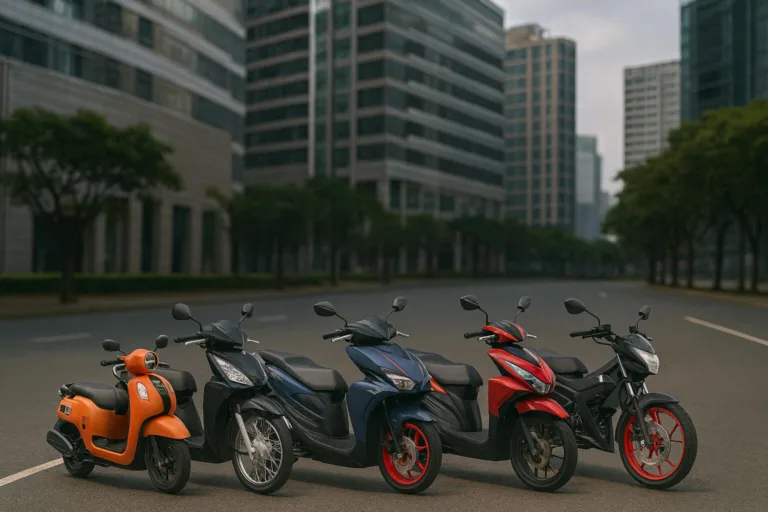
Scooters dominate the daily commute segment in the Philippines for one simple reason: convenience. Automatic transmission, practical storage, and manageable engine sizes make them ideal for city riders.
If your route includes heavy traffic, tight parking spaces, and frequent stops, scooters reduce fatigue and simplify your ride.
Here are strong daily-use scooter options for Filipino riders:
The Honda Click remains one of the most practical commuter scooters in the country.
The 125cc version suits strict budget riders. The 160cc offers stronger acceleration for mixed highway use.
For beginners or shorter riders, the Honda Beat is approachable and forgiving.
It’s not built for aggressive riding. It’s built for consistency.
The Mio lineup continues to be popular among young professionals and students.
It balances affordability with modern styling.
These models offer a slightly different take on practicality.
The Skydrive Crossover adds a more rugged aesthetic for riders who want subtle adventure styling without going full ADV.
For riders who prioritize comfort and stability:
It costs more than entry-level scooters, but long-distance commuters appreciate the added comfort.
If you want a broader breakdown of practical city motorcycles beyond just scooters, check Top 5 Motorcycles for Daily Commuters in the Philippines – Smart Picks for City Riders. That article compares real-world commuter choices across different categories and budgets.
Scooters win in simplicity. But they are not the only answer.
Next, we’ll look at underbones and why many Filipino riders still prefer them for daily commuting.
While scooters dominate city traffic, underbone motorcycles remain strong daily-use machines in the Philippines. They are lighter than most standard motorcycles, more mechanically simple than scooters, and often more fuel-efficient.
For riders who value durability and low long-term costs, underbones are still a smart choice.
Here are solid daily commuter options:
The Honda Wave 110 is built for practicality.
It is not flashy. It is dependable.
The Yamaha Sight focuses on fuel savings and lightweight handling.
For riders comfortable with manual shifting, it offers long-term efficiency.
For commuters who want a sportier look without sacrificing practicality:
It blends underbone practicality with youthful appeal.
The Raider J is another respected commuter option.
It appeals to riders who want manual engagement without excessive maintenance complexity.
Underbones may require manual shifting, but many Filipino riders prefer that control. They also tend to cost less upfront compared to higher-displacement scooters.
If you want a deeper breakdown of how scooters and underbones compare in real commuting scenarios, read Scooters vs Underbones: Best Commuter Motorcycle for Filipinos. That guide explains long-term practicality, fuel efficiency differences, and lifestyle fit between the two categories.
Underbones are not outdated. They are purpose-driven.
For delivery riders, a motorcycle is not just transportation. It is income equipment. That changes the criteria completely.
Durability, fuel efficiency, and low maintenance costs matter more than styling or premium features. A delivery motorcycle must survive daily mileage, unpredictable weather, and heavy loads.
Here are strong choices for delivery use in the Philippines:
The TMX125 Alpha is a long-time favorite for utility work.
Many riders trust it for long-term hauling and rural delivery routes. It is built for abuse, not aesthetics.
The Yamaha SZ offers a step up in comfort while remaining practical.
It suits riders covering longer distances daily.
For riders handling rough roads or provincial routes:
It adapts well to uneven roads and mixed terrain.
When choosing a delivery motorcycle, focus on total cost of ownership. Fuel consumption, repair frequency, and parts availability determine long-term profitability.
Comfort still matters. You ride longer hours than most commuters.
Some Filipino riders travel 20 to 50 kilometers daily. Others ride from the province into Metro Manila. For these commuters, engine stability and seat comfort become critical.
A small 110cc may survive traffic. But long daily highway stretches demand more balance and power.
Here are strong options:
For riders who want comfort with capability:
It handles rain, uneven roads, and occasional rough terrain better than most small scooters.
The Aerox 155 appeals to riders who want sporty performance without jumping into big-bike territory.
It is not the cheapest option in its class. But for commuters mixing city traffic and open roads, it offers a stronger performance edge.
If you want a deeper comparison of how the Aerox stacks up against competitors in Metro Manila conditions, read Yamaha Aerox 155 vs Rivals: Best Scooter for Metro Manila in 2025?. That breakdown looks at pricing, comfort, maintenance realities, and whether the performance is truly justified.
Some riders still prefer standard motorcycles for long daily routes.
They may not have under-seat storage. But for consistent long rides, simplicity wins.
For long-distance daily commuters, the real question is not speed. It is sustainability. Can the bike handle your routine for years without draining your budget?
By now, you’ve seen the categories. Scooters. Underbones. Standard motorcycles. Each serves a purpose.
The real question is not which is best overall.
It’s which one matches your daily reality.
Scooters reduce fatigue. They simplify commuting. For office workers and students navigating Metro Manila, they are often the easiest daily solution.
Underbones remain popular because they are durable and economical. They may require more rider input, but they reward long-term practicality.
Standard motorcycles handle sustained use well. They are less flashy but built for consistency.
The best motorcycle for daily use Philippines riders can rely on is not determined by brand. It is determined by routine.
Ask yourself:
Once you answer those honestly, the category becomes obvious.
The best motorcycle for daily use in the Philippines depends on your routine. For heavy city traffic, automatic scooters like the Honda Click or Yamaha Mio are practical. For fuel efficiency and durability, underbones such as the Honda Wave are strong options. Long-distance commuters may prefer 150cc to 160cc scooters.
Scooters are easier to use in stop-and-go traffic because of automatic transmission and built-in storage. Underbones, however, often provide better fuel efficiency and lower long-term maintenance costs. The better choice depends on whether you prioritize convenience or mechanical simplicity.
For urban commuting, 110cc to 160cc is usually enough. Smaller engines offer better fuel savings, while 150cc to 160cc models provide stronger acceleration for mixed highway use. Higher displacement is rarely necessary for daily city riding.
A 155cc motorcycle is not excessive for daily use. In fact, it can provide smoother highway merging and better overtaking power. However, if your route is strictly short-distance city traffic, smaller displacement models may be more cost-efficient.
Fuel-efficient daily motorcycles typically fall within the 110cc to 125cc range. Many underbones and entry-level scooters achieve 45 to 60 km/L depending on riding style and traffic conditions. Proper maintenance also plays a major role in maintaining fuel efficiency.
Finding the best motorcycle for daily use Philippines riders can depend on is not about chasing the most powerful engine or the trendiest design. It is about choosing a motorcycle that matches your real daily conditions.
Traffic in Metro Manila is demanding. Provincial roads can be unpredictable. Fuel prices continue to fluctuate. Maintenance costs add up over time. A smart daily motorcycle should reduce stress, not add to it.
Scooters offer convenience and comfort in heavy traffic. Underbones deliver fuel efficiency and mechanical simplicity. Standard motorcycles provide durability for longer routes and heavier loads.
There is no universal winner.
The right choice depends on your routine, budget, skill level, and long-term plans. When you align your motorcycle with your daily reality, commuting becomes easier, cheaper, and more sustainable.
Choose based on function.
Ride with intention.
Own with purpose.