Skip to content
Contact & Community
📍 Metro Manila, Philippines
🌐 robimotoph.com
✉️ hello@robimotoph.com
📱 +63 917 517 0594
📍 Metro Manila, Philippines
🌐 robimotoph.com
✉️ hello@robimotoph.com
📱 +63 917 517 0594

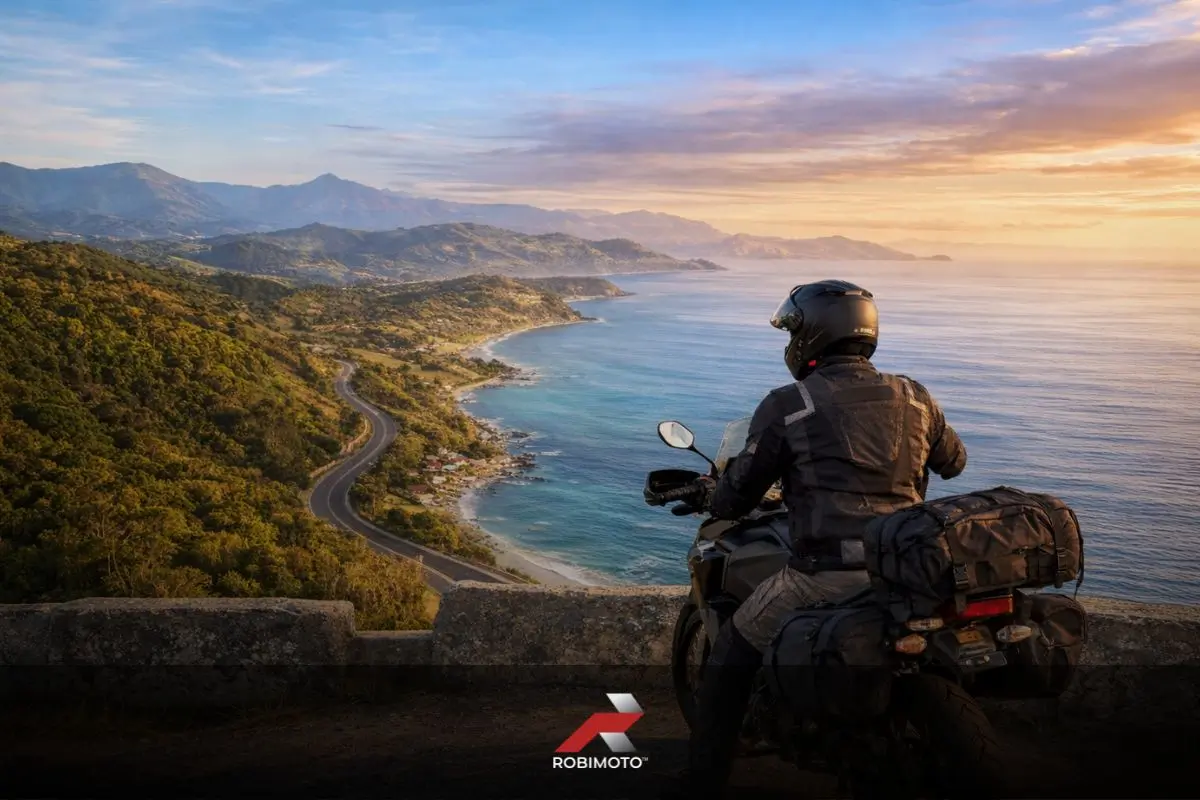
Motorcycle tourism has become a global movement built on slow travel, cultural connection, and meaningful journeys. In the Philippines, the roads, landscapes, and communities already support this style of travel. Yet motorcycle tourism remains overlooked as a serious tourism product. This article explores why the country is ready, what holds it back, and how riders and local communities can benefit when the journey itself becomes the destination.
Motorcycle tourism often begins with a simple choice to take the longer road home. I felt this clearly during provincial rides that mirrored the reflections I shared in Motorcycle Off Road Racing in the Philippines. The scenery was never the problem. The silence, the rhythm, and the connection were already there, waiting to be recognized.
The Philippines offers a riding experience shaped by geography rather than design. With over 7,600 islands, variety appears naturally within short distances. Coastal highways shift into mountain roads. Town centers fade into farmland. Every turn feels earned.
Motorcycle tourism thrives in this environment because it favors patience. Riders slow down, stop often, and stay longer. This rhythm encourages deeper interaction with local communities. Small eateries, roadside repair shops, and family-run inns become part of the journey.
This form of travel spreads tourism benefits beyond major destinations. Instead of concentrating spending in resorts, motorcycle tourism supports everyday local economies.
Motorcycles allow access where buses and vans rarely go. Riders reach barangays, upland towns, and coastal routes untouched by mass tourism. These places are not hidden. They are simply passed by.
Slow motorcycle travel also reduces pressure on crowded destinations. Riders distribute themselves across regions instead of gathering in a few hotspots. This creates balance rather than strain.
Sustainability appears naturally here. Fewer vehicles, longer stays, and mindful riding habits lower environmental impact without formal policy. When riders maintain their bikes properly, they travel responsibly by default.
Invest in durable riding gear like the HJC C10 Full-Face Helmet. A helmet built for long-term use reduces frequent replacements, supports rider safety on extended routes, and encourages mindful ownership rather than disposable upgrades.
Despite its natural fit, motorcycle tourism receives little attention in Philippine tourism planning. The focus remains on flights, hotels, and packaged experiences. Motorcycles are still viewed mainly as daily transport.
This perception limits growth. When riding is treated as secondary, infrastructure, information, and support remain informal. Riders adapt, but visitors hesitate.
The opportunity cost is significant. Motorcycle tourists often stay longer and spend locally. Ignoring them means overlooking a form of tourism aligned with provincial development.
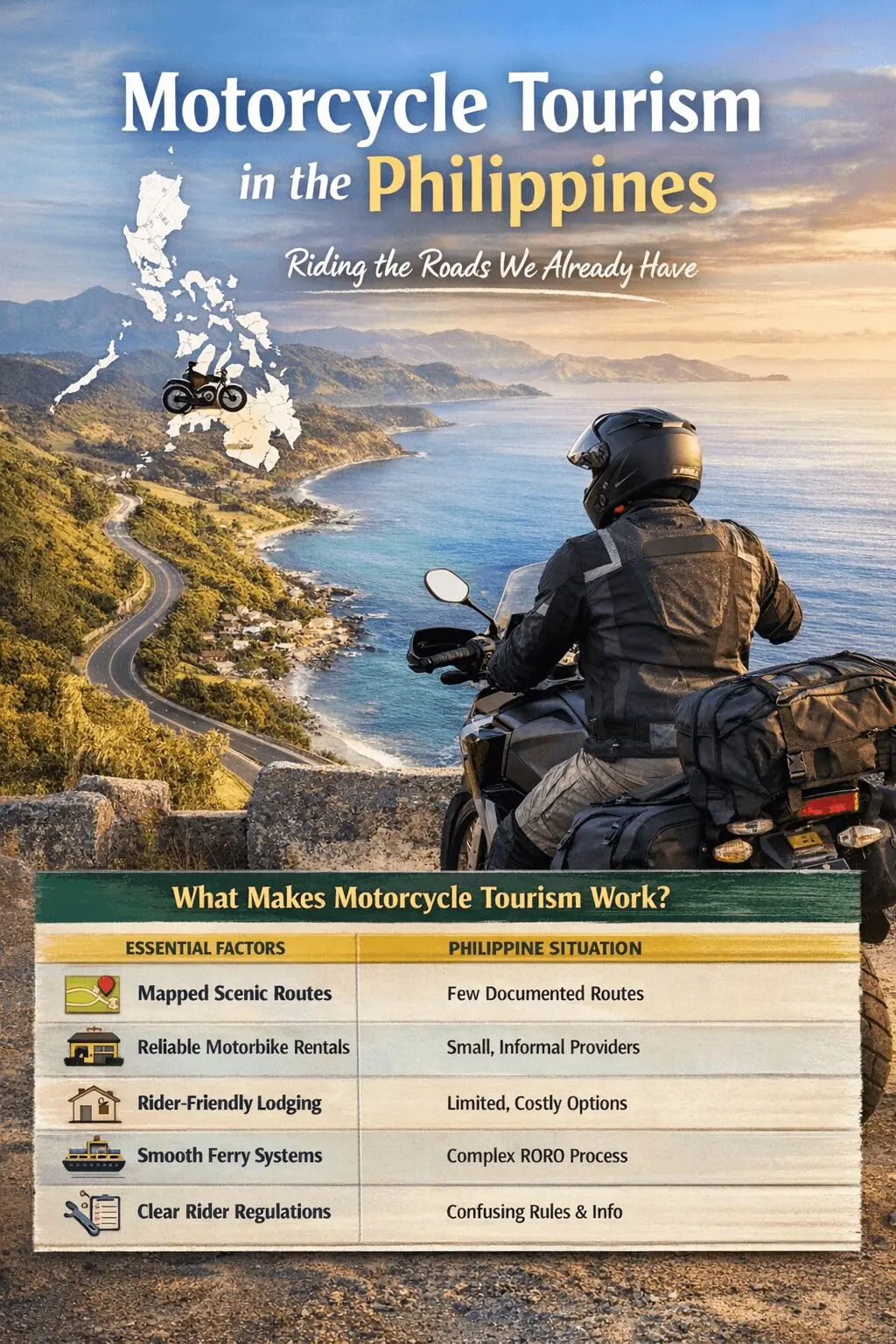
In many tourism campaigns, motorcycles appear only in passing. They are tools, not experiences. This framing prevents route development and documentation.
Other countries succeeded by redefining riding as exploration. Once routes were mapped and shared, riders followed. The Philippines has routes just as compelling. They simply lack recognition.
Mindset shifts come before infrastructure upgrades. Recognition invites investment.
Countries that embraced motorcycle tourism started with structure. Routes were identified. Information was centralized. Rules became clear.
This clarity encourages confidence. Riders plan trips knowing what to expect. According to this publication from Motorcycle.com, destinations that formalize motorcycle routes attract travelers who design entire itineraries around riding itself.
The Philippines already attracts adventure riders informally. Formal acknowledgment would multiply that interest.
Well-known riding loops did not become popular by accident. They were named, mapped, and promoted consistently. This structure transforms ordinary roads into destinations.
Clear route information reduces uncertainty. Riders accept challenges when they understand them. Documentation matters more than perfection.
Road conditions vary widely across regions. Some highways are well maintained. Others lack lighting, signage, or consistent enforcement. This inconsistency affects confidence.
However, riders adapt when information is available. The greater issue is unpredictability. Without clear guidance, even experienced riders hesitate.
Infrastructure improvement is important, but transparency matters first. When expectations are clear, riders plan responsibly.
Many challenges could be managed with better communication. Route guides, safety notes, and seasonal updates would reduce anxiety.
A trusted local review from AutoIndustriya highlights how road users prioritize clarity over comfort. Riders value knowing what lies ahead more than riding flawless roads.
This insight applies directly to motorcycle tourism planning.
Motorcycle tourism in an archipelago depends on ferry systems. Island crossings should connect journeys smoothly. Unfortunately, this is not always the case.
I experienced this while riding across regions. Multiple payment points, unclear instructions, and repeated queues disrupted the flow of travel. What should have been routine became stressful.
For long-distance riders, these interruptions matter. Momentum is part of the experience.
Fragmented ticketing systems discourage exploration. Riders crossing several islands face repeated delays. Over time, frustration replaces curiosity.
Island connectivity is essential, not optional. If crossing feels complicated, riders choose destinations with simpler logistics.
Streamlining processes would immediately improve rider confidence.
Carry documents and essentials in a RockBros Waterproof Motorcycle Tank Bag. Easy access during checkpoints and ferry crossings keeps the journey organized and efficient.
Accommodation plays a major role in route planning. In many provinces, options are limited or overpriced relative to value.
Motorcycle travelers seek simplicity. Clean rooms, safe parking, and fair pricing matter more than amenities. When these are missing, riders shorten stays or skip regions.
Affordable lodging supports slow travel. Longer stays mean deeper community engagement and more consistent local spending.
Small inns and homestays benefit directly from motorcycle tourism. Riders arrive steadily rather than in waves. This creates predictable income.
Supporting local accommodation keeps tourism benefits within communities. It also aligns naturally with sustainable travel principles.
Mindful maintenance, local spending, and long-term gear use make motorcycle tourism a shared responsibility between riders and communities.
Motorcycle tourism in the Philippines already exists on the ground, even if it remains absent in policy. Riders travel daily through roads shaped by history, geography, and community life.
The landscapes are ready. The routes are waiting. What remains is recognition.
When riding is treated as a legitimate form of travel, systems improve. Information becomes available. Confidence grows.
For riders seeking slower journeys and deeper connection, the Philippines is not a future destination. It is already one.