Skip to content
Contact & Community
📍 Metro Manila, Philippines
🌐 robimotoph.com
✉️ hello@robimotoph.com
📱 +63 917 517 0594
📍 Metro Manila, Philippines
🌐 robimotoph.com
✉️ hello@robimotoph.com
📱 +63 917 517 0594

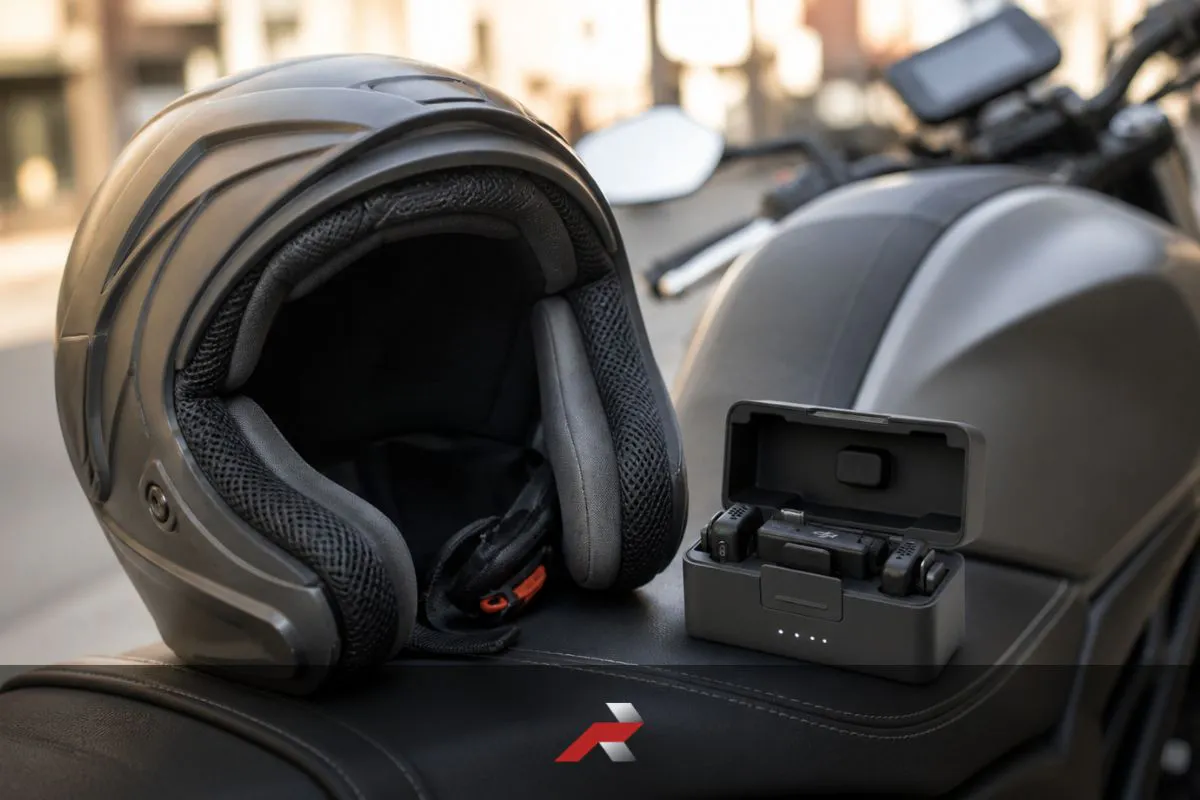
Clear audio can make or break a motorcycle vlog. This motorcycle wireless microphone guide explains how different systems work, what features matter, and how to set them up for real-world riding in the Philippines. From helmet placement to wind noise control, this guide focuses on practical use, not specs alone. Whether you are recording daily commutes or long rides, you will understand how to improve clarity, reduce noise, and build a reliable audio setup. Designed for beginner to intermediate creators who want consistent and professional sound on every ride.
A motorcycle wireless microphone system captures your voice clearly while you ride by sending audio from a small transmitter inside your helmet to a receiver connected to your camera or phone. In this motorcycle wireless microphone guide, you will learn how this setup solves common problems like wind noise, engine vibration, and distance from the camera that built-in microphones cannot handle well.
Most beginners think audio is secondary. In reality, viewers tolerate average video, but they leave quickly when the audio is unclear. On a moving motorcycle, your environment is always working against you. Wind increases as speed rises. Engine vibration adds low-frequency noise. Traffic introduces unpredictable sound spikes.
A wireless system separates your voice from all that chaos.
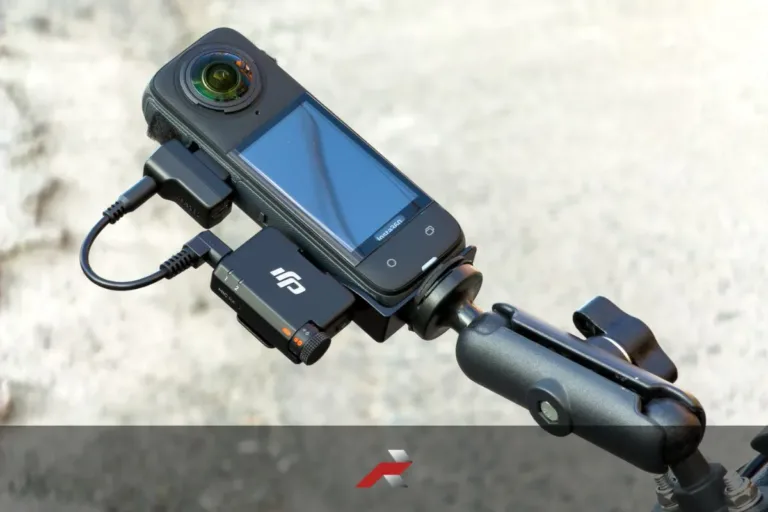
A basic setup includes three parts:
The transmitter sends your voice wirelessly to the receiver. This allows stable recording even when your camera is mounted far from your helmet, like on the handlebars or chest.
Compared to wired setups, wireless systems reduce cable limitations. This matters more on motorcycles, where movement is constant, and space is tight.
Built-in microphones are designed for controlled environments. Riding is the opposite.
Common issues include:
In real Philippine conditions, especially in Metro Manila traffic, audio becomes inconsistent. Jeepneys pass, horns spike, and idle engines create a background hum. The result is audio that fluctuates between usable and unusable.
On daily rides, especially stop-and-go traffic, your voice competes with:
Wireless microphones improve clarity because they capture sound closer to your mouth. This reduces environmental dominance and makes your voice more consistent across different riding conditions.
Key observation from local riders:
Audio quality improves more from proper mic placement and isolation than from simply buying a more expensive camera.
| Factor | Built-in Mic | Wireless Mic |
|---|---|---|
| Voice clarity | Low | High |
| Wind resistance | Poor | Moderate to High |
| Distance flexibility | Limited | Flexible |
| Consistency | Unstable | More stable |
| Use for motovlog | Not recommended | Essential |
The most important features of a motorcycle wireless microphone are voice clarity, wind noise control, battery life, and connection stability. These directly affect whether your audio remains usable during real riding conditions, not just in controlled environments or test recordings.
Many creators get distracted by specs. In reality, performance depends on how the mic behaves while you are moving, speaking, and dealing with noise that constantly changes.
Clear audio is not just about volume. It is about how well your voice stands out from the background noise.
Two key factors influence this:
In city riding, especially in places like EDSA or Commonwealth, noise is layered. You have engines, horns, and airflow all at once. A good system reduces the dominance of these layers without making your voice sound unnatural.
Observation from real use:
Some mics reduce noise aggressively, but this can make your voice sound compressed or robotic. Others retain natural tone but allow more background noise.
The balance matters more than the spec sheet.
Battery ratings are often based on ideal conditions. Riding is not ideal.
Factors that affect battery usage:
Typical expectations:
| Use Case | Estimated Battery Behavior |
|---|---|
| Short commute (30–60 mins) | Stable, minimal drain |
| Daily ride (1–2 hours) | Moderate usage |
| Long ride (3+ hours) | Requires planning or backup |
In Philippine conditions, heat plays a role. Devices inside helmets tend to warm up, especially during traffic. This can slightly reduce battery efficiency over time.
Range is not just about distance. It is about consistency.
On a motorcycle setup:
Even if a mic claims long range, real-world performance depends on positioning.
Key behaviors observed:
For most motovlog setups, stability matters more than maximum range.
A good microphone system should not slow you down.
Look for:
The more complex your setup, the higher the chance of mistakes before a ride.
Common beginner mistake:
Adjusting settings while already on the road.
Better approach:
Set everything before riding, then focus only on recording.
Wind is the biggest enemy of motorcycle audio.
Even at moderate speeds:
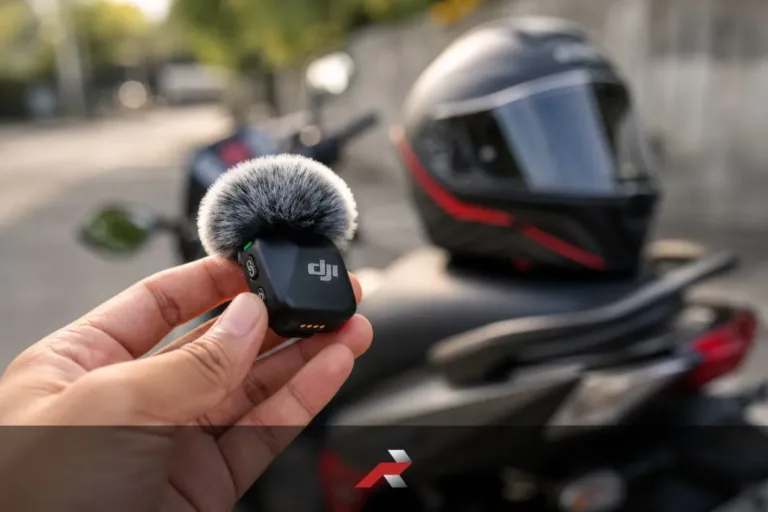
Accessories that help:
But here’s the truth most skip:
👉 Accessories alone will not fix bad placement.
If your mic is positioned wrong, even the best wind protection will fail.
If you are dealing with muffled audio, wind noise, or inconsistent voice levels, you need to fix the setup itself. You can explore a deeper breakdown in this guide on fixing motorcycle helmet audio problems, where placement, airflow, and real riding scenarios are explained step by step.
| Feature | Impact on Audio | Difficulty to Manage | Priority |
|---|---|---|---|
| Mic placement | Very High | Medium | Critical |
| Wind protection | High | Low | High |
| Audio gain control | High | Medium | High |
| Battery life | Moderate | Low | Medium |
| Wireless range | Moderate | Low | Medium |
Better audio does not come from having more features. It comes from how well your setup controls the environment around your voice. Riders who focus on placement and consistency often outperform those who rely only on premium gear.
The main types of microphones used for motorcycle vlogging are lavalier (clip-on), built-in wireless mics, and shotgun-style setups. In this motorcycle wireless microphone guide, each type behaves differently inside a helmet, and choosing the right one depends on how you ride, where you mount your camera, and how much control you want over audio quality.
Not all microphones are built for confined spaces like helmets. Some perform well in open environments but struggle when airflow, padding, and vibration come into play.
Lavalier microphones are small clip-on mics placed near your mouth. They are the most commonly used option for motorcycle setups.
Why they work well:
In real riding conditions, especially in traffic, lav mics help isolate your voice better than other types. The shorter distance reduces the dominance of wind and engine noise.
But placement is critical.
Even a few centimeters too far can reduce clarity. Too close, and you risk distortion or breathing noise.
Some wireless systems include built-in microphones on the transmitter.
Advantages:
Limitations:
In Philippine riding conditions, where noise is unpredictable, built-in mics often struggle to maintain consistent clarity.
They can work for casual use, but for serious motovlogging, they are usually a step below lav setups.
Shotgun mics are directional microphones designed to capture sound from a specific direction.
Why don’t they work well on motorcycles?
They are better suited for static filming or off-bike content.
Trying to use a shotgun mic on a moving motorcycle often results in inconsistent audio, especially when your head moves or wind direction changes.
Both wired and wireless setups can work, but they behave differently on a motorcycle.
| Setup Type | Strength | Limitation |
|---|---|---|
| Wired | Stable connection | Limited movement |
| Wireless | Flexible positioning | Possible signal drops |
Wireless systems are more practical for riding because:
However, wired setups still offer a consistent signal with no interference. Some riders prefer them for controlled environments or short rides.
Scenario A: Lavalier + Wireless System
Scenario B: Built-in Mic Only
👉 The difference is not subtle. It directly affects how understandable your content is.
| Use Case | Recommended Mic Type |
|---|---|
| Daily motovlog | Lavalier + wireless |
| Casual riding clips | Built-in mic |
| Static recording | Shotgun mic |
This is where most riders level up.
Not by buying expensive gear, but by choosing the right type for the job.
Motorcycle wireless microphones perform differently in the Philippines because of traffic density, heat, humidity, and unpredictable road noise. These conditions constantly change your audio environment, so consistency becomes more important than raw audio quality or specs.
A setup that sounds clean in a quiet test can break down quickly once you hit real roads. The goal is not perfect audio. The goal is a stable, understandable voice across changing conditions.
In city riding, your audio competes with multiple sound sources at once.
Common noise layers include:
Unlike controlled environments, these sounds do not stay constant. They spike and drop without warning.
Real-world observation:
Audio clarity drops more during stop-and-go traffic than during steady riding. This is because the surrounding noise becomes more dominant when your speed is low and your engine is less consistent.
A well-placed mic can reduce this impact, but it cannot remove it completely.
Wind becomes the main problem once the speed increases.
Typical behavior:
| Speed Range | Audio Impact |
|---|---|
| 20–40 kph | Minimal wind interference |
| 40–60 kph | Noticeable noise buildup |
| 60+ kph | Wind can overpower a voice |
Wind does not just add noise. It distorts audio by creating pressure on the microphone.
Even with foam or wind muffs, poor placement will still allow wind to enter the mic directly.
This is why riders often think their mic is defective when the real issue is airflow direction inside the helmet.
The Philippine weather adds another layer of challenge.
Inside the helmet:
These conditions affect:
In longer rides, especially midday, the gear inside the helmet can shift slightly. Even a small movement can change how your mic captures your voice.
Rain does not just affect visibility. It also affects audio.
Common issues:
In light rain, audio may still be usable. In heavy rain, clarity drops significantly.
This is why many riders pause recording during downpours or switch to voice-over later.
Scenario A: Metro Manila Traffic Ride
Scenario B: Open Highway Ride
In Philippine riding conditions, audio problems are rarely caused by the microphone itself. They are caused by the environment changing faster than your setup can adapt. Riders who understand these changes produce more consistent audio even with basic gear.
A basic motorcycle wireless microphone setup involves placing a lavalier mic inside your helmet near your mouth, connecting it to a transmitter, and pairing it with a receiver attached to your camera or phone. Proper setup matters more than expensive gear because placement and configuration directly affect audio clarity.
Most audio problems come from setup mistakes, not from the microphone itself.
The best mic position is close to your mouth but not directly in front of it.
Ideal placement:
Avoid these common mistakes:
In real riding, even small adjustments change audio quality significantly. A few centimeters can be the difference between a clear voice and a muffled recording.
Your receiver connects to your recording device.
Common setups:
Things to check before riding:
Some devices require specific adapters. Missing this step results in silent footage, which is a common beginner issue.
Gain controls how loud your voice is recorded.
Basic rule:
Recommended approach:
In stop-and-go traffic, your voice naturally changes volume. A stable manual setting often produces more consistent results.
Some wireless systems allow dual-channel recording.
This means:
Why this matters:
In real-world riding, especially in busy areas, sudden horns or revs can ruin a recording. Dual-channel acts as a safety net.
Before you start your ride, run through this quick check:
This takes less than a minute but saves the entire footage.
| Setup Factor | Impact | Difficulty | Priority |
|---|---|---|---|
| Mic placement | Very High | Medium | Critical |
| Gain setting | High | Medium | High |
| Connection check | High | Low | High |
| Wind protection | High | Low | High |
| Backup recording | Medium | Low | Medium |
A simple, well-executed setup consistently outperforms complex setups done incorrectly. Riders who build a repeatable setup routine avoid most audio issues before they even start recording.
Most motorcycle audio issues come from a few repeat mistakes: poor mic placement, weak wind protection, and incorrect audio settings. These problems often go unnoticed during setup but become obvious during playback, especially in real riding conditions.
Fixing these mistakes improves audio more than upgrading gear.
The most common issue is placing the mic too far or in the wrong spot.
Typical mistakes:
What happens:
In real rides, small shifts inside the helmet can make this worse. A mic that sounds okay while stationary can fail once you start moving.
Many riders underestimate how aggressive wind noise is.
Common behavior:
Reality:
Better approach:
Auto settings seem convenient but are unpredictable.
Problems with auto gain:
Manual gain gives better consistency, especially in mixed conditions like city riding.
Many creators press record and hope everything works.
Common skipped steps:
Result:
👉 Entire ride recorded with unusable audio
In practice, this is one of the most expensive mistakes in terms of lost content.
Even with wireless systems, small issues still happen.
Examples:
These introduce:
Scenario A: Proper Setup
Scenario B: Improper Setup
| Mistake | Effect | Fix |
|---|---|---|
| Wrong placement | Muffled voice | Do a quick audio test |
| No wind protection | Loud wind noise | Add wind muff + reposition |
| Auto gain only | Volume inconsistency | Use manual gain |
| No test recording | Lost footage | Do quick audio test |
| Loose setup | Crackling audio | Secure all components |
Most audio problems are predictable. Riders who build a simple checklist and follow it consistently avoid nearly all beginner mistakes, regardless of the microphone they use.
The best motorcycle wireless microphone depends on how you ride, what you record, and how consistent your setup needs to be. There is no single “best” option. The right choice is the one that matches your riding conditions, recording habits, and tolerance for setup complexity.
At this stage, you already understand how audio works. Now it’s about choosing what fits your real use.
If you ride daily in city traffic, your priority is consistency.
Typical conditions:
Recommended approach:
You do not need complex features. You need a setup that works every time without thinking.
For longer rides, your setup needs more flexibility.
Typical conditions:
Key considerations:
Long rides expose weaknesses in the gear. Systems that feel okay in short rides may struggle after hours of continuous use.
If you are creating structured content, your requirements are higher.
Focus areas:
This is where features like:
start to matter more.
If you want to understand the official features and system design, you can check the DJI Mic Mini specifications on the DJI official website, then compare it with a real-world DJI Mic Mini experience for motorcycle vlogging, or go deeper with the full DJI Mic Mini product review and buying guide, where performance, strengths, and limitations are discussed.
Not all setups require premium gear.
General pattern:
| Budget Level | Expected Outcome |
|---|---|
| Entry-level | Usable but inconsistent |
| Mid-range | Balanced performance |
| Higher-end | More stable and flexible |
Important insight:
A higher price does not automatically mean better results.
A well-set-up mid-range system often performs better than a poorly configured high-end setup.
Scenario A: Daily Rider Content
Scenario B: Long-Form Motovlog
Choosing the right microphone is less about brand and more about matching your setup to your riding behavior. Riders who understand their use case make better decisions than those who chase specifications.
A lavalier mic connected to a wireless system and placed inside the helmet near your mouth gives the most consistent voice clarity while reducing background noise.
You can, but it is not recommended. Built-in mics struggle with wind, distance, and surrounding noise, especially above 40 kph.
Place it near the chin or cheek area, about 2–4 cm from your mouth. Avoid placing it directly in front of your lips or too far away.
Reduce wind noise by combining proper mic placement with wind protection. Position the mic away from airflow and use a wind muff.
Wireless systems are more practical for motorcycle setups. They allow flexible camera placement and a cleaner setup than wired options.
Dual-channel records two audio levels at once. One acts as a backup to prevent distortion during sudden loud sounds.
Muffled audio usually comes from poor mic placement or padding interference. Adjusting the mic position often improves clarity.
Most systems handle short to medium rides. For longer rides, monitor battery levels or use systems with extended runtime.
No. Proper setup matters more than price. A well-positioned mid-range mic can outperform expensive gear used incorrectly.
Light rain may still be usable, but heavy rain introduces noise and moisture issues. Many riders switch to voice-over during heavy rain.
A motorcycle wireless microphone setup works when your voice stays clear despite changing riding conditions. This motorcycle wireless microphone guide shows that clarity depends more on placement, setup, and understanding your environment than on the price of your gear.
By this point, the key ideas are simple:
In Philippine riding conditions, you deal with traffic noise, heat, wind, and sudden changes on every ride. A reliable setup performs well across all of these, not just in ideal situations.
If your audio still sounds muffled, inconsistent, or overwhelmed by wind, it usually comes down to setup issues. You can revisit the step-by-step motorcycle helmet audio fix guide to refine your placement, airflow control, and recording approach.
Once your setup is stable, the next step is choosing the right system. You can explore a real-world DJI Mic Mini experience for motorcycle vlogging, or check the DJI Mic Mini product review with latest pricing and options to compare performance and value.
This motorcycle wireless microphone guide makes one thing clear: better audio is not about chasing gear. It is about controlling the conditions around your voice. Riders who build a repeatable setup and understand their environment consistently produce clearer and more usable motovlog audio.
Featured image: Editorial composite image created for RobiMotoPH using official product photo.