Skip to content
Contact & Community
📍 Metro Manila, Philippines
🌐 robimotoph.com
✉️ hello@robimotoph.com
📱 +63 917 517 0594
📍 Metro Manila, Philippines
🌐 robimotoph.com
✉️ hello@robimotoph.com
📱 +63 917 517 0594

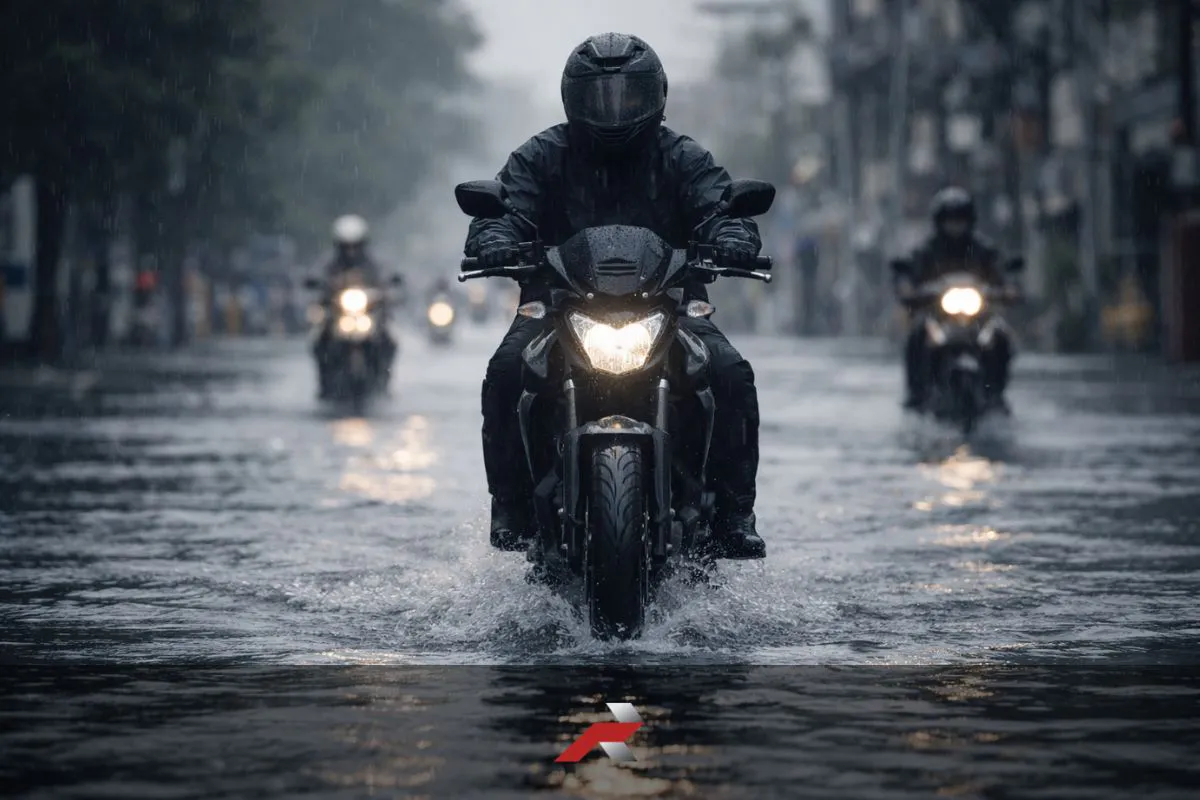
Choosing the best touring tire for Philippine monsoon season is important for safety, stability, and tire lifespan. Philippine roads include concrete highways, asphalt with tar strips, flooded streets, and long provincial rides under extreme heat. Not all touring tires perform well in these conditions. Some offer better wet braking, while others last longer under heavy load and top box setups. This guide compares Michelin, Pirelli, and Dunlop touring tires based on Philippine road conditions, price in the Philippines, availability, tire lifespan, and stability at highway speeds. This helps riders choose the right tire for daily riding, long rides, and monsoon season safety.
Riding in the Philippines during monsoon season is very different from riding in dry countries. Roads here are a mix of concrete highways, asphalt with tar strips, painted lines, steel plates, and sometimes flooded roads. Because of this, choosing the best touring tire philippine monsoon riders can rely on is not just about brand preference. It is about wet braking, stability, tire lifespan, and confidence on unpredictable roads.
Touring tires are popular among big bike riders because they are designed for long rides, highway stability at 80–100 kph, heavy load with top box setups, and consistent performance in both wet and dry conditions. However, not all touring tires behave the same on Philippine roads. Some perform well on smooth asphalt but feel slippery on concrete roads. Others last long but sacrifice wet grip.
This guide will help Filipino riders choose the right touring tire for monsoon season, daily commuting, and long-distance rides across the country.
Concrete roads, asphalt patches, and tar strips react differently in heavy rain. Tires that work abroad may not perform the same locally.
They are designed for long ride heat, heavy motorcycles, luggage, and stable highway speeds.
Many riders ask whether sport tires or touring tires are better for Philippine riding conditions. For dry roads and aggressive riding, sport tires can provide better grip and faster cornering. However, for Philippine monsoon season, touring tires are usually the better and safer choice.
Touring tires are designed with deeper grooves for water evacuation, which helps prevent hydroplaning on flooded roads and heavy rain. They also use rubber compounds that perform better on wet concrete roads and asphalt with tar strips. This improves wet braking and overall stability.
Another advantage of touring tires is tire lifespan. Sport tires usually wear faster, especially on rough concrete roads and during long rides under hot weather. Touring tires are designed to handle long ride heat, heavy load from top boxes and luggage, and long-distance highway riding at 80–100 kph.
For most riders in the Philippines who use their motorcycles for daily riding, long rides, and rainy season riding, touring tires are generally more practical, safer, and more economical than sport tires.
Choosing the right touring tire in the Philippines starts with understanding the roads. Many riders focus on brand, tread pattern, or price, but the real factor is how the tire behaves on Philippine surfaces during rain, heat, and heavy load riding.
Most major roads in the Philippines are concrete, not asphalt. Concrete becomes very slippery when wet, especially when the surface becomes polished over time. This is very common on highways, flyovers, and provincial roads.
Asphalt roads usually provide better grip. The problem starts when asphalt roads are repaired and tar strips are added. These tar strips become extremely slippery during rain, especially when leaning slightly during cornering.
Because of this combination of concrete roads, asphalt patches, and tar strips, touring tires for the Philippines must have strong wet grip and stable rubber compound, not just long tire life.
Flooded roads are a normal part of Philippine riding during monsoon season. Even shallow water can cause hydroplaning if the tire cannot evacuate water properly.
Touring tires usually have deeper grooves compared to sport tires. These grooves help push water away from the contact patch. This improves wet braking, straight-line stability, and confidence at 80–100 kph even during heavy rain.
Many riders in the Philippines choose sport touring tires like the Michelin Road series because of their wet grip and stability. If you want a detailed breakdown of how this tire performs in daily riding and wet conditions, you can read How the Michelin Road 6 Performs for Daily Sport Touring Riders, where real-world Philippine riding conditions are discussed.
Another factor many riders forget is heat. Long rides in the Philippines generate a lot of heat because of high ambient temperature and rough road surfaces. Add a top box, luggage, or passenger, and the tire is under constant load.
Touring tires are designed to handle long ride heat cycles, heavy motorcycles, and consistent highway speeds without wearing out too fast. This is why touring tires usually last longer than sport tires.
Choosing the right touring tire is not just about rain performance. It must balance wet grip, dry stability, load capacity, and tire lifespan in Philippine conditions.
Choosing the best touring tire philippine monsoon riders can rely on is not about choosing the most expensive tire. The important factors are wet grip, stability, tire lifespan, and performance on mixed road surfaces like concrete and asphalt with tar strips.
Wet braking is one of the most important factors during monsoon season. Sudden stops on wet concrete roads, painted lines, and steel plates are common in city riding. A good touring tire must maintain grip during emergency braking even on slippery surfaces.
Tires with silica-rich compounds usually perform better in wet conditions because they maintain grip even when the road surface is cold and wet.
Many touring riders travel at 80–100 kph on highways like NLEX, SLEX, and provincial roads. A good touring tire must remain stable at these speeds even during rain, crosswinds, and uneven road surfaces.
Stable tires reduce rider fatigue and improve long-distance comfort.
Long rides generate heat, especially on heavy motorcycles with top boxes and luggage. Touring tires must resist heat cycles and uneven wear to maintain performance over time. Tire lifespan is important because touring tires are expensive and availability in the Philippines can sometimes be limited.
When choosing a touring tire for Philippine monsoon season, three brands are commonly available and trusted by big bike riders: Michelin, Pirelli, and Dunlop. Each brand has different strengths depending on riding style, road conditions, and budget.
Michelin is known for wet grip and long tire lifespan. Many sport touring riders prefer Michelin because the tire compound performs well on wet concrete roads and asphalt with tar strips.
Michelin touring tires usually feel very stable at highway speeds and provide confident braking during heavy rain. They also tend to last longer compared to softer sport tires, which is important because touring tires are expensive and availability in the Philippines can sometimes be limited depending on tire size.
For riders who travel long distance and ride during rainy season, Michelin is often considered one of the safest choices.
Pirelli touring tires are known for handling, cornering feel, and stability during aggressive riding. They are popular among riders who want a balance between sport performance and touring comfort.
Pirelli tires usually have a slightly sportier feel compared to Michelin. Steering feels lighter, and cornering confidence is good even on mountain roads and twisty provincial highways.
If you want to understand how this tire performs in daily riding, wet roads, and long-distance touring, you can read Understanding the Pirelli Angel GT II for Daily Riding, Wet Roads, and Long-Distance Touring, where Philippine road conditions and real-world usage are discussed.
Dunlop tires are often chosen by riders who travel on mixed road conditions, including rough provincial roads, patched asphalt, and occasional gravel or construction areas.
Some Dunlop tires are slightly harder in compound, which helps improve tire lifespan and durability on rough concrete roads. This makes them a practical choice for riders who prioritize durability and price over maximum wet grip performance.
Each brand has strengths, and the best touring tire will depend on your riding style, load, road conditions, and budget.
When choosing the best touring tire philippine monsoon riders should also consider price, availability, and long-term ownership cost. Touring tires are more expensive than regular commuter tires, so lifespan and availability in the Philippines become very important factors.
Touring tire prices in the Philippines vary depending on brand, size, and shop availability. Michelin and Pirelli tires are usually more expensive, while some Dunlop models are slightly more affordable. However, availability can sometimes be limited, especially for uncommon tire sizes.
This is important because if your rear tire wears out and the same model is not available, you may be forced to change tire brands or replace both tires at the same time. Riders who travel long distance often choose tire models that are commonly available in Metro Manila and major provincial cities.
Some tires are expensive but last longer, while others are cheaper but wear out faster. The better way to compare tires is not just by price, but by cost per kilometer.
A tire that lasts 18,000 km may actually be cheaper in the long run than a tire that lasts only 10,000 km, especially for riders who travel long distance or ride daily.
Choosing a touring tire becomes easier when we compare them based on real Philippine riding conditions instead of just marketing claims. The table below summarizes how Michelin, Pirelli, and Dunlop touring tires generally perform in wet roads, concrete highways, long ride heat, load carrying, and tire lifespan.
| Tire Brand | Wet Grip | Concrete Roads | Long Ride Heat | Load / Top Box | Tire Lifespan | Price in PH | Availability |
|---|---|---|---|---|---|---|---|
| Michelin | Excellent | Excellent | Excellent | Excellent | Long | High | Medium |
| Pirelli | Very Good | Very Good | Very Good | Very Good | Medium | High | Medium |
| Dunlop | Good | Excellent | Very Good | Excellent | Long | Medium | High |
This table does not mean one brand is perfect for everyone. Instead, it shows general strengths based on rider feedback, road conditions in the Philippines, and touring usage.
Michelin is usually preferred for wet braking and rain performance. Pirelli is often chosen for handling and sport touring balance. Dunlop is commonly selected for durability, rough roads, and availability in the Philippines.
Wet grip should be your priority if you ride daily in heavy rain and highways. For long distance riding with luggage and a top box, durability and heat resistance become more important. Riders who enjoy twisty roads and sporty riding should focus more on handling and cornering feel.
When riders ask what the best touring tire philippine monsoon conditions require, the answer is not just wet grip. Philippine riding conditions combine rain, heat, rough concrete roads, asphalt patches, tar strips, and sometimes flooded roads. A good touring tire must perform consistently across all these conditions.
During monsoon season, wet braking becomes one of the most important safety factors. Riders often encounter sudden stops because of traffic, pedestrians, or vehicles changing lanes without warning.
Touring tires with silica compounds usually perform better in wet braking because the rubber remains flexible even on cold and wet road surfaces. This improves grip on concrete roads and painted lines, which are common causes of slipping during rain.
Hydroplaning resistance is also important. Tires with proper water evacuation grooves help maintain contact with the road even when passing through standing water.
Many touring riders travel on highways and provincial roads at speeds around 80–100 kph. During rain, stability becomes more important than aggressive cornering grip.
A good touring tire should feel stable when passing through rain grooves, road repairs, and uneven surfaces. The motorcycle should not feel like it is floating or wobbling when crossing painted lines or tar strips.
Stable tires reduce rider fatigue, especially during long rides in the rain.
Some riders consider using adventure tires instead of touring tires because of rough roads and occasional flooded streets. Adventure tires usually have deeper grooves and stronger sidewalls, which help on rough roads and light gravel.
In fact, Michelin has been expanding its adventure tire lineup, and according to Michelin’s move to develop the Anakee Adventure 2 tire, the company is positioning itself strongly in the adventure segment in the coming years. This shows how tire manufacturers are recognizing that many riders worldwide are dealing with mixed road conditions, not just smooth highways.
For riders who encounter rough roads, construction zones, and mixed surfaces, some tires like Dunlop’s mixed road tires can also be considered. You can read real ownership feedback and Philippine road performance in Dunlop Trailmax Mixtour Rear Tire for Daily Riding and Philippine Road Conditions: Real Ownership and Usage Insights, especially for riders who travel on both city roads and rough provincial roads.
For most highway and daily riders, touring tires remain the best option for stability, wet grip, and long-distance comfort.
One of the most important factors when choosing touring tires in the Philippines is tire lifespan. Touring tires are expensive, and riders want tires that can last long even with daily riding, long rides, heavy load, and hot weather conditions.
In the Philippines, tire wear is affected by several factors. Concrete roads are rougher compared to asphalt, so tires wear faster. Long rides generate heat, which also accelerates tire wear. Riding with a passenger, top box, or luggage adds load, which increases rear tire wear. Frequent stop-and-go traffic in the city also shortens tire lifespan.
Most touring tires in Philippine conditions last around 12,000 to 20,000 kilometers depending on riding style, motorcycle weight, and tire compound. Softer tires usually provide better wet grip but wear faster. Harder tires last longer but may have less wet grip performance.
Another factor is tire pressure. Incorrect tire pressure can significantly reduce tire lifespan and affect wet grip performance. Underinflated tires wear on the sides and overheat. Overinflated tires wear in the center and reduce grip.
Proper maintenance, correct tire pressure, smooth throttle control, and proper braking habits can extend tire lifespan significantly. Choosing the right touring tire is important, but proper riding habits and maintenance also play a big role in how long the tire will last.
Choosing the best touring tire philippine monsoon riders should use depends on riding style, motorcycle weight, load, and road conditions. There is no single tire that is perfect for everyone. The best tire is the one that matches how and where you ride.
If you ride daily in the city, your tire will often encounter wet concrete roads, painted pedestrian lanes, steel plates, and stop-and-go traffic. Wet braking and low-speed grip become very important in this situation.
You also need a tire that warms up quickly and performs well even on short rides. Some tires are designed for long-distance touring and may not reach optimal temperature quickly during short city rides.
For daily commuting riders, prioritize wet grip, stability on concrete roads, and availability in the Philippines so replacement tires are easy to find.
Long distance riders need tires that can handle long ride heat, heavy load from luggage or top box, and stable performance at 80–100 kph. Tire lifespan also becomes very important for touring riders.
Durability and heat resistance matter more for long rides than aggressive cornering grip. Touring riders should choose tires known for long lifespan and consistent performance even after thousands of kilometers.
If you want to understand tire construction, compounds, and how motorcycle tires really work, you can read Motorcycle Tire Guide 101 and FAQ, which explains tire structure, tread design, and tire performance in different riding conditions.
Motorcycles with passenger, top box, crash guards, and accessories are heavier. Heavier motorcycles put more pressure on the rear tire, which increases wear and heat buildup.
For loaded motorcycles, choose touring tires with strong carcass construction and good heat resistance. Stability becomes more important than sporty handling when riding with heavy load.
The right touring tire should feel stable, predictable, and confidence-inspiring even when the motorcycle is fully loaded and riding in the rain.
After considering Philippine rain, concrete roads, asphalt with tar strips, flooded roads, long ride heat, heavy load, tire lifespan, and price in the Philippines, a few touring tires consistently stand out for Philippine riding conditions.
Michelin touring tires are often recommended for riders who prioritize wet grip, wet braking performance, and long tire lifespan. They are known for stability at highway speeds and predictable handling in both wet and dry conditions. Many long-distance riders prefer Michelin because the tires perform consistently even after many kilometers.
Pirelli touring tires are popular among riders who want a balance between touring comfort and sporty handling. The tires feel more responsive during cornering and provide good stability on mountain roads and twisty provincial highways. Wet grip performance is also good, making them suitable for monsoon riding.
Dunlop tires are often chosen by riders who frequently travel on rough roads, patched asphalt, and provincial roads. These tires are known for durability and strong performance under heavy load and long-distance riding. They are also usually easier to find in the Philippines compared to some premium touring tires.
Each tire brand has strengths, and the best choice depends on your riding style, motorcycle weight, and typical road conditions.
Many riders choose touring tires based only on brand reputation or price. This is one of the most common mistakes. The best tire for another rider may not be the best tire for your motorcycle, riding style, or road conditions.
One common mistake is choosing a tire that is too sporty. Sport tires may have good dry grip but usually wear faster and may not perform as well in heavy Philippine rain compared to touring tires.
Another mistake is ignoring tire availability. Some tires are very good but difficult to find in the Philippines. When the rear tire wears out, riders are forced to change tire brands or replace both tires at the same time.
Riders also sometimes ignore load rating. Adding a top box, luggage, crash guards, and a passenger increases motorcycle weight. Tires that are not designed for heavy load may wear faster or feel unstable at highway speed.
Another mistake is ignoring tire pressure. Incorrect tire pressure affects wet grip, tire lifespan, and stability. Proper tire pressure is one of the easiest ways to improve tire performance and safety.
Choosing the right touring tire requires considering road conditions, riding style, load, and long-term ownership cost, not just brand name.
Choosing the best touring tire philippine monsoon riders should use is not about finding the most expensive tire or the most popular brand. The correct tire is the one that matches Philippine road conditions, your riding style, and how you use your motorcycle every day.
Philippine roads include concrete highways, asphalt with tar strips, flooded streets, and rough provincial roads. A tire that performs well abroad may not perform the same on local roads. Always prioritize wet grip, stability, and durability for Philippine conditions.
If you ride with a top box, luggage, or passenger, choose tires designed for touring and heavy load. Long rides generate heat, and heat affects tire wear and performance. Tire lifespan and cost per kilometer are important factors for touring riders.
Before choosing a tire, check if the tire size and model are available in the Philippines. A good tire that is difficult to find locally may cause problems when replacement time comes.
The best touring tire is the tire that keeps you safe, stable, and confident in both rain and long-distance riding.
The best touring tire for Philippine monsoon season is one that provides strong wet grip, stable performance on concrete roads, good water evacuation, long tire lifespan, and stable handling at highway speeds. Michelin, Pirelli, and Dunlop touring tires are commonly used by big bike riders in the Philippines.
Yes, touring tires are generally better than sport tires for rainy season because they have deeper grooves, better water evacuation, and longer lifespan. They are also more stable for long rides and heavy motorcycles with top box or luggage.
Touring tires in the Philippines usually last around 12,000 to 20,000 kilometers depending on riding style, motorcycle weight, tire pressure, and road conditions. Concrete roads and heavy load can shorten tire lifespan.
Expensive touring tires can be worth it if they last longer and provide better wet grip and stability. Sometimes a more expensive tire with longer lifespan can be cheaper in the long run compared to cheaper tires that wear out quickly.
Touring tires can handle shallow flooded roads better than sport tires because of their tread grooves and water evacuation design. However, riders should still slow down and avoid deep flooded roads to prevent hydroplaning and engine damage.
Choosing the best touring tire philippine monsoon riders can trust is not about choosing the most popular brand. It is about choosing a tire that performs well on Philippine roads, during heavy rain, long rides, and daily commuting.
Philippine riding conditions are unique. Riders encounter concrete roads, asphalt with tar strips, flooded streets, rough provincial highways, and long ride heat. Tires must also handle heavy load from top boxes, luggage, and passengers. Because of these conditions, touring tires are usually the best choice for big bikes used for daily riding and long-distance travel.
Michelin touring tires are known for wet grip and long lifespan. Pirelli touring tires are known for sporty handling and stability. Dunlop touring tires are known for durability and rough road performance. Each brand has strengths depending on riding style and road conditions.
The best touring tire is the one that provides confidence in the rain, stability at highway speeds, long tire lifespan, and availability in the Philippines. Choosing the right tire improves safety, comfort, and overall riding experience, especially during monsoon season.
Featured image: Editorial composite image created for RobiMotoPH.