Skip to content
Contact & Community
📍 Metro Manila, Philippines
🌐 robimotoph.com
✉️ hello@robimotoph.com
📱 +63 917 517 0594
📍 Metro Manila, Philippines
🌐 robimotoph.com
✉️ hello@robimotoph.com
📱 +63 917 517 0594

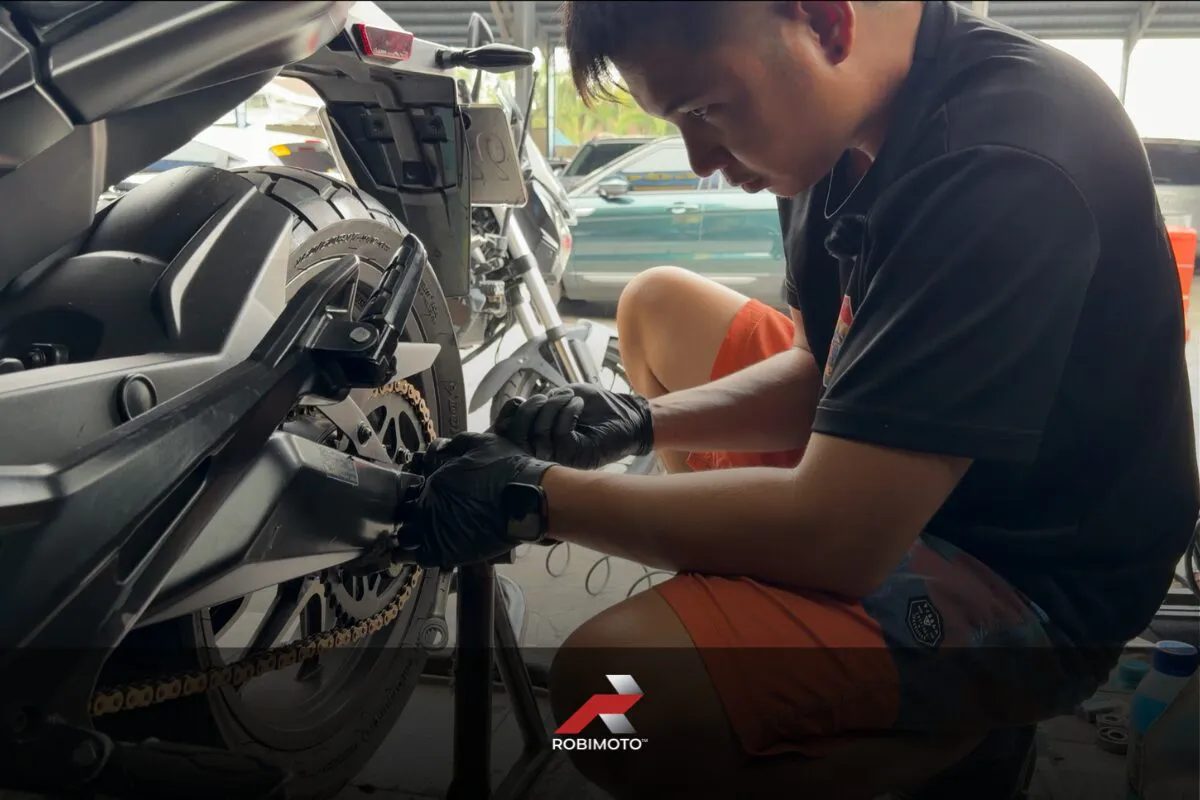
Motorcycle chain, belt, and shaft drive systems deliver power to the rear wheel in different ways. Each affects maintenance, weight, cost, power delivery, and long-term ownership. This guide compares the three systems using Philippine riding situations, from daily city commuting to weekend rides and long-distance touring. It explains why chain drive remains practical for many riders, where belt drive offers a cleaner and quieter experience, and why shaft drive appeals to owners who prioritize durability. The goal is not to declare one universal winner, but to help riders choose the system that matches their motorcycle, route, budget, and maintenance habits.
For most Filipino riders, motorcycle chain vs belt vs shaft drive has no single winner. Chain drive is usually the most practical because parts and service are easier to find. Belt drive is cleaner and quieter. Shaft drive needs less routine attention, but repairs can be heavier on the wallet.
On paper, all three systems can look convincing. The real difference appears after months of commuting, weekend rides, rain, dust, and regular maintenance.
A daily rider may value easy servicing and affordable replacement parts. A cruiser owner may prefer a cleaner rear wheel and quieter operation. A touring rider may accept added weight in exchange for fewer routine drivetrain checks during long trips.
The final drive also affects more than maintenance. It can influence weight, power delivery, gearing options, repair difficulty, and long-term ownership cost. That is why it should be judged as part of the whole motorcycle, not as a feature on its own.
Honda recommends cleaning, lubrication, and slack checks for motorcycle chains. Harley-Davidson requires belt condition and tension inspections. Honda also describes shaft drive as a low-maintenance feature on its Shadow motorcycles. [1][2][3]
This guide compares chain, belt, and shaft drive through real Philippine riding conditions. It focuses on daily traffic, sudden rain, parts availability, maintenance habits, and long-distance use. The goal is not to crown one system as the best. It is to help ka-Robi choose what fits the bike, the budget, and the way the motorcycle will actually be used.
For most Filipino riders, chain drive is still the most practical choice because parts, service, and replacements are easier to find. In the motorcycle chain vs belt vs shaft drive comparison, belt drive suits riders who want a cleaner and quieter setup, while shaft drive fits long-distance use with less routine upkeep. Chain systems need regular cleaning, lubrication, and slack checks, while belts still require condition and tension inspection. Shaft drives reduce day-to-day maintenance, but they still need scheduled oil and seal checks. [1][2][3]
A motorcycle final-drive system is the part that sends power from the transmission to the rear wheel. Depending on the motorcycle, it uses a chain and sprockets, a toothed belt and pulleys, or an enclosed shaft-and-gear assembly.
The power travels through three basic stages:
A chain drive uses metal links wrapped around front and rear sprockets. It is exposed, easy to inspect, and relatively simple to service. That exposure also means riders must watch for dirt, rust, dry links, damage, and incorrect chain slack. Honda identifies the chain’s main job as transferring engine power to the rear wheel through the sprockets. [1]
A belt drive follows a similar layout but uses a reinforced toothed belt. It does not need chain lubricant, which keeps the rear wheel and swingarm cleaner. However, it still needs inspection for proper tension, cracked teeth, frayed edges, trapped debris, and unusual wear. [2]
A shaft drive sends power through an enclosed rotating shaft and gears near the rear wheel. Since most moving parts are protected, it needs less routine cleaning. The trade-off is that internal repairs are usually more complicated and less suitable for roadside work. [3]
For chain-equipped motorcycles, our guide to motorcycle chain maintenance in tropical conditions explains how rain, humidity, traffic grime, and outdoor parking affect the system.
Understanding this basic difference makes the rest of the comparison easier. Each design changes the motorcycle’s upkeep, weight, repair options, and overall ownership experience.
Chain drive remains the most practical setup for many Filipino riders. It offers direct power delivery, low weight, affordable replacement parts, and familiar servicing. The downside is simple: the chain and sprockets are exposed to rain, dust, road grime, and poor adjustment.
Its straightforward design gives riders several advantages:
That last point matters in the Philippines. Even outside major cities, finding a shop that can work on a chain-driven motorcycle is usually easier than finding specialist service for a shaft system. Still, easy access to a mechanic should not replace regular owner checks.
Honda advises riders to inspect drive-chain slack because a chain that is too tight or too loose can cause problems. The correct measurement and adjustment procedure depends on the motorcycle’s owner’s manual. [4]
After riding in the rain, the real concern is not whether the chain still looks clean. Moisture, dirt, and old lubricant can remain around the rollers, seals, and sprockets. Our guide to motorcycle chain maintenance in tropical conditions explains how Philippine heat, humidity, and frequent rain affect chain care.
PRO TIP
Inspect the chain before washing or lubricating it. Dirt may make stiff links, damaged seals, rust spots, and uneven tension easier to notice.
Chain drive works well when the rider stays consistent. Ignore it for too long, and the most affordable system can still lead to damaged sprockets, poor power delivery, or an avoidable repair.
Belt drive suits riders who want less mess, quieter operation, and fewer routine maintenance tasks. It does not need chain lubricant, so there is no oil fling on the wheel or swingarm. The trade-off is higher replacement cost, limited parts availability, and fewer roadside repair options.
A motorcycle belt uses reinforced teeth that engage with front and rear pulleys. Gates describes belt systems as clean, quiet, smooth, corrosion-resistant, and low-maintenance compared with exposed chains. [5]
Still, low maintenance does not mean maintenance-free. Harley-Davidson service information includes regular checks for belt tension, alignment, wear, and pulley condition. More frequent inspection may also be needed in extreme heat, dusty roads, rough surfaces, and heavy stop-and-go traffic. [2]
For Philippine riding, owners should watch for:
Belt drive works well on cruisers and road-focused motorcycles. It also suits riders who prefer a cleaner rear wheel and do not want to lubricate a chain regularly.
The limitation becomes clearer on rough roads, loose gravel, and construction areas. Debris can damage the belt, while finding the correct replacement may take longer than sourcing a common motorcycle chain.
Changing final gearing is also less flexible than replacing chain sprockets. More importantly, a damaged belt is not something most riders can fix beside the road.
Belt drive offers convenience, but only when the motorcycle, route, and local parts support make sense for the owner.
Shaft drive suits riders who want fewer routine drivetrain chores, especially on long-distance motorcycles. Most moving parts are enclosed, so there is no exposed chain to clean, lubricate, or adjust. The trade-off is added weight, more complex repairs, and less chance of fixing a problem beside the road.
Instead of using a chain or belt, the system transfers power through a rotating shaft and a set of final-drive gears. These components are usually built into the swingarm area and protected from direct rain, dust, and road grime.
That protection makes ownership easier, but shaft drive is not maintenance-free. Honda’s 2024 Shadow Phantom manual instructs owners to check the final-drive oil level and inspect the system for leaks. It also warns against contamination and incorrect filling. [6] Honda describes the same motorcycle’s shaft drive as a low-maintenance feature suited to longer rides. [3]
For Filipino touring riders, the benefit is easy to understand. After a wet or dusty trip, there is no chain waiting to be cleaned and lubricated. Routine drivetrain attention is generally less frequent, and the rear-wheel area stays cleaner.
However, repairs are another story. Work involving internal gears, seals, bearings, or the housing usually needs proper tools and a mechanic familiar with the system.
Sa long ride, malaking bagay ang mas kaunting iniisip. Pero low-maintenance does not mean puwede nang pabayaan.
Shaft drive makes the most sense on motorcycles designed for touring, cruising, or carrying heavier loads. Riders still need to follow the model-specific service schedule. A small leak or worn seal left unchecked can turn a convenient system into an expensive repair.
The motorcycle chain vs belt vs shaft drive comparison is easier when viewed through actual ownership. Chain drive offers the best mix of performance, light weight, affordable parts, and easy servicing. Belt drive gives cleaner and quieter operation. Shaft drive reduces routine upkeep but adds weight, complexity, and higher repair risk.
| Factor | Chain Drive | Belt Drive | Shaft Drive |
|---|---|---|---|
| Routine maintenance | Highest | Low | Low |
| Cleaning and lubrication | Required | No lubricant needed | No external lubrication |
| Weight | Usually lightest | Light to moderate | Usually heaviest |
| Gearing changes | Relatively easy | Limited | Difficult |
| Exposure to dirt and debris | Highest | Moderate | Lowest |
| Roadside service | Most practical | Limited | Least practical |
| Common applications | Sport, naked, commuter, adventure | Cruiser and road-focused motorcycles | Touring, cruiser, large adventure |
| Potential repair cost | Usually lower | Moderate | Potentially highest |
Honda’s maintenance guidance shows that chain systems need regular checks for condition, slack, cleaning, and lubrication. Gates describes motorcycle belts as clean, quiet, smooth, and low-maintenance. Honda and BMW documentation also show that shaft systems use enclosed components but still require model-specific inspection and servicing. [1][5][6][7]
These are general tendencies, not fixed rules. Actual ownership cost depends on motorcycle design, engine output, riding conditions, parts pricing, dealer support, and how well the owner follows the service schedule.
🏍️
Key Analysis: The system needing the least routine attention is not always the most practical. For many Filipino riders, affordable parts, easy inspection, and access to capable mechanics matter more than avoiding chain cleaning.
Use this comparison as one part of the buying decision. The complete motorcycle, including comfort, weight, price, reliability, and after-sales support, still matters more than the final drive alone.
n the Philippines, the best drivetrain is not only about design. Service access, parts availability, rain, traffic, and maintenance habits can matter just as much. Chain drive stays practical because most shops can work on it. Belt and shaft systems need less routine attention, but parts and specialist service may be harder to find.
PAGASA notes that the country has high relative humidity, warm temperatures, and frequent rainfall. These conditions affect exposed motorcycle parts over time. [8]
Each system reacts differently:
Traffic adds another layer. A daily commuter may spend hours in stop-and-go conditions, pass through wet roads, and collect grime faster. A weekend motorcycle may travel less but sit unused for longer periods. Both need inspection, but not for the same reasons.
Scenario: One rider uses a chain-driven motorcycle through Metro Manila five days a week. Another rides a shaft-driven tourer twice a month. The commuter handles more cleaning and adjustment, but finding chain service is easier. The tourer does less routine drivetrain work, yet a seal leak may require a better-equipped shop.
For wet-weather care, see our guide to chain maintenance during the rainy season. Our big-bike maintenance schedule for tropical conditions also explains why service planning should reflect actual use, not mileage alone.
The most practical system is the one the owner can inspect, maintain, and support consistently.
The right final drive depends on how often you ride, where you travel, and how much maintenance you are willing to handle. Chain drive suits riders who want accessible servicing and flexible performance. Belt drive favors cleaner road use, while shaft drive fits riders who prefer fewer routine drivetrain tasks.
Use these rider profiles as a practical guide:
The best choice is not automatically the most advanced design. It is the system that matches your route, budget, access to parts, nearby service options, and willingness to inspect the motorcycle regularly.
A motorcycle should not be judged by its final-drive system alone. Comfort, weight, engine character, price, fuel range, parts availability, and dealer support usually affect ownership more. The drivetrain should match the motorcycle’s purpose, not become the only reason to buy it.
A chain-driven motorcycle can still be the better touring option when it offers comfortable ergonomics, reliable parts support, and easier servicing. A shaft-driven model may need less routine attention, yet feel too heavy, expensive, or difficult to repair for the rider’s actual use.
The same applies to belt drive. A belt-driven cruiser may be quiet and clean, but it may not suit riders who regularly pass through rough roads, gravel, or areas where replacement belts are difficult to source.
Before deciding, ask these questions:
🏍️
Rider Insight: A low-maintenance drivetrain does not always mean low-cost ownership. Parts availability, labor, motorcycle weight, and neglected repairs still affect the total cost.
Choose the complete motorcycle first. Then check whether its final drive fits your route, budget, and maintenance habits. That approach is more practical than choosing a bike because one feature looks better on paper.
Shaft drive can last a long time because most of its working parts are enclosed and protected from dirt and rain. Its actual lifespan still depends on proper servicing, final-drive oil, seals, bearings, and overall design. [6]
Not for every rider. Shaft drive needs less routine attention, but chain drive is lighter, easier to inspect, and usually easier to service or replace. The better choice depends on the motorcycle’s purpose and the rider’s maintenance habits. [4][6]
No. A motorcycle drive belt does not use chain lubricant. Riders still need to inspect its tension, teeth, edges, alignment, and pulley condition. [2][5]
Chain drive is commonly preferred for performance motorcycles because it is light, direct, and easy to adjust through sprocket changes. Actual performance still depends on the engine, transmission, gearing, and total motorcycle design.
Routine chain care is usually affordable. Costs rise when the chain is neglected, stretched, rusted, or paired with worn sprockets. Regular inspection helps prevent premature replacement and related damage. [4]
Yes. A belt can fail when it is damaged, incorrectly tensioned, contaminated, or overdue for replacement. Cracks, missing teeth, frayed edges, unusual noise, and trapped debris are warning signs worth checking. [2]
Chains offer low weight, compact packaging, strong power handling, and easier gearing changes. They are also faster to inspect and replace, which suits performance-focused motorcycles.
For many Filipino riders, chain drive remains the most practical because parts and service are easier to find. Belt drive suits paved-road use and cleaner ownership. Shaft drive works well for touring riders with access to proper service and replacement parts.
In the motorcycle chain vs belt vs shaft drive comparison, chain drive remains the most practical all-around choice for many Filipino riders. Parts are easier to find, most shops can service it, and replacement costs are usually manageable.
Chain drive is the better choice when performance, accessible parts, and easy servicing matter most.
For riders who mainly stay on paved roads, belt drive offers a cleaner and quieter setup with less routine work.
Meanwhile, shaft drive suits long-distance use when reduced maintenance matters more than added weight, higher cost, and specialist servicing.
The final drive should support the motorcycle you actually need. Before buying, check the bike’s comfort, weight, parts availability, dealer support, and maintenance schedule. A low-maintenance system is not practical when replacement parts or capable mechanics are difficult to find.
For chain-driven motorcycles, our guides on motorcycle chain maintenance in tropical conditions and chain care during the rainy season cover the next steps.
The best final drive is the one that fits your route, budget, and maintenance habits, not simply the one that looks best on paper.
[1] Honda Global. “Clean the Drive Chain Yourself!” https://global.honda/en/motorcycle-aftersales/plusone/202410.html
[2] Harley-Davidson Service Information Portal. “Drive Belt and Sprocket Inspection.” https://serviceinfo.harley-davidson.com/sip/service/procedure/2153250976973228711/BLAISE/1824280/en_US?nid=11454&uid=1824280
[3] Honda Powersports. “Shadow Phantom ABS Cruiser Motorcycle.” https://powersports.honda.com/motorcycle/cruiser/shadow-phantom
[4] Honda Global. “Drive Chain / Sprocket.” https://global.honda/en/motorcycle-aftersales/maintenance/drivechain_sprocket.html
[5] Gates Corporation. “Motorcycle / Scooter.” https://www.gates.com/us/en/urban-mobility-and-powersports/motorcycle-scooter.html
[6] Honda Powersports. “2024 Shadow Phantom Owner’s Manual.” https://cdn.powersports.honda.com/documentum/MWOM/ml.remawmom.amja2424omen.pdf
[7] BMW Motorrad. “Paralever and Cardan.” https://www.bmwmotorcycles.com/en/engineering/detail/motor-drivetrain/paralever-cardan.html
[8] PAGASA. “Climate of the Philippines.” https://www.pagasa.dost.gov.ph/information/climate-philippines