Skip to content
Contact & Community
📍 Metro Manila, Philippines
🌐 robimotoph.com
✉️ hello@robimotoph.com
📱 +63 917 517 0594
📍 Metro Manila, Philippines
🌐 robimotoph.com
✉️ hello@robimotoph.com
📱 +63 917 517 0594

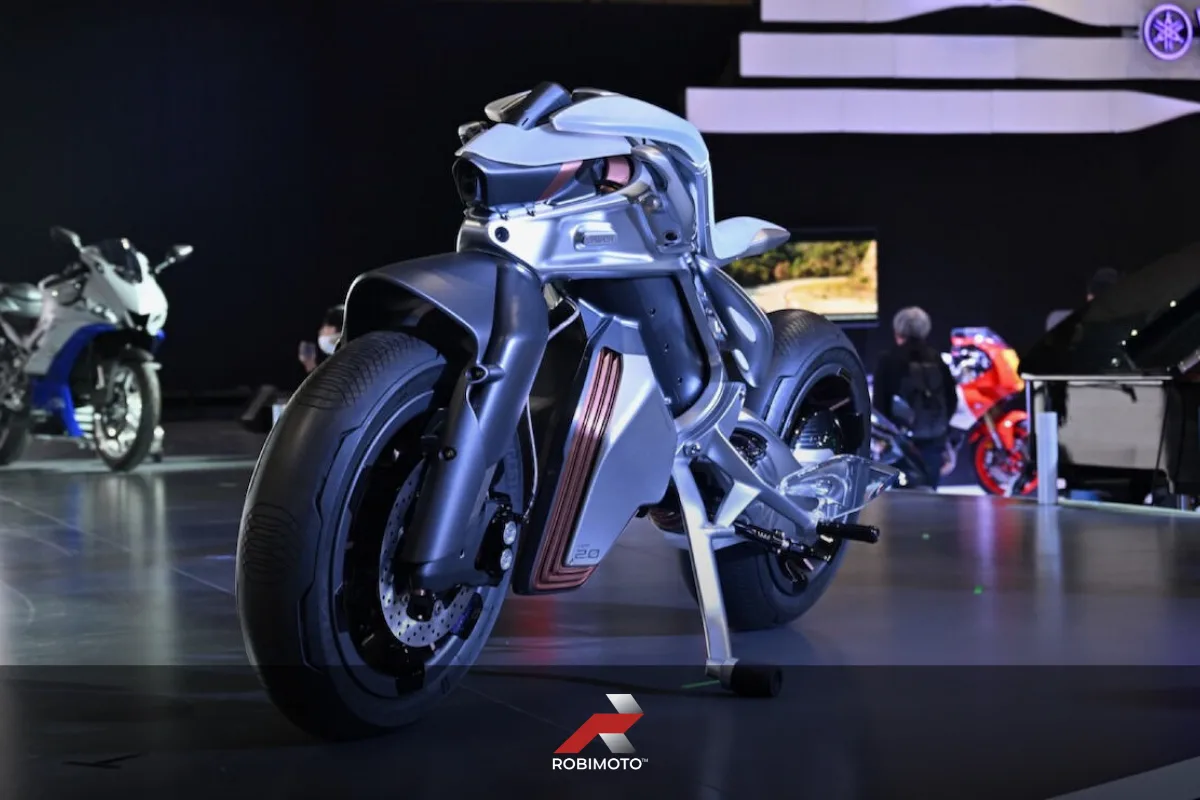
Yamaha has unveiled five world-premiere motorcycle concepts at the Japan Mobility Show 2025, each redefining the boundaries of technology and human connection. From self-learning AI motorcycles to hydrogen-powered prototypes, Yamaha’s lineup pushes the limits of mobility design. But beyond the spectacle, what do these innovations mean for everyday riders—especially here in the Philippines? Let’s explore how Yamaha’s future vision could reshape how ka-Robi experience the road ahead.
The Yamaha JMS 2025 showcase at the Japan Mobility Show didn’t just reveal motorcycles—it unveiled a glimpse into the future of mobility.
With five world-premiere Yamaha JMS 2025 concepts, the brand challenges how riders connect with machines. From self-balancing AI technology to hydrogen-powered scooters, Yamaha continues to push beyond engineering toward emotion and human experience.
Imagine a motorcycle that can stand up on its own, recognize you, and learn from how you ride. That’s MOTOROiD Λ, one of the headline debuts from Yamaha JMS 2025.
Built with Sim2Real learning technology, MOTOROiD Λ doesn’t rely on pre-programmed movements—it “learns” balance and motion through experience. Over time, it becomes more stable and responsive. Yamaha calls it “a mobility that grows with you.”
This concept aims to build trust between rider and machine. For beginners, that could mean safer starts. For pros, it’s a tool that mirrors their rhythm.
Relevance to the Philippines: Imagine navigating EDSA traffic with a bike that keeps its own balance even at crawling speeds. AI-driven assistance like this could help new riders and enhance safety for commuters.
Learn more about Yamaha’s official MOTOROiD Λ concept on Yamaha Global Newsroom.
Another major Yamaha JMS 2025 highlight is the TRICERA Proto, a three-wheel electric “autocycle” featuring 3-Wheel Steering (3WS) technology.
Both the front and rear wheels turn independently, delivering sharper cornering and exceptional stability. It also introduces αlive AD, a digital sound system that adds a layer of emotion to silent EV riding.
Why it matters for ka-Robi: This hybrid between a bike and a car could appeal to riders who want open-air freedom with added safety. In Metro Manila’s tight roads, 3WS could redefine control and confidence.
The concept drew attention across global motorcycle publications after Yamaha introduced the TRICERA Proto at JMS 2025.
Among Yamaha’s most promising electric projects, the PROTO BEV is a battery-electric supersport motorcycle that proves silence doesn’t have to mean boredom.
With a large battery and lightweight frame, it’s built for performance and emotion. Yamaha wants EVs to stay thrilling, not sterile. Its digital sound synthesis bridges technology and soul, keeping that Yamaha identity alive even without an exhaust note.
For Filipino riders: The challenge remains infrastructure. Until we see wider charging networks, electric motorcycles like this will serve more as pioneers than daily commuters.
The H₂ Buddy Porter, another Yamaha JMS 2025 reveal, is a hydrogen-powered scooter co-developed with Toyota. It promises around 100 km per tank and Euro 5 emissions compliance, using a clean hydrogen combustion system instead of electricity.
Hydrogen offers a new path toward carbon neutrality without sacrificing the feel of combustion. However, hydrogen refueling remains limited even in Japan—making infrastructure the biggest challenge.
For local riders: If adapted in the Philippines, hydrogen could power small, zero-emission fleets for urban riders or delivery services—once refueling becomes available.
Read Yamaha and Toyota’s hydrogen collaboration overview on Reuters.
Closing the Yamaha JMS 2025 lineup are two concept e-bikes that celebrate Yamaha’s beginnings: the minimalist Y-00B Base and the retro-styled Y-00B Bricolage.
The Bricolage pays tribute to the 1955 YA-1, Yamaha’s first motorcycle, blending vintage aesthetics with electric functionality. The Base variant strips mobility to its purest form—light, simple, and urban-ready.
For Filipino riders, this could mark Yamaha’s entry into the growing e-bike market, offering quality and reliability beyond generic imports.
For the Philippines: e-bikes and e-mopeds are growing fast here, from delivery apps to weekend rides. If Yamaha enters this market segment seriously, local riders might finally see reliable, brand-backed alternatives to generic e-bikes flooding local stores.
Every Yamaha JMS 2025 concept centers on one philosophy—technology that exists for people. These machines are not meant to replace riders but to amplify their connection to motion, emotion, and creativity.
From AI-assisted balancing to clean-energy propulsion, Yamaha’s message is clear: the heart of riding will always be human.
The big question is whether our country is ready for what Yamaha just showed.
As highlighted in Muffler Awareness: Riding with Respect and Peace on the Road, true progress starts with responsibility. Smart bikes or loud pipes—discipline will always define the kind of rider we become.
The Yamaha JMS 2025 lineup paints a future where machines adapt to riders, not the other way around. For ka-Robi, it’s a wake-up call that innovation and empathy can coexist on the same road.
Whether it’s AI balance, 3-wheel control, or hydrogen energy, Yamaha’s vision reminds us that riding will always be about harmony—between man, machine, and motion.
Featured image via MyNavi.jp. All rights belong to their respective original owners.