Skip to content
Contact & Community
📍 Metro Manila, Philippines
🌐 robimotoph.com
✉️ hello@robimotoph.com
📱 +63 917 517 0594
📍 Metro Manila, Philippines
🌐 robimotoph.com
✉️ hello@robimotoph.com
📱 +63 917 517 0594

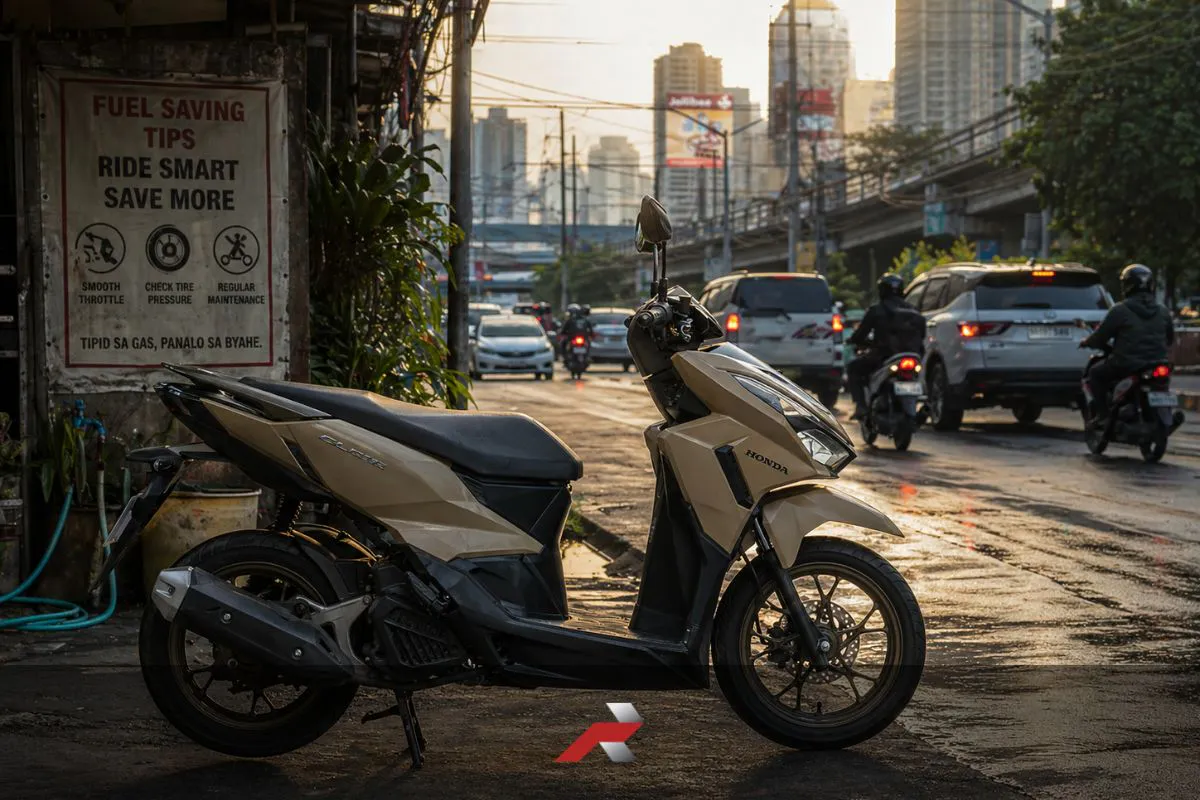
Fuel saving scooter riding tips are essential for riders navigating daily traffic in the Philippines. This guide explains how riding habits, throttle control, tire pressure, and real-world conditions affect fuel consumption. Learn practical techniques that work in stop-and-go traffic, hot weather, and mixed road conditions. Based on real rider behavior and Philippine commuting patterns, this article breaks down what actually improves efficiency versus common misconceptions. Whether you ride for work or daily errands, these insights help reduce fuel cost, improve control, and extend your scooter’s performance in real-world use.
Fuel saving scooter riding tips are most effective when applied consistently in real Philippine riding conditions such as traffic congestion, high temperatures, short-distance commuting, and unpredictable stop patterns. These habits focus on controlling throttle input, maintaining steady riding behavior, and reducing unnecessary engine load to improve efficiency over time.
In daily Philippine use, scooters are rarely ridden in ideal conditions. Riders deal with EDSA-level traffic, sudden stops, uneven roads, and frequent idling. Because of this, actual fuel consumption can vary by 10–30% depending on how the scooter is used, not just its specifications.
Two riders using the same scooter can experience very different results. One may stretch every liter, while another refuels more often. The difference usually comes from riding behavior, consistency, and awareness of conditions.
Based on rider reports and real-world commuting patterns, small habits repeated daily create a measurable impact over time. These include smoother acceleration, better route choices, and proper maintenance.
This guide breaks down those habits into a practical system.
Because in real riding, fuel efficiency is not controlled by the machine alone.
It is shaped by the rider.
Fuel efficiency matters in daily Philippine riding because repeated inefficiencies in traffic, heat, and stop-and-go conditions can significantly increase long-term fuel cost and reduce overall riding efficiency. Even small differences in riding behavior can compound into noticeable expenses over time.
In the Philippines, scooters are not used occasionally. They are daily tools for commuting, errands, and work. That means fuel consumption is not a one-time concern. It becomes a weekly and monthly pattern.
Consider a simple comparison based on rider behavior:
| Riding Style | Average Consumption | Weekly Distance | Fuel Used |
|---|---|---|---|
| Aggressive | 30 km/L | 300 km | 10 L |
| Controlled | 38 km/L | 300 km | 7.9 L |
That difference is around 2 liters per week.
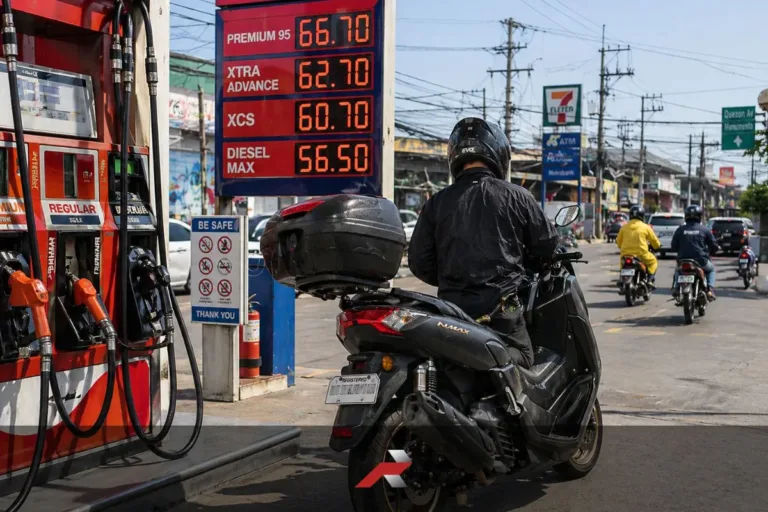
At ₱70 per liter, that’s:
Same scooter. Same route. Different habits.
Daily riding conditions amplify inefficiency:
Based on rider observations, stop-and-go riding alone can increase fuel consumption by up to 15–25% compared to steady movement.
That means even a fuel-efficient scooter can perform poorly if riding habits are inconsistent.
Fuel-efficient riders tend to share the same behavior patterns:
These are not just fuel-saving habits. They reflect control and awareness.
There is also a direct link between efficiency and safety.
A rider who:
…will not only save fuel but also reduce risk.
Fuel efficiency is not about chasing numbers.
It is about reducing waste in real conditions.
You cannot remove traffic.
You cannot change fuel prices.
But you can control how much fuel you waste every day.
And that control starts with how you ride.
Scooters consume fuel based on throttle input, engine load, and resistance, but in real-world Philippine riding conditions, frequent changes in speed, traffic patterns, and environmental factors make fuel consumption less predictable and often higher than expected.
At a basic level, fuel is used whenever the engine produces power.
More throttle means more fuel. Less throttle means less fuel.
That part is simple.
The challenge comes from how often riders change throttle input.
In ideal conditions, fuel use stays stable.
In city riding, it rarely does.
In real conditions, your scooter constantly cycles through:
Each cycle increases fuel demand.
Based on rider observations, frequent throttle changes can increase fuel use by 10–20% compared to steady riding.
These factors combine to make fuel consumption highly dependent on how the scooter is used.
If you want to better understand how different setups perform, you can see how different options compare in real use through the Scooter Fuel Efficiency Comparison Philippines Guide.
Smooth throttle control improves fuel efficiency by reducing sudden fuel spikes, stabilizing engine demand, and maintaining consistent movement in traffic-heavy conditions. In daily Philippine riding, controlled acceleration can reduce unnecessary fuel use by up to 10–20% compared to aggressive input patterns.
Most fuel loss starts at the throttle.
Every time you twist the throttle, the engine responds by injecting fuel.
The faster and harder the twist, the more fuel is delivered.
In traffic, this happens repeatedly.
Many riders follow this pattern:
This creates repeated fuel spikes.
Based on rider reports, this stop-and-burst pattern is one of the biggest contributors to poor fuel efficiency in city riding.
Controlled riders apply the throttle differently:
This reduces unnecessary fuel injection.
| Throttle Behavior | Fuel Use | Control Level |
|---|---|---|
| Sudden bursts | High | Low |
| Smooth input | Moderate | High |
| Consistent pacing | Lowest | Highest |
Case A:
Case B:
👉 Scenario B typically consumes less fuel and maintains better control over longer rides.
Even without aggressive riding, some riders unknowingly waste fuel through constant throttle changes:
This forces the engine to adjust repeatedly.
Each adjustment costs fuel.
In conditions like EDSA or city intersections:
Trying to maximize every opening usually leads to wasted fuel.
Throttle control is not about going slow.
It is about avoiding unnecessary energy use.
Smooth input reduces waste.
Consistency maintains efficiency.
And in daily riding, those small differences repeat hundreds of times.
RPM management improves fuel efficiency by keeping the engine within its optimal operating range, where fuel combustion is more balanced and consistent. In daily Philippine riding, maintaining stable mid-range RPM can reduce unnecessary fuel use compared to frequent high-rev bursts.
You don’t need exact numbers to manage RPM well.
But you need awareness of how your engine responds.
High RPM is useful for power, not for short-distance commuting.
Too low is not efficient either.
For most scooters:
You accelerate hard between two short stops.
Then you brake immediately.
That entire high RPM burst is wasted.
Based on rider observations, repeated over-revving in short distances can increase fuel consumption by 10–15% in traffic conditions.
Fuel is most commonly wasted through repeated inefficient habits such as aggressive stop-and-go riding, hard braking, unnecessary idling, and poor anticipation of traffic flow. In daily Philippine conditions, these behaviors can increase fuel consumption by 15–30% compared to controlled riding.
These habits feel normal because they are common.
But they quietly drain your tank.
Hard braking removes momentum instantly.
Early braking reduces this loss.
This is the biggest fuel killer in city conditions.
Typical pattern:
It creates repeated fuel spikes.
Based on rider reports, this pattern alone can increase fuel use by up to 20% in traffic-heavy routes.
Fuel burns even when you are not moving.
Common situations:
Even short idling periods add up over time.
Estimated impact:
Trying to gain small advantages in traffic:
These actions rarely save time.
But they increase fuel use significantly.
Not reading the road ahead leads to:
This creates inconsistent fuel demand.
Sometimes the problem is not behavior alone.
Fuel waste can also come from:
If consumption feels unusually high, it helps to explore common causes of performance issues related to setup and maintenance.
| Habit | Fuel Impact | Adjustment |
|---|---|---|
| Hard braking | High | Brake early |
| Stop-and-go bursts | Very High | Maintain flow |
| Idling | Medium | Reduce idle time |
| Aggressive overtaking | High | Stay consistent |
| Poor anticipation | High | Read traffic |
Fuel consumption increases in Philippine riding conditions due to constant traffic, high ambient temperature, varying road quality, and frequent stop patterns. These factors prevent the engine from maintaining steady efficiency, often raising real-world fuel use by 10–25% compared to ideal conditions.
Even a well-maintained scooter can perform differently depending on where and how it is ridden.
In cities like Metro Manila:
Each restart consumes additional fuel.
High temperatures affect engine behavior:
Philippine roads are inconsistent:
Daily riding often includes:
These increase engine load.
Based on rider observations:
You cannot change the environment.
But you can adjust how you ride within it.
And that adjustment is where efficiency is gained.
Proper tire pressure improves fuel efficiency by reducing rolling resistance, allowing the scooter to move with less engine effort. In daily riding, maintaining the correct PSI can improve efficiency by around 5–10% compared to underinflated tires.
This is one of the simplest adjustments with consistent impact.
Rolling resistance is the force that slows your scooter as the tires move on the road.
Tire pressure directly affects this.
When tires are underinflated:
Based on rider observations, even a small pressure drop can increase fuel use.
Rule of thumb:
When tires are correctly inflated:
| Tire Condition | Rolling Resistance | Fuel Impact |
|---|---|---|
| Underinflated | High | Increased consumption |
| Correct PSI | Balanced | Optimal efficiency |
| Overinflated | Low (but unsafe) | Unstable performance |
Case A:
Case B:
👉 Scenario B typically experiences better efficiency and smoother riding over time.
Tire compound also affects efficiency:
For daily commuting, balance matters more than maximum grip.
Do not rely on visual inspection.
A tire can look normal but still be underinflated.
Daily riding includes:
These factors constantly affect tire pressure.
You don’t need to change how you ride to gain efficiency here.
You just need consistency in maintenance.
And that consistency adds up every day.
Route and timing decisions improve fuel efficiency by reducing unnecessary stops, idle time, and repeated acceleration cycles. In daily Philippine riding, choosing smoother routes and adjusting travel time can lower fuel use by around 5–10% compared to congested alternatives.
Fuel saving is not only about how you ride.
It is also about when and where you ride.
Not all routes behave the same in real conditions.
Some roads may appear shorter, but include:
These conditions increase fuel consumption.
Instead, consider:
Less stopping means less fuel wasted.
Apps like Waze and Google Maps can help identify traffic conditions in real time.
However, do not rely blindly.
Real experience still matters more than app suggestions.
Traffic patterns follow predictable behavior.
Riding during peak hours often results in:
Even small adjustments can help:
Based on rider observations:
Daily habits improve long-term fuel efficiency by reinforcing consistent riding behavior, reducing unnecessary fuel loss, and maintaining stable engine performance over time. In real-world Philippine use, small habits applied daily can lead to measurable improvements in fuel consumption within weeks.
Fuel efficiency is not built in one ride.
It is built through repetition.
Many riders focus on big changes.
But fuel savings usually come from:
Even a 5–10% improvement per ride adds up over time.
These habits require no advanced skill:
None of these are complicated.
But consistency is what makes them effective.
Case A:
Case B:
👉 Scenario B typically sees more stable fuel consumption and fewer refueling cycles over time.
Before and during your ride:
These small checks help maintain discipline.
Based on rider reports:
Fuel efficiency is not a trick.
It is a system of habits.
Proper maintenance and correct setup improve fuel efficiency by ensuring the engine runs smoothly, reducing unnecessary strain, and preventing hidden fuel loss caused by worn or inefficient components. In daily Philippine use, poor maintenance can reduce efficiency by 5–15% over time.
Even with good riding habits, a poorly maintained scooter will still consume more fuel.
Each of these components plays a role in how efficiently fuel is used.
These are early indicators that something needs attention.
Based on rider reports:
The most effective fuel saving system combines consistent riding behavior, proper maintenance, and smart route planning into one repeatable approach. In real Philippine riding conditions, applying these factors together can improve overall efficiency by 15–25% compared to inconsistent riding patterns.
Most riders treat fuel saving as isolated tips.
But real results come from combining them.
Rider A:
Rider B:
After one week, the difference is small.
Over a month, it becomes noticeable.
After a year, it becomes significant.
A complete system includes:
1. Riding Behavior
2. Mechanical Condition
3. External Awareness
Each layer supports the others.
| Factor | Contribution to Efficiency |
|---|---|
| Riding behavior | High |
| Maintenance | Medium |
| Route and timing | Medium |
When combined, these create stable fuel consumption.
Case A:
Case B:
👉 Scenario B maintains better long-term efficiency and fewer fuel spikes.
Philippine riding conditions are unpredictable.
A system approach allows you to adapt consistently.
There is no single trick that fixes fuel consumption.
Efficiency comes from reducing waste across all areas.
And that only happens when habits, machine condition, and environment awareness work together.
Improving throttle control is the fastest change. Smooth, gradual acceleration reduces fuel spikes immediately.
Not always. Consistent speed and smooth input matter more than simply reducing speed.
Traffic can increase fuel use by 15–25% due to repeated stops and idling.
Yes. Additional weight increases engine load and can reduce efficiency by around 5–10%.
At least once a week. Tire pressure changes with temperature and daily use.
Yes. Idling consumes fuel without movement and adds up over time.
Yes. Dirty filters, worn spark plugs, and old oil can reduce efficiency by up to 10–15%.
Yes. Routes with fewer stops and smoother flow help maintain efficiency.
Yes. Consistent riding habits can improve efficiency by 10–20% over time.
No. Engine type, weight, and setup affect performance, but rider behavior still plays a major role.
Fuel saving scooter riding tips work best when applied consistently across daily riding conditions. In the Philippines, where traffic, heat, and road variability are part of every ride, efficiency depends more on rider behavior than machine capability.
Smooth throttle control, proper RPM use, correct tire pressure, regular maintenance, and smart route planning all contribute to better fuel use. None of these are complicated on their own, but together, they create a system that reduces waste over time.
Riders cannot control traffic or fuel prices.
But they can control how they respond.
And that response determines how efficiently every liter is used.
Featured image: Editorial composite image created for RobiMotoPH using official product photo.