Skip to content
Contact & Community
📍 Metro Manila, Philippines
🌐 robimotoph.com
✉️ hello@robimotoph.com
📱 +63 917 517 0594
📍 Metro Manila, Philippines
🌐 robimotoph.com
✉️ hello@robimotoph.com
📱 +63 917 517 0594

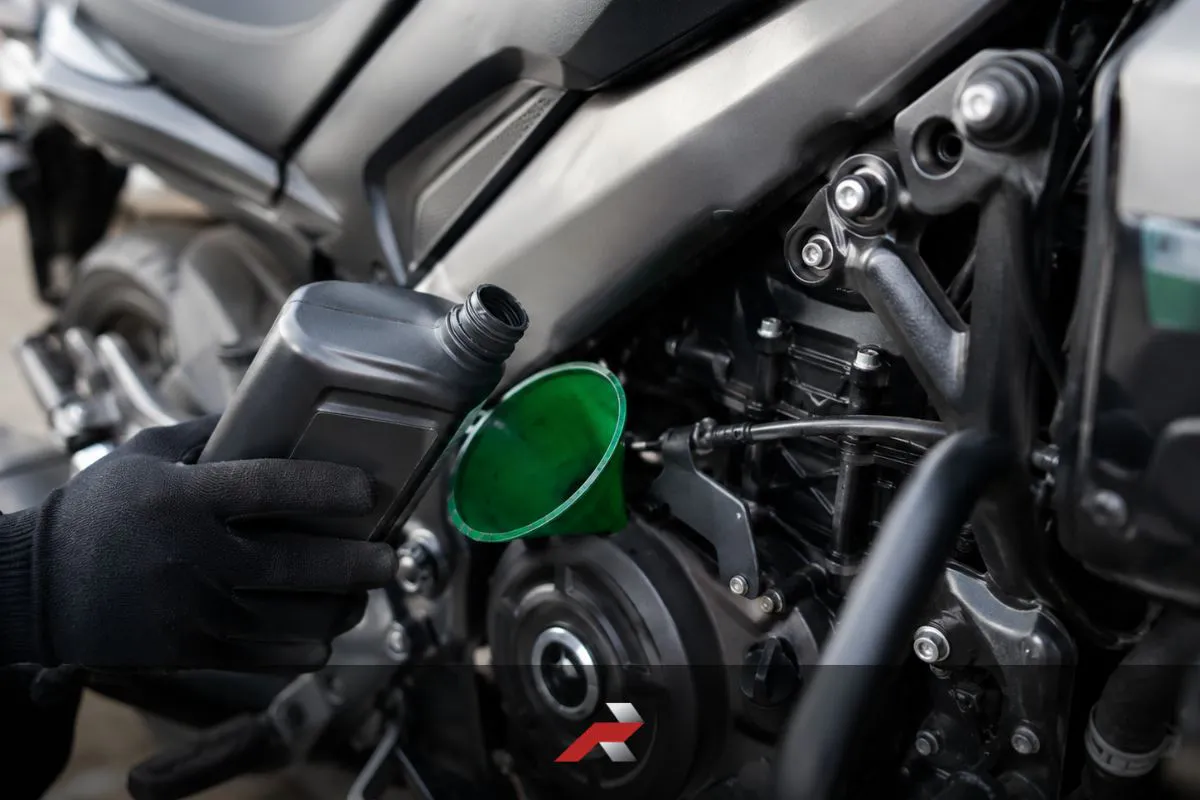
Big bike engine oil should match the motorcycle’s manual, engine design, clutch system, riding style, and Philippine conditions. Riders should not choose oil by brand hype alone. Viscosity, JASO rating, API rating, oil type, and real riding use all matter before PMS. This guide explains the difference between 10W-40 and 10W-50, fully synthetic and semi-synthetic oil, and why wet clutch compatibility matters for many motorcycles. It also helps Filipino riders connect oil selection with practical maintenance decisions.
Big bike engine oil should be chosen based on the owner’s manual, viscosity grade, oil standard, clutch compatibility, and riding conditions. Filipino riders should not buy oil by brand popularity alone because the wrong oil can affect shifting feel, clutch behavior, heat management, and long-term maintenance confidence.
This is where many riders get pulled into the usual oil debate. One rider says 10W-40 is enough. Another says 10W-50 feels better in heat. Someone else says fully synthetic is always the answer. Then the comments section turns into a mini civil war with oil bottles.
But for big bike owners, the better starting point is not opinion. It is the manual. Your owner’s manual tells you the required oil grade, oil quantity, service interval, and oil standard. That baseline matters because engines are not all built the same way.
A naked bike used in traffic, a sport bike ridden hard, and an ADV bike used for touring may all need different owner habits. But before comparing brands or prices, riders need to confirm what their motorcycle actually allows.
| What To Check | Why It Matters | Rider Mistake To Avoid |
|---|---|---|
| Viscosity grade | Affects flow and protection range | Guessing based on weather alone |
| JASO rating | Supports wet clutch compatibility | Using car oil without checking |
| API rating | Shows oil performance classification | Ignoring the label completely |
| Oil type | Mineral, semi-synthetic, fully synthetic | Buying only by price |
| Manual requirement | Manufacturer baseline | Copying another rider’s setup |
The owner’s manual should be the first filter before buying oil. It tells you what viscosity and oil standard the manufacturer expects for that engine. If the manual says 10W-40, start there. If it allows another grade under certain temperatures, read the condition carefully.
This matters because big bike engine oil is not just a liquid you pour into the engine. It has to work with engine clearances, heat behavior, clutch design, gearbox load, and service intervals.
In the Philippines, riders often adjust based on traffic and heat. That can be valid, but only after checking the manual. Do not jump to thicker oil just because “mas mainit dito.” That shortcut can cause more confusion than benefit.
JASO MA or MA2 rating matters because many motorcycles use a wet clutch, where the clutch shares oil with the engine and gearbox. If the oil is not suitable for that setup, riders may feel changes in clutch grip or shifting behavior.
The JASO Engine Oil Standards Implementation Panel explains how MA classification was subdivided into MA1 and MA2, which helps riders understand motorcycle oil categories. This is why riders should check oil labels instead of relying on bottle design alone.
API rating is another label riders may see on motorcycle oil bottles. It helps show the oil’s performance classification. However, API rating should not be read alone. For many motorcycles, JASO compatibility and the owner’s manual are still more important for clutch-related concerns.
The American Petroleum Institute also reminds vehicle owners to refer to their owner’s manuals before choosing oil categories, which supports the same basic rule: start with the motorcycle’s requirement, then compare options.
For this article, we can choose either JASO or API as the main external link. I recommend JASO because it is more directly connected to motorcycle wet clutch use.
Rider Insight:
Oil labels are not decoration. For big bikes, the small text on the bottle can matter more than the brand name printed in large letters.
Big bike engine oil can be fully synthetic or semi-synthetic when it matches the owner’s manual and required oil standards. The better choice depends on riding style, heat exposure, service interval, budget, and how consistently the rider can maintain the motorcycle.
This is where riders often get tempted to make the discussion emotional. Fully synthetic sounds premium. Semi-synthetic sounds practical. Mineral oil sounds old-school. But the real question is not which one sounds better. The real question is which oil fits the bike and the rider’s actual use.
For Filipino big bike owners, oil type should be judged through daily reality: traffic, heat, weekend rides, long rides, and PMS consistency. A rider using a big bike in heavy city traffic may benefit from a stronger oil formulation. A weekend rider with light use may focus more on correct specs and regular time-based servicing.
| Oil Type | Common Strength | Best Fit |
|---|---|---|
| Fully synthetic | Better heat and stability support | Harder use, long rides, performance bikes |
| Semi-synthetic | Balanced price and performance | Regular use, budget-conscious riders |
| Mineral oil | Basic protection when allowed | Older bikes or manual-approved use |
Fully synthetic oil is often preferred for big bikes because it is designed to handle heat, stress, and longer use better than basic oil types. This does not mean every motorcycle must use it. It means fully synthetic oil can be a stronger choice when the bike’s manual allows it and the riding pattern demands it.
This can make sense for riders who deal with:
For many big bike owners, fully synthetic oil feels like the safer default because the cost of oil is still smaller than the cost of engine problems. Still, riders should avoid buying fully synthetic oil blindly. The viscosity, JASO rating, and manual requirement still matter.
Semi-synthetic oil can be a practical choice when the manual allows it and the rider follows a consistent oil change schedule. It blends synthetic and mineral oil characteristics, which often makes it more affordable than fully synthetic oil.
This may fit riders who use their motorcycles moderately, ride mostly on weekends, or prefer shorter oil change intervals. If the bike is not ridden hard and the oil is changed on time, semi-synthetic oil can still serve a practical role.
The risk is not semi-synthetic oil itself. The risk is using it beyond what the bike, oil quality, and riding pattern can reasonably handle. If the motorcycle often sees heavy traffic, high heat, or aggressive riding, riders should be more careful before choosing oil mainly by price.
Oil type should match riding style because the same motorcycle can experience different stress under different owners. A big bike used for Sunday breakfast rides is not living the same life as one used daily through city traffic.
Scenario A:
A rider uses a 650cc naked bike for weekday city rides, traffic, and occasional long trips. The bike experiences frequent heat cycles and idle time.
Scenario B:
Another rider uses a similar bike twice a month for relaxed expressway rides. The bike has lower mileage but still needs time-based checks.
The first rider may benefit from a more conservative oil choice and interval. The second rider may focus more on time, storage, and correct manual specs.
Rider Insight:
The best engine oil is not always the most expensive bottle. It is the oil you can use correctly, consistently, and within your motorcycle’s required specifications.
Big bike engine oil viscosity matters because 10W-40 and 10W-50 can both be suitable when the owner’s manual allows them. The right choice depends on the motorcycle’s required viscosity, engine design, riding style, heat exposure, and service pattern. Riders should not switch viscosity based on Philippine heat alone.
This is where oil discussions get spicy. Some riders say 10W-40 is the safe everyday choice. Others prefer 10W-50 because they believe it offers better protection in hot conditions. Both views can have context, but neither should override the manual.
The numbers matter, but they should not be treated like magic. In simple terms, the first number relates to cold-start flow. The second number relates to oil behavior at operating temperature. For Philippine riders, the second number often gets more attention because of traffic and heat. Still, the motorcycle’s design should decide what is acceptable.
| Viscosity | Common Rider Perception | Important Reminder |
|---|---|---|
| 10W-40 | Common and widely recommended | Use if listed in the manual |
| 10W-50 | Preferred by some for hotter use | Use only if allowed |
| 5W-40 | May appear in some manuals | Follow climate and manufacturer guidance |
| 15W-50 | Used in some models | Do not assume it fits all big bikes |
10W-40 is commonly recommended for many motorcycles because it offers a balanced viscosity range for general riding. It can work well for daily use, weekend rides, and mixed Philippine conditions when the manual lists it as approved.
For many riders, 10W-40 is also easier to find. That matters in real ownership. If an oil is widely available, reasonably priced, and matches the bike’s requirements, it becomes easier to maintain consistency.
This is why your existing article on choosing 10W-40 motorcycle oil in the Philippines fits naturally here. It gives riders a deeper guide before they choose oil for PMS.
10W-40 can be a practical choice for:
The key phrase is “when allowed.” If the manual does not list 10W-40, do not force it just because another rider uses it.
10W-50 is sometimes considered by riders who deal with hotter conditions, harder use, or more demanding riding. The higher second number suggests the oil behaves differently at operating temperature compared with 10W-40.
However, this does not mean 10W-50 is automatically better for all Philippine big bikes. Thicker is not always smarter. If the engine was designed around a different viscosity, changing oil grade can affect flow, feel, efficiency, or shifting behavior.
10W-50 may be worth considering only when:
For riders who often join long rides, carry luggage, or ride aggressively, the question is valid. But the answer still starts with the manual.
Guessing viscosity is risky because oil choice affects more than engine protection. In many motorcycles, the same oil also works with the clutch and gearbox. A wrong choice may change shifting feel, clutch response, or overall engine behavior.
This is why riders should avoid the “mas makapal, mas protected” mindset. That sounds logical, but engines are designed with specific oil flow needs. Too much guessing can create a different problem while trying to solve one.
A simple decision path works better:
| Question | If Yes | If No |
|---|---|---|
| Is the viscosity listed in the manual? | Continue checking standards | Do not use it |
| Does it meet JASO MA or MA2 if required? | Consider riding style | Look for another oil |
| Does the bike see heavy traffic or hard use? | Stay conservative with PMS | Follow standard schedule |
| Can you buy it consistently? | Good for repeat maintenance | Avoid hard-to-source choices |
Rider Insight:
Oil viscosity should be a decision, not a guess. Philippine heat matters, but the owner’s manual still has the final say.
For most Filipino big bike owners, 10W-40 is the safer starting point if the manual recommends it. It is common, familiar, and easier to source. 10W-50 becomes more of a case-by-case option when the manual allows it and the rider’s use supports the change.
Here is the cleaner way to think about it:
| Rider Situation | Better Starting Point |
|---|---|
| Manual recommends 10W-40 only | Stay with 10W-40 |
| Manual allows 10W-40 and 10W-50 | Choose based on riding pattern |
| Heavy traffic and hard use | Consider allowed higher-temperature option |
| Weekend light riding | Manual recommendation is usually enough |
| Unsure about compatibility | Ask a trusted mechanic or service center |
Do not change oil grade just because a comment section sounds confident. Confidence is not always competence. Minsan malakas lang talaga mag-type.
Big bike engine oil should match how the motorcycle is actually used. A daily commuter, weekend expressway rider, and touring or ADV rider may need different oil priorities. The correct oil still starts with the manual, but real riding conditions help decide how conservative the owner should be.
This is where oil choice becomes practical. Riders should stop asking only, “Ano ang best oil?” Better question: “Best oil for what kind of riding?”
A big bike used every weekday in city traffic has different needs from a bike used twice a month for relaxed expressway rides. A touring bike with luggage also has a different workload from a naked bike used for nearby errands.
| Use Case | Oil Priority | Rider Focus |
|---|---|---|
| Daily commuter | Heat and consistency | Correct specs, regular PMS |
| Weekend expressway rider | Stability during storage and rides | Time-based checks |
| Touring or ADV rider | Long-distance protection | Pre-ride and post-ride inspection |
| Spirited rider | Heat and shifting feel | Shorter intervals when needed |
| Low-mileage owner | Oil age | Calendar-based maintenance |
A daily commuter big bike needs oil that can handle repeated heat cycles, idle time, short trips, and traffic. The bike may not always run fast, but it works often. That repeated use can make oil consistency more important than chasing the most expensive option.
For daily riders, the best oil choice should meet three basic rules:
Availability matters more than many riders admit. If your preferred oil is always hard to find, your maintenance schedule becomes harder to follow. A slightly less glamorous but correct oil used on time is better than a premium oil you cannot source consistently.
Daily commuters should also watch shifting feel. Since many motorcycles share oil between the engine, clutch, and gearbox, oil condition can affect how the bike feels in traffic.
A weekend expressway rider may not build mileage quickly, but oil still ages. This rider should focus on correct oil specs, storage habits, time-based checks, and pre-ride inspection.
Expressway use is usually smoother than heavy city traffic. The engine gets better airflow, and the riding pace is steadier. However, the bike may sit unused for long periods between rides. That makes calendar time important.
For weekend riders, oil choice should support:
A weekend bike does not need an overly dramatic oil strategy. It needs consistency. Keep records, follow the manual, and avoid letting the bike sit for too long without proper checks.
Rider Insight:
Low mileage does not always mean low maintenance. A parked big bike still has an oil clock quietly running in the background.
Touring and ADV riders should think about oil in terms of distance, heat, load, and changing road conditions. Long rides can include expressways, mountain climbs, provincial traffic, rain, dust, broken concrete, and luggage weight.
For this use case, oil choice should not be based on hype. It should be based on reliability and repeatability. If the bike will carry a top box, panniers, tools, rain gear, and maybe a passenger, the engine is working under a bigger load.
Before a major ride, check:
| Checkpoint | Why It Matters |
|---|---|
| Oil level | Confirms the engine has enough oil |
| Last oil change date | Shows if oil is aging |
| Mileage since PMS | Helps judge remaining interval |
| Oil filter record | Confirms service completeness |
| Approved viscosity | Prevents wrong oil choice |
| Shifting feel | Reveals possible oil or clutch changes |
If the oil is already near the end of its interval, change it before the ride. Hindi kailangan magpaka-hero sa lumang oil habang nasa bundok ka na. Peace of mind is part of the ride budget.
A spirited rider should choose oil with heat, stability, and shifting feel in mind. Higher rpm, stronger acceleration, hard engine braking, and mountain riding can put more stress on oil than relaxed cruising.
This does not mean every spirited rider needs the most expensive oil. It means the oil must be correct, compatible, and changed at a sensible interval. If the motorcycle is used hard often, stretching the interval becomes less wise.
Performance riders should watch for:
If these appear near the end of the interval, inspect early. Power and maintenance should move together. One without the other is just future gastos wearing a helmet.
Low-mileage big bikes need time-based thinking. These motorcycles may only be used for Sunday rides, events, group rides, or occasional errands. The odometer looks low, but the oil still goes through storage, moisture exposure, and heat cycles.
For this rider, the best oil choice is the one that meets the manual and supports regular service habits. Overbuying oil does not replace time-based inspection. Even premium oil should not become an excuse to ignore the bike for a year.
A simple routine works:
For low-mileage bikes, calendar discipline matters more than oil brand debates.
After checking the correct big bike engine oil type, riders should choose an oil that matches the manual, fits their riding conditions, and can be maintained consistently. A good oil choice is not only about brand reputation. It is also about compatibility, availability, budget, and repeatable PMS habits.
This is where the decision becomes practical. Many Filipino riders do not just ask, “Ano ang best oil?” They also ask, “Available ba ito lagi?” “Kaya ba ng budget every PMS?” “Bagay ba ito sa traffic, init, at long rides?” Those questions matter because maintenance only works when it can be repeated.
A premium oil may look attractive, but it still needs to match the motorcycle’s required viscosity and oil standard. A more affordable oil may also work well if it meets the manual and is changed on schedule. The better choice is the one that protects the bike and fits the owner’s actual riding life.
| What To Check | Why It Matters |
|---|---|
| Manual approval | Confirms the oil is allowed for the bike |
| Viscosity | Helps match engine and temperature needs |
| JASO rating | Supports wet clutch compatibility |
| Availability | Makes PMS easier to repeat |
| Price | Helps maintain consistency |
| Riding use | Matches oil choice to real conditions |
Riders considering 10W-40 should first understand whether that viscosity fits their motorcycle. Many bikes use 10W-40, but big bike engine oil should still be confirmed through the manual. For riders who want a deeper look at this grade, the guide on choosing 10W-40 motorcycle oil in the Philippines explains what daily riders should check before PMS.
This matters because 10W-40 is common, but common does not mean universal. Some motorcycles allow it. Others may require a different grade depending on model, temperature range, or engine design.
Once the manual confirms that the oil grade and standard are suitable, riders can compare specific products with better context. This is where big bike engine oil reviews become useful. They help riders look at specs, positioning, riding use, and value without relying only on brand hype.
For example, riders looking at a 10W-40 option can review Petronas Sprinta 4T 10W-40 Racing + Ester as one possible reference point. It is not about saying one oil is the automatic answer. It is about helping riders compare an available product against their own motorcycle requirements.
Rider Insight:
A product review should support your decision, not replace your manual. The best oil is still the one your bike allows and your maintenance habit can sustain.
Oil choice should not be based only on comments, brand loyalty, or what another rider uses. A product may work well for one bike and still be the wrong fit for another. Riding style also changes the result.
Before buying oil, ask:
That last question matters. Oil discussions can get loud online, but your engine does not care about popularity. It cares about correct specs, clean oil, and consistent maintenance.
For Filipino riders, the smartest oil choice is usually not the most dramatic one. It is the one that matches the bike, fits the riding conditions, and keeps PMS repeatable.
The best big bike engine oil is the one that matches the motorcycle’s manual, required viscosity, oil standard, clutch system, and real riding conditions. Filipino riders should avoid choosing oil by brand hype alone because compatibility and consistent PMS matter more than popularity.
Oil choice should start with the owner’s manual, but riders should also understand how often big bike oil should be changed before comparing oil types. That manual tells you what viscosity grades are allowed, what oil standards are required, and how the motorcycle should be maintained. Once that baseline is clear, riders can adjust their thinking based on traffic, heat, long rides, weekend use, and budget.
A popular oil is not automatically the right oil for your motorcycle. Big bike owners should check the label, viscosity, JASO rating, API rating, and manual requirement before buying.
Brand trust helps, but it should never replace compatibility. A well-known oil with the wrong specification is still the wrong oil.
A daily city rider needs a different oil decision than a weekend expressway rider. Traffic, heat, idle time, short trips, and long rides all affect how riders should think about oil choice and PMS timing.
If your bike often deals with heavy traffic or hard riding, stay conservative with maintenance. If your bike is rarely used, respect time-based oil checks.
The smartest oil choice is one you can use correctly and consistently. If an oil is hard to find, too expensive to maintain, or not clearly compatible with your bike, it may not be the best practical choice.
Before every PMS, use this simple checklist:
| Question | Why It Matters |
|---|---|
| Does my manual allow this oil? | Prevents wrong viscosity choice |
| Does it meet the required standard? | Supports engine and clutch compatibility |
| Can I buy it consistently? | Keeps PMS repeatable |
| Does it fit my riding style? | Matches oil to real use |
| Am I choosing by specs, not hype? | Avoids emotional buying |
Big bike engine oil should support the way you ride, not just the way the bottle looks. Choose with discipline, track your PMS, and let the manual lead the decision.