Skip to content
Contact & Community
📍 Metro Manila, Philippines
🌐 robimotoph.com
✉️ hello@robimotoph.com
📱 +63 917 517 0594
📍 Metro Manila, Philippines
🌐 robimotoph.com
✉️ hello@robimotoph.com
📱 +63 917 517 0594

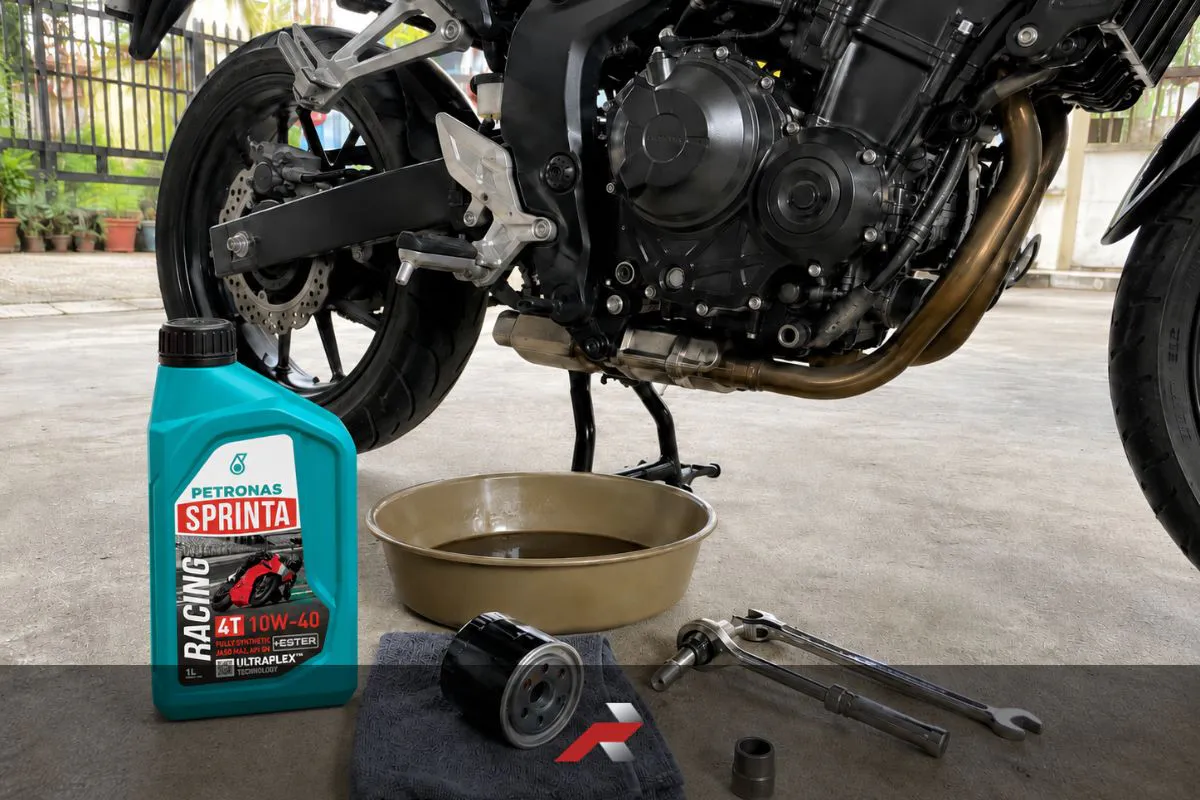
Choosing the right 10W-40 motorcycle oil matters for Filipino riders who deal with traffic, heat, rain, and regular PMS schedules. This guide explains viscosity, fully synthetic oil, JASO MA2 rating, wet clutch compatibility, and real-world riding use in the Philippines. It also shows where premium options like Petronas Sprinta Racing Ester 10W-40 may fit, without treating any oil as a magic fix. Before changing oil, riders should check the owner’s manual, riding habits, engine condition, and maintenance history. Good oil helps, but disciplined maintenance still carries the bigger weight.
10W-40 motorcycle oil is a common choice for many Filipino riders because it can support everyday riding, engine heat, and regular PMS needs when it matches the bike manufacturer’s recommendation. However, the best oil is not decided by popularity alone. It should match the engine, clutch system, riding conditions, and maintenance schedule.
For daily riders in the Philippines, engine oil works harder than many people think. A motorcycle may only travel a short distance from Valenzuela to Quezon City, Makati, Pasig, or Manila, but the engine can spend long minutes under heat while crawling through traffic. That is where oil choice starts to matter.
The challenge is simple: Philippine riding is not always gentle riding.
A rider may face:
This is why choosing 10W-40 motorcycle oil should not be based only on brand hype, bottle design, or the word “racing.” Those can catch attention, but they do not replace compatibility.
A good oil decision starts with the owner’s manual. From there, riders can check viscosity, JASO rating, API rating, oil type, riding style, and PMS interval. Premium options like Petronas Sprinta Racing Ester 4T 10W-40 may fit riders looking for a fully synthetic option, but only when the motorcycle requires or allows that specification.
This guide explains how to choose oil practically. No magic claims. No overacting. Just real maintenance thinking for Filipino riders who want their motorcycles to last.
For Philippine riders, oil choice is less about chasing the most premium label and more about matching the oil to actual use. Traffic, heat, clutch design, and PMS discipline often matter more than brand loyalty.
10W-40 motorcycle oil is common in the Philippines because many motorcycles need an oil grade that can handle daily starts, city heat, and regular riding loads. It is not automatically the best choice for every bike, but it works well when the owner’s manual recommends it and the oil meets the correct motorcycle standard.
For many Filipino riders, 10W-40 motorcycle oil sits in the practical middle. It is not too thin for warm riding conditions, and it is not too heavy for normal daily use. That balance matters when a motorcycle is used for commuting, errands, weekend rides, and occasional long trips.
The “10W” part refers to cold-start behavior. The “40” refers to how the oil behaves when the engine is already hot. In simple terms, 10W-40 is designed to flow during startup and still protect when the engine reaches operating temperature. This follows how SAE viscosity grades classify engine oil behavior under different temperature conditions.
For daily riders, oil does three basic jobs:
In city riding, the motorcycle does not always get steady airflow. The bike may crawl through EDSA, Commonwealth, C5, MacArthur Highway, or local barangay roads. Even if the trip is short, the engine may stay hot for a long time.
That is why 10W-40 motorcycle oil is often seen as a practical choice for motorcycles that require this grade. It gives riders a balanced oil option for normal use, as long as the bike manual allows it.
Philippine traffic changes how oil performs. A 10-kilometer ride in open provincial roads is different from a 10-kilometer ride in Metro Manila traffic. Same distance, different punishment. Parang same exam, pero yung isa may bonus heat index.
In stop-and-go riding:
This is where riders should think beyond odometer reading. The engine does not care if the bike has moved only a few kilometers. If it was left for long minutes under heat, the oil was still working.
The owner’s manual should always lead the oil decision. If the manual recommends 10W-40 motorcycle oil, then riders can compare brands, oil type, and standards within that requirement. If the manual recommends another grade, follow that first.
Also check the motorcycle oil standard. For many manual motorcycles with wet clutches, JASO MA or MA2 matters because the engine oil also affects clutch behavior. According to Lubrizol’s explanation of JASO MA2 motorcycle oil, MA2 oils are designed for higher clutch friction performance in four-stroke motorcycles and scooters.
Quick checklist before buying:
| Factor | What To Check | Why It Matters |
|---|---|---|
| Viscosity | 10W-40 or manual-recommended grade | Matches engine design |
| JASO Rating | MA, MA1, or MA2 for many wet clutch bikes | Helps protect clutch feel |
| Oil Type | Mineral, semi-synthetic, fully synthetic | Affects cost and stability |
| Riding Use | Traffic, long rides, weekend rides | Changes oil stress |
| Seller | Trusted store or official channel | Reduces counterfeit risk |
Riders should not choose oil because the label looks aggressive. “Racing” sounds cool, yes. But compatibility is still king.
Motorcycle oil types differ mainly in base oil quality, heat resistance, price, and service stability. Fully synthetic oil usually offers stronger performance under heat, semi-synthetic oil balances cost and protection, while mineral oil is usually the most basic option. The right choice depends on the motorcycle, riding pattern, PMS interval, and budget.
For Filipino riders, choosing oil is not just about buying the most expensive bottle. A daily commuter stuck in traffic has different needs from a weekend rider who only rides early Sunday morning. A big bike used for expressway cruising also puts different stress on oil compared with a small-displacement city bike.
This is why 10W-40 motorcycle oil can appear in different forms:
The viscosity may look the same, but the oil type can affect how well it handles heat, aging, and long service use.
Fully synthetic motorcycle oil is usually chosen for better heat resistance, cleaner performance, and stronger stability under demanding use. This is why many riders consider it for daily traffic, spirited weekend rides, or motorcycles with higher engine stress.
In simple terms, fully synthetic oil is built to perform more consistently under pressure. It is often more expensive, but it may offer better resistance to oil breakdown compared with basic mineral oil.
For motorcycles that require 10W-40 motorcycle oil, a fully synthetic option may make sense when the rider regularly faces:
However, fully synthetic oil should still match the correct viscosity and motorcycle standard. The label matters. The manual matters more.
Semi-synthetic oil is not automatically a downgrade. For many practical riders, it can be a better value choice. It blends synthetic and mineral base oil, giving riders a middle ground between cost and performance.
Semi-synthetic oil may make sense for:
The main advantage is cost control. If a rider changes oil on time and follows the manual, semi-synthetic oil can still support reliable daily use.
Scenario A:
Scenario B:
In real-world ownership, Scenario B may be safer. Good habits beat expensive shortcuts. Classic lesson, still undefeated.
Cheap oil becomes risky when it does not match the motorcycle’s required grade, clutch system, or service standard. Saving a small amount during PMS may create bigger problems if the oil affects shifting, clutch feel, or engine performance.
Before buying, riders should check more than the price tag. The American Petroleum Institute’s engine oil categories can help explain why oil classifications matter, especially when comparing product labels.
For many manual motorcycles, riders should also check if the oil is suitable for wet clutch use. A cheap automotive oil may look tempting, but motorcycle engines often share oil between the engine, clutch, and gearbox.
Before choosing any oil, check:
| Oil Type | Best For | Main Trade-Off |
|---|---|---|
| Mineral Oil | Basic riding, older bikes, tight budgets | Less stable under heavy heat |
| Semi-Synthetic Oil | Practical daily use, scheduled PMS | Balanced but not top-tier |
| Fully Synthetic Oil | Heat, traffic, long rides, higher load | Higher price |
For riders choosing 10W-40 motorcycle oil, the smartest move is simple: match the manual, match the use, then match the budget.
JASO MA2 matters because many manual motorcycles use one oil system for the engine, gearbox, and clutch. If the oil is not suitable for wet clutch use, shifting feel and clutch behavior may suffer. For Filipino riders, checking JASO MA2 helps prevent buying oil that looks correct but performs poorly in actual use.
Many riders focus only on the viscosity number. They see 10W-40 motorcycle oil and assume it is already safe. But viscosity is only one part of the decision.
For manual motorcycles, especially bikes used in daily traffic and weekend rides, the JASO rating is just as important. This is because the oil must protect the engine while also working with the clutch and gearbox.
Wet clutch compatibility matters because the clutch plates are bathed in engine oil. That means the oil affects more than lubrication. It can also influence clutch grip, shifting feel, and overall ride confidence.
In many motorcycles, the same oil works across:
That is why some automotive oils are not ideal for motorcycles. They may be designed for car engines, not shared motorcycle systems. A car engine does not usually ask the oil to help manage clutch friction. A manual motorcycle often does.
According to Lubrizol’s guide to JASO motorcycle oil standards, JASO T903 categories help define oil performance for four-stroke motorcycle engines, including clutch-related requirements.
For riders choosing 10W-40 motorcycle oil, the label should not stop at viscosity. Look for motorcycle-specific ratings such as JASO MA, MA1, or MA2 when your motorcycle requires wet clutch compatibility.
Scooter oil is not always the same as manual motorcycle oil because some scooters use different clutch and transmission layouts. Many automatic scooters do not rely on the same wet clutch setup found in manual motorcycles.
This is where confusion happens. A rider may see 10W-40 on the bottle and think it can work for any bike. But the oil standard still matters.
For example:
| Oil Label Detail | Why It Matters |
|---|---|
| 10W-40 | Shows viscosity grade |
| JASO MA / MA2 | Often relevant for wet clutch motorcycles |
| JASO MB | Often used for certain scooters |
| API Rating | Shows engine oil performance category |
| 4T Label | Indicates four-stroke motorcycle use |
Some scooters may require JASO MB oil, while manual motorcycles often need JASO MA or MA2. Riders should not swap these casually. Same number, different purpose. Parang helmet at tabo, parehong may plastic, pero ibang trabaho.
Before buying oil, riders should read the label in this order: viscosity, motorcycle standard, performance rating, oil type, and seller reliability. This habit helps avoid wrong purchases, especially when buying online.
Check these details:
For Petronas Sprinta Racing Ester 4T 10W-40, local listings commonly reference JASO MA2 and API SN, which makes it relevant for riders comparing premium 10W-40 motorcycle oil options. Still, the final decision should depend on the motorcycle manual and actual riding use.
The safe rule is simple: do not buy oil based on the front label alone. Turn the bottle around. Read the back. That small habit can save you from a wrong PMS decision.
Philippine riding conditions can make engine oil work harder because traffic, heat, rain, and long idle time add stress beyond normal mileage. For daily riders, 10W-40 motorcycle oil should be judged not only by distance traveled but also by how the motorcycle is used in real traffic, weather, and road conditions.
A bike may travel only 8 to 15 kilometers in a city commute, but the engine may stay hot for a long time. This is common in Metro Manila, especially during slow traffic, roadworks, school zones, market areas, and rush hour bottlenecks.
That is why oil performance is not only about odometer reading. Time under heat also matters.
Heat and traffic are two of the biggest reasons riders should take oil choice seriously. Low-speed riding reduces airflow, while long idle time keeps the engine working even when the motorcycle barely moves.
In daily Philippine use, oil may face:
This is where 10W-40 motorcycle oil becomes a practical choice when the manual recommends it. It should flow properly at startup and maintain protection once the engine is hot.
According to TotalEnergies’ explanation of engine oil viscosity grades, viscosity refers to how engine oil flows at low and high temperatures. That matters because Philippine riders often deal with cold starts, traffic heat, and long running conditions in one day.
Rain does not automatically ruin engine oil, but rainy season riding can still affect maintenance habits. Wet roads, splash, mud, and frequent washing can make riders check their bikes more often.
During rainy months, riders should inspect:
Rainy rides can also hide small problems. A rider may blame the wet road for poor feel, when the real issue is delayed PMS, low tire pressure, worn chain, or old oil.
Scenario A:
Scenario B:
The second rider spends less drama money. Very rare currency, but highly valuable.
Long rides create a different kind of oil stress. City riding builds heat through traffic and idle time. Expressway riding creates sustained engine load at higher speed.
Both can be demanding, but in different ways.
For weekend riders and big bike owners, oil should be checked before rides that involve:
A proper PMS before a long ride gives the rider more confidence. It also reduces the chance of discovering oil-related concerns far from home. That kind of surprise belongs in movies, not in Marilaque, Baguio, Bataan, or Batangas.
Here is a practical view:
| Riding Condition | Oil Stress Factor | Rider Action |
|---|---|---|
| City traffic | Heat and idle time | Check PMS interval sooner |
| Rainy rides | More inspection needs | Look for leaks and changes |
| Expressway rides | Sustained engine load | Check oil level before ride |
| Weekend rides | Mixed riding pace | Observe shifting and heat |
| Daily commute | Repeated short trips | Track date and odometer |
For Filipino riders, 10W-40 motorcycle oil should be part of a bigger routine. The oil matters, but the inspection habit matters too.
Petronas Sprinta Racing Ester 4T 10W-40 fits as a premium oil option for riders whose motorcycles require or allow 10W-40 motorcycle oil with wet clutch compatibility. It should be considered as part of a proper PMS decision, not as a shortcut for poor maintenance, delayed service, or mechanical issues.
This is where we place Petronas Sprinta Racing Ester properly inside the article. It is not the whole topic. It is one product example inside a bigger oil decision framework.
That matters because Filipino riders can easily get pulled by labels like “racing,” “ester,” or “fully synthetic.” Those terms are useful, but they should still be checked against the manual, riding pattern, and actual PMS needs.
Riders consider Petronas Sprinta Racing Ester because it is positioned as a fully synthetic 4T oil with ester technology. For many riders, that signals stronger heat stability, smoother feel, and better confidence during demanding use.
Local product listings for Petronas Sprinta Racing Ester 4T 10W-40 reference 10W-40 viscosity, JASO MA2, and API SN. These details make it relevant for riders comparing premium motorcycle oil options for wet clutch motorcycles.
Still, the label should start the evaluation, not end it.
A rider should ask:
If the answer matches the oil’s specification and use case, then it becomes a reasonable option to consider.
Premium oil cannot repair poor maintenance. It cannot fix a worn clutch, damaged bearing, overdue valve check, dirty air filter, or neglected oil filter.
This is important. Some riders expect a new bottle of oil to solve every rough sound, vibration, or shifting concern. Sometimes the oil helps the feel. Sometimes the real issue is deeper.
A premium 10W-40 motorcycle oil may support better confidence during PMS, but it should not be used as a band-aid for ignored problems.
Here is the practical line:
| Rider Expectation | Reality Check |
|---|---|
| Oil will fix engine noise | It may help feel, but will not repair damage |
| Racing oil is always better | Only if compatible with the motorcycle |
| Fully synthetic means longer forever | PMS interval still matters |
| Ester oil solves heat | It may help stability, but cooling system and riding use matter |
| Expensive oil means safe choice | Wrong spec is still wrong spec |
Good oil helps most when the motorcycle is already maintained properly. If the bike is neglected, the oil becomes the clean shirt on a dirty problem. Mukhang okay sa labas, pero may laban pa rin sa loob.
Petronas Sprinta Racing Ester 4T 10W-40 may fit riders who want a premium oil option for regular PMS, especially if their motorcycle requires 10W-40 motorcycle oil and JASO MA2 compatibility.
Best-fit riders may include:
For riders considering a premium 10W-40 option, our hands-on PMS notes in Petronas Sprinta Racing Ester 10W-40 Review explain the product in a more specific real-use context.
This is the cleaner decision: use the pillar article to understand oil choice, then use the product review to check if this specific Petronas oil fits your PMS needs.
Choosing motorcycle oil should follow a simple order: check the manual, confirm the viscosity grade, verify the motorcycle oil standard, buy from a trusted seller, and match the oil to your riding pattern. For Filipino riders, 10W-40 motorcycle oil should be selected through compatibility first, not price, label design, or hype.
A good oil purchase starts before the cashier or checkout button. Many wrong PMS decisions happen because riders only look at the front label. The bottle may say “fully synthetic,” “racing,” or “premium,” but those words are not enough.
The better habit is to check the details that affect actual use.
Compatibility should always come before brand preference. If the manual recommends 10W-40 motorcycle oil, then riders can compare options within that grade. If the manual recommends another viscosity, follow that requirement first.
Before buying, check:
For many wet clutch motorcycles, JASO MA or MA2 is important. For riders choosing 10W-40 motorcycle oil, the label should not stop at viscosity. Look for motorcycle-specific ratings such as JASO MA, MA1, or MA2 when your motorcycle requires wet clutch compatibility.
Do not rely on memory alone. Check the manual or verified service information. “Sabi ng tropa” is useful for tambay talk, but not always enough for engine care.
Seller reliability matters because engine oil is easy to imitate, relabel, or sell through questionable channels. A cheap bottle can become expensive if the product is fake, expired, damaged, or not meant for your bike.
When buying oil online or in-store, check:
A suspiciously cheap price should make riders pause. Discount is good. Too-good-to-be-true pricing is where wallet happiness becomes engine anxiety.
Your riding pattern affects how hard the oil works. A bike used mainly for short city rides may face more heat cycles than a bike used for relaxed weekend routes. A rider doing expressway runs, backride trips, or loaded touring may also need stronger oil stability.
Use this quick guide:
| Riding Pattern | Oil Concern | Buying Priority |
|---|---|---|
| Daily city commute | Heat and idle time | Stable oil and timely PMS |
| Weekend rides | Mixed pace and distance | Manual-approved viscosity |
| Expressway use | Sustained engine load | Correct grade and standard |
| Rainy season riding | More inspection needs | Trusted oil and leak checks |
| Budget riding | Cost control | Correct spec over brand hype |
For riders choosing 10W-40 motorcycle oil, the cleanest buying rule is this: manual first, standard second, riding condition third, brand last.
That does not mean brand is unimportant. It means brand should support the right decision, not replace it.
For riders unsure about service timing, our guide on when to change motorcycle oil in the Philippines should explain the warning signs to watch during daily use once the cluster article is published.
Yes. 10W-40 motorcycle oil can work well in Philippine weather if your motorcycle manual recommends it. It can support daily starts, city heat, and regular riding loads, but engine design should still guide the final choice.
Not always. Fully synthetic oil usually handles heat and longer use better, but it must still match the correct viscosity and motorcycle standard. A cheaper oil changed on time can be safer than premium oil used carelessly.
Yes, if it matches your motorcycle’s required viscosity and standard. The word “racing” should not be the main reason for buying. Compatibility still matters more than branding.
Yes, if it has the correct JASO MA or MA2 rating required by your motorcycle. Wet clutch bikes need oil that works with the engine, gearbox, and clutch system.
Follow your owner’s manual first. However, heavy traffic, heat, short trips, and long idle time can make oil work harder, so riders should monitor shifting feel, engine sound, oil level, and PMS history.
Not always. Oil can turn dark as it collects heat residue and dirt. It becomes more concerning when paired with rough shifting, engine noise, burnt smell, low oil level, or overdue PMS.
It may fit daily riders whose motorcycles allow 10W-40 motorcycle oil and require JASO MA2 compatibility. It is best treated as a premium PMS option, not a fix for neglected maintenance.
Check the manual, viscosity grade, JASO rating, API rating, oil type, seller reputation, and riding pattern. The safest choice is the oil that matches your bike and actual use.
Choosing 10W-40 motorcycle oil in the Philippines should be a practical maintenance decision, not a popularity contest. The right oil must match the manual, support the clutch system, handle real riding conditions, and fit the rider’s PMS habit. Good oil helps, but disciplined ownership still matters more.
For daily riders, the best oil choice is the one that fits the motorcycle and the way it is actually used. A commuter stuck in traffic needs consistency. A weekend rider needs confidence before long rides. A big bike owner needs the correct standard, not just the loudest label on the shelf.
Petronas Sprinta Racing Ester 4T 10W-40 can fit riders looking for a premium 10W-40 motorcycle oil option, especially if their motorcycle allows that viscosity and requires JASO MA2 compatibility. However, riders should not treat it as a default recommendation for every bike. For example, Dominar 400 owners should check their manual first because many Dominar references point to 10W-50, JASO MA2, and API SN as the safer manual-aligned choice. In that case, Petronas Sprinta Racing Ester 4T 10W-40 is better treated as a premium 10W-40 reference, not the automatic Dominar PMS recommendation.
Before your next oil change, ask three simple questions:
First, does your manual allow this oil grade?
Next, does the oil match your clutch and engine requirements?
Finally, does your riding pattern justify this choice?
If the answer is yes, then the oil becomes a smart option. If not, choose what your motorcycle actually needs.
For riders comparing premium oil choices, read our PMS-use notes in Petronas Sprinta Racing Ester 10W-40 Review. For riders unsure about timing, our guide on when to change motorcycle oil in the Philippines can help once that article is published.
At the end of the day, oil is not just a bottle you pour into the engine. It is part of how you respect the machine, your budget, and every ride waiting after the next PMS.