Skip to content
Contact & Community
📍 Metro Manila, Philippines
🌐 robimotoph.com
✉️ hello@robimotoph.com
📱 +63 917 517 0594
📍 Metro Manila, Philippines
🌐 robimotoph.com
✉️ hello@robimotoph.com
📱 +63 917 517 0594

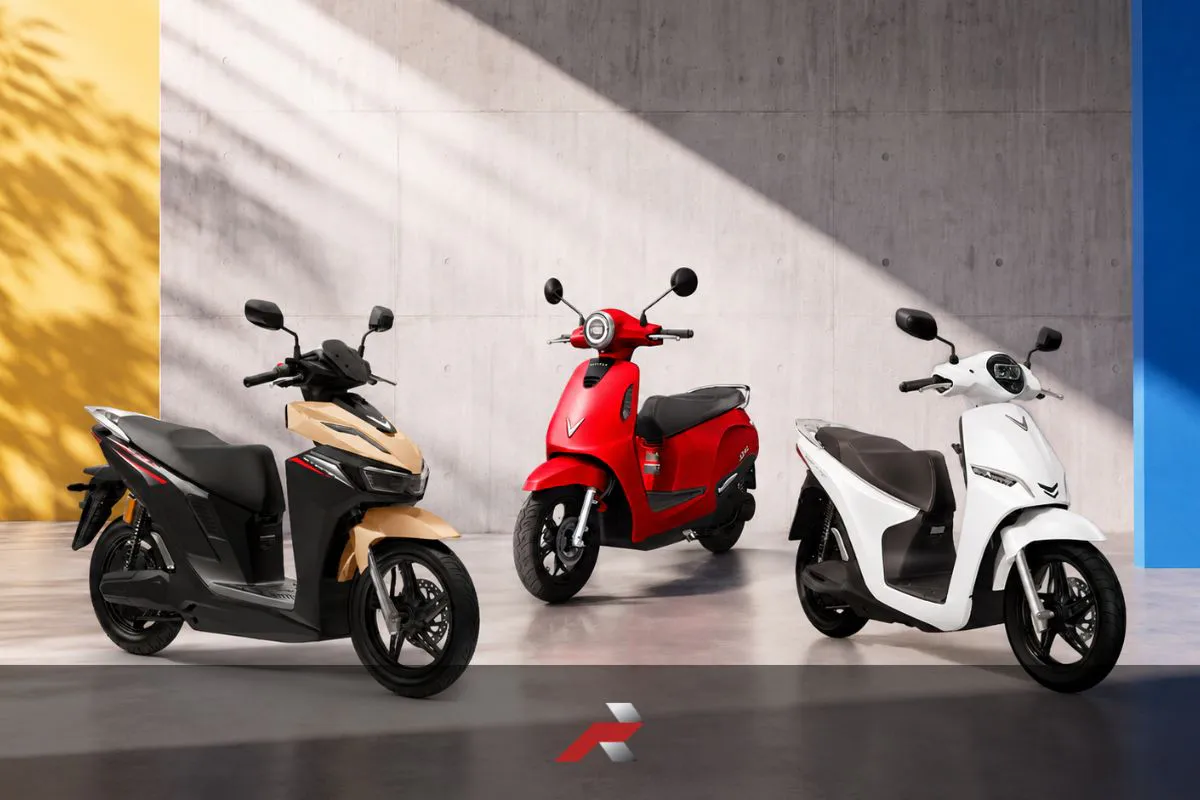
VinFast has launched its battery-swapping e-motorcycles in the Philippines, introducing the Evo, Feliz II, and Viper. For Filipino riders, the bigger question is not just the model lineup, but whether battery swapping can work in real commuting conditions. This article breaks down the announcement, the battery-swapping concept, and what daily riders should consider before looking at electric motorcycles as a practical option.
VinFast E-Motorcycles Philippines is now part of the local motorcycle conversation after the company opened early bookings for three battery-swapping models: the Evo, Feliz II, and Viper. For Filipino riders, this is not just another product launch. It is also a test of whether battery swapping can fit daily riding life in the country.
VinFast announced an early booking program in the Philippines for three battery-swapping electric motorcycles: the VinFast Evo, VinFast Feliz II, and VinFast Viper. The booking period runs from June 10 to July 18, 2026, with a PHP 3,000 non-refundable booking fee and incentives valued at PHP 5,600. [1]
The announcement places VinFast directly into the local two-wheel EV discussion. The company is not only selling electric motorcycles. It is also introducing a system built around battery swapping, home charging, and battery subscription options.
Based on VinFast’s announcement, customers can place early orders through the official website or VinFast dealerships nationwide. Deliveries are expected to begin in July 2026. [1]
For riders, the model names are only one part of the story.
| Model | Likely Rider Fit |
|---|---|
| VinFast Evo | Daily city commuting |
| VinFast Feliz II | Practical everyday use |
| VinFast Viper | Sportier urban riding |
This launch matters because electric motorcycles are still trying to prove their place in the Philippines. Gas motorcycles remain the default choice for many riders because refueling is fast, familiar, and available almost everywhere.
Battery-swapping e-motorcycles challenge that habit.
These are the practical questions that will likely influence whether Filipino riders consider battery-swapping motorcycles as a realistic alternative to traditional gas-powered bikes.
That is where the real conversation begins.
Battery swapping is different because it reduces the waiting time usually connected with electric motorcycle charging. Instead of parking for hours to recharge, a rider can exchange a depleted battery for a charged one, provided a swapping station is available and accessible.
The challenge lies in station availability.
In theory, battery swapping solves one major concern about electric motorcycles: downtime. A rider who uses the bike daily does not always have the luxury of waiting. Many Filipino riders move through traffic, rain, work schedules, errands, and family responsibilities in one day.
A fast battery exchange can make EV ownership feel closer to the gas-station experience.
But the system depends heavily on infrastructure.
Riders who want a deeper understanding of ownership costs, home charging, and battery-swapping access can also read our guide to VinFast battery subscription in the Philippines, which explains how the subscription and battery ownership options differ.
If a rider lives near a swapping station, the setup may feel practical. If the nearest station is far from the rider’s home, office, or daily route, the advantage becomes weaker.
Here is the basic comparison:
| Setup | Strength | Concern |
|---|---|---|
| Home charging | Convenient for riders with secure parking | Hard for condo or street parking users |
| Battery swapping | Faster than waiting for a full charge | Depends on station availability |
| Gas refueling | Widely available and familiar | Higher fuel and maintenance exposure |
| Battery subscription | Lower upfront battery concern | Adds monthly cost to ownership |
Key Analysis: Battery swapping can make electric motorcycles more practical, but only when the network is dense enough. In Metro Manila, convenience is not a small feature. It is often the deciding factor.
Scenario A:
A rider has a garage, predictable daily route, and access to a home outlet. Home charging may be enough.
Scenario B:
A rider parks outside, lives in a condo, or moves across several cities daily. Battery swapping may be more useful, but only if stations are nearby.
That is why VinFast E-Motorcycles Philippines should be watched as a system, not just as a model lineup.
For Filipino riders, VinFast’s launch raises practical questions about cost, range, charging access, swapping stations, and long-term ownership. The announcement is promising, but the real test will happen in daily use, especially in traffic-heavy cities and during the rainy season.
Motorcycle ownership in the Philippines is rarely based on specs alone.
A bike must survive daily realities:
This is where electric motorcycles face both opportunity and pressure.
On one hand, EV motorcycles may appeal to riders who want lower running noise, simpler operation, and possibly lower day-to-day energy costs. On the other hand, many riders will still ask about battery life, parts support, service access, waterproofing, resale value, and real-world range.
These concerns are understandable, especially for riders considering electric motorcycles for daily transportation.
A rider from Valenzuela going to Quezon City daily will think differently from a rider using the bike only around the neighborhood. A delivery rider will calculate uptime more strictly than a weekend user. A condo resident will worry more about charging than someone with a secure garage.
VinFast’s entry expands rider choices, but long-term adoption will depend on how the system performs outside controlled launch conditions.
The better mindset is to observe first, test when possible, and wait for real owner feedback.
For now, the key rider questions are:
These questions matter more than hype. Brochure numbers are useful, but Philippine roads always have the final say.
VinFast E-Motorcycles Philippines is worth covering because it introduces a different ownership model, not just another electric motorcycle lineup. Battery swapping could help solve charging anxiety, but its success will depend on infrastructure, pricing, service support, and real-world rider experience.
For now, this should be treated as industry news with rider-focused analysis.
Not a review.
Not a recommendation.
Not a buying guide yet.
The smart move is to watch how VinFast builds its swapping network and how early Filipino owners respond after actual daily use. If the system works in traffic, rain, and tight urban routines, then this topic may deserve deeper follow-up content later.
Until then, it is a development worth monitoring.
Riders who want to understand the ownership side of VinFast’s electric motorcycle ecosystem can also explore our guide to battery subscriptions, charging options, and battery-swapping access in the Philippines.
[1] VinFast. “VinFast Launches Early Booking Program for Battery-Swapping E-Motorcycles in the Philippines.” https://vinfastauto.us/investor-relations/news/vinfast-launches-early-booking-program-for-battery-swapping-e-motorcycles
Image Source: VinFast Philippines